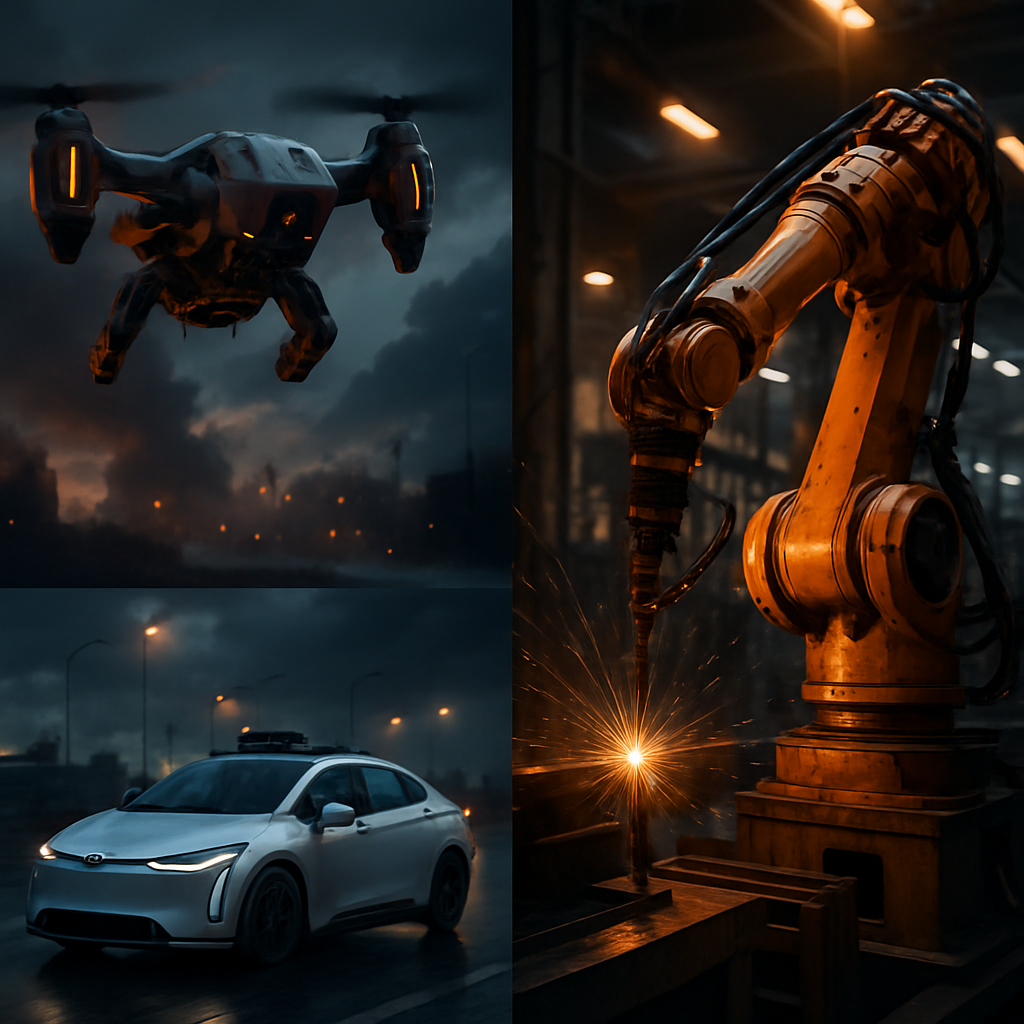
At TechCrunch Disrupt 2026, high-stakes autonomy takes center stage in a session titled “Building AI Systems When Failure Is Not an Option.” Leading voices from Shield AI, Waabi, and General Motors came together to dissect how autonomous systems—whether in defense, driving, or manufacturing—can be pushed beyond controlled demos into real-world operations without catastrophic consequences.
Mission-critical autonomy and defense
Nathan Michael, Chief Technology Officer at Shield AI, heads development of Hivemind, a platform-agnostic autonomy system designed for drones and robotic teams. His team’s recent work includes being selected earlier this year to bring autonomy to the U.S. Air Force’s Collaborative Combat Aircraft drone prototype. Shield AI also closed a $1.5 billion Series G round valuing it at $12.7 billion. These developments underscore how high-stakes applications demand not just capability but provable trust and safety. For Shield AI, that means rigorous testing, validation, and an immovable safety culture before anything hits deployed missions.
Autonomous vehicles: virtual trials vs. real roads
Raquel Urtasun, founder and CEO of Waabi, brings a depth of experience from academia and formerly Uber’s autonomous vehicle division. Her current work aims to scale autonomous driving via Waabi Driver, including a recent $1 billion Boston round and a push to deploy tens of thousands of robotaxis through a partnership with Uber. Central to Waabi’s strategy is its Waabi World simulation system, where virtual environments are used to stress-test its autonomous driving and trucking tech. Even with all that, Urtasun emphasized that full validation must precede any driverless deployment—especially as the company targets not just controlled pilots but widespread rollouts.
Robots in real workplaces
Mikell Taylor, Director of Robotics Strategy at General Motors’ Autonomous Robotics Center, focuses on robots built to co-exist with people. From underwater bots to industrial systems, her experience includes leading Amazon Robotics’ Proteus project. At GM, she’s working on bringing robotics out of the lab and into warehouses and factories, with heavy attention on design elements that affect human trust, safety, and daily usability. Those aren’t afterthoughts—they’re foundational requirements when AI-powered machines move into settings where people rely on them.
What it takes to know AI is ready
Across these leaders, four core themes emerged when failure truly isn’t an option: first, institutionalizing a culture of safety; second, executing rigorous testing—virtual and physical; third, navigating regulatory landscapes and compliance; fourth, gaining—and maintaining—trust, from operators, users, and the public. The discussion made clear that success isn’t measured just by milestones; it’s judged by whether systems are demonstrably reliable under uncertainty.
These conversations are critical as autonomous systems enter domains from defense missions to public transport to industrial robotics. TechCrunch Disrupt 2026, running October 13–15 in San Francisco, will gather over 10,000 tech professionals including founders, investors, and operators across hundreds of sessions to explore these issues.
AI that interacts with the physical world carries different stakes. When a chatbot messes up, it’s a hiccup. When a drone, robotaxi, or robot has gone through all the virtual, lab, and real-world testing—and still can’t afford to fail—it requires a disciplined, cross-domain approach. For anyone building autonomy systems, examining how these leaders balance innovation, safety, trust, and deployment readiness offers a roadmap for doing it right—no shortcuts allowed.