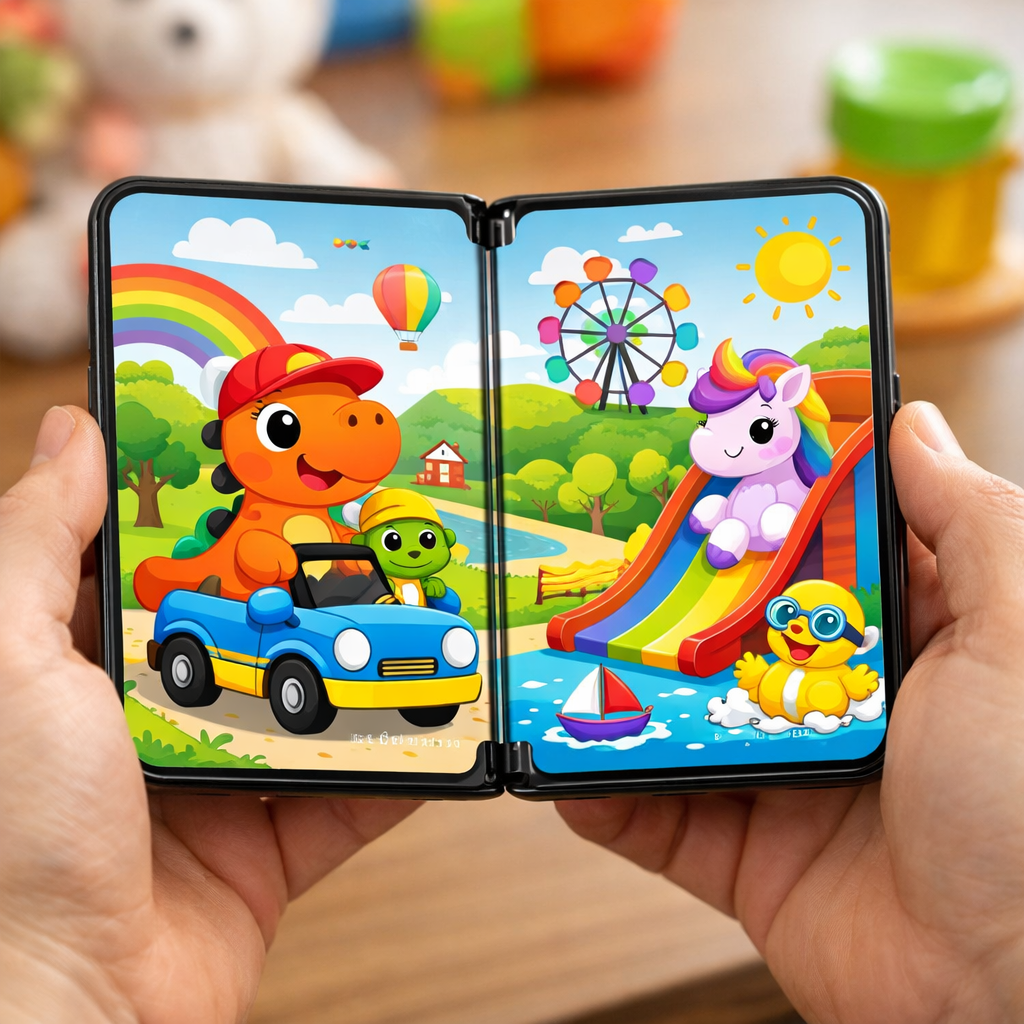
Apple’s iPhone Duo introduces Kid Cue, a feature designed to tackle a problem every parent knows well—getting a child to look at the camera.
What Kid Cue Does
The iPhone Duo’s Kid Cue mode activates an animated Snoopy scene on the outer display when taking photos or recording videos with the Camera app. The animation serves as a visual cue to draw attention from kids (or pets), helping ensure they face the camera at just the right moment.
Using Kid Cue is simple: unfold the Duo with its inner screen facing you, open the Camera app, tap the top-left icon showing the back of the phone, select Kid Cue, watch the Snoopy animation on the outer display, and then take your shot—photo or video like normal.
What Sets the Duo Apart
The iPhone Duo steps into uncharted territory for Apple by challenging the long-standing hierarchy where “Pro” models carry the most capable cameras. Though the Duo costs more than the iPhone 18 Pro, it doesn’t match it in certain image quality metrics, yet Kid Cue adds a kind of creative utility none of the traditional iPhones offer.
While Apple still enables developers to build attention-getting tools via the CameraCaptureAccessory and related APIs, Kid Cue is exclusive to the built-in Camera app and can’t be replicated exactly by third-party apps. Developers can approximate something similar, but without access to Apple’s Snoopy animation or the outer display control, the experience won’t be the same.
Despite some trade-offs in raw camera performance, the iPhone Duo’s photo and video capabilities remain more than adequate for everyday use. What Kid Cue offers is the chance to capture moments—those fleeting instants of looking into the lens—that might otherwise be lost.
This feature could be the clincher for families torn between camera specs and real-world usability. When the subject is a child who won’t hold still, tools like Kid Cue might matter more than megapixels.
Implications and What to Monitor
Kid Cue represents something new: Apple designing hardware and software in tandem to solve practical pain points—not just chasing specs. It raises questions about the future of the lineup now that the “Pro” name doesn’t guarantee the highest camera specs.
How will camera quality evolve in foldables, and will Apple expand Kid Cue-like functionality elsewhere? Can third-party developers push the envelope with outer display animations or attention-capture tricks? Those will be interesting to watch.
For parents weighing what device to pick, the iPhone Duo doesn’t just offer novelty—it offers a concrete solution that could improve photo and video outcomes. If Apple leans more into features like this, the balance may shift away from who can capture the sharpest image to who can capture the most meaningful moment.