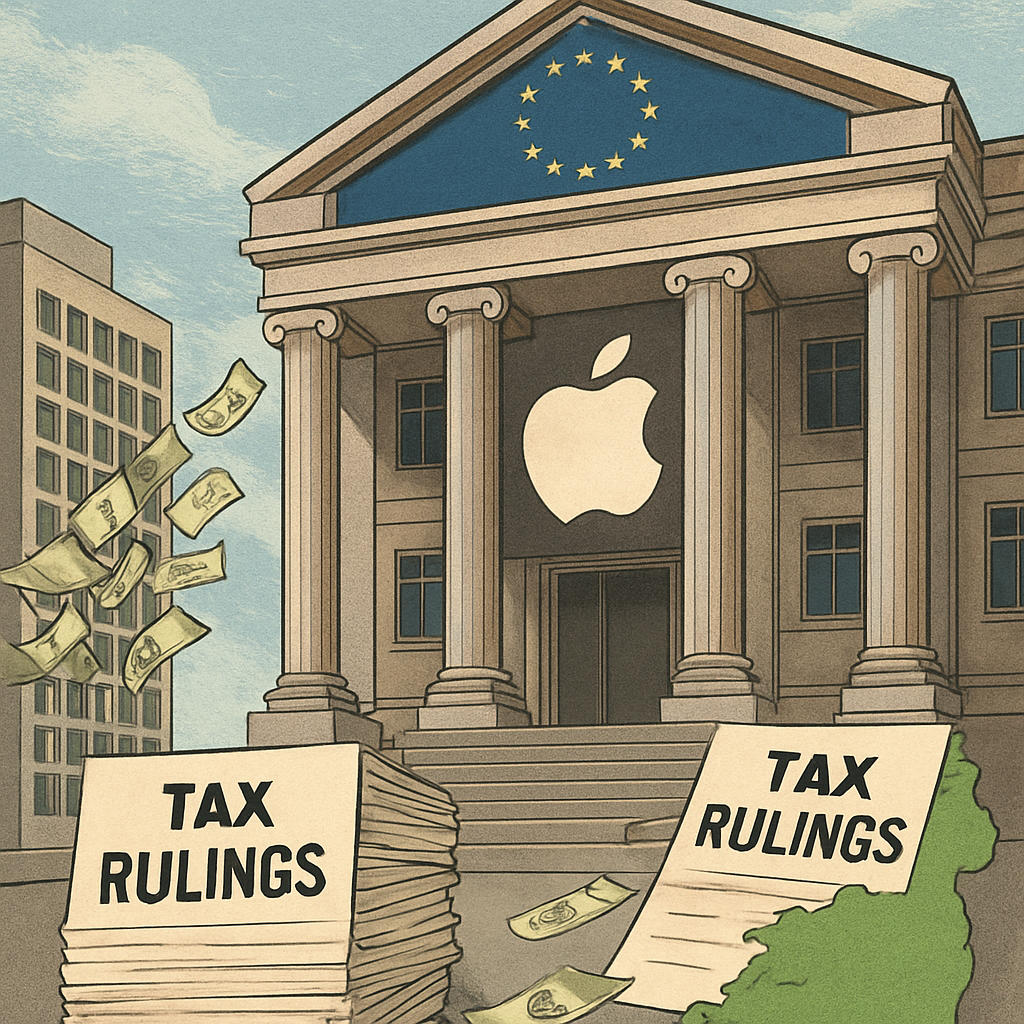
In 2025, Apple handed over approximately $17 billion in taxes to Ireland — accounting for nearly 40% of the company’s global corporate tax bill of $43 billion for the year. This payment reflects conclusion of the long-running legal battles over tax treatment in Ireland that had embroiled Apple in a dispute with the European Union for over a decade.
Earlier rulings by EU authorities determined that Ireland had provided Apple “unlawful aid” through unusually favorable tax arrangements, resulting in corporate tax rates reportedly below 1%. These findings traced back to tax rulings issued in 1991 and 2007, which allowed Apple’s Irish subsidiaries to allocate profits to corporate entities with no formal tax residence.
By 2016, the European Commission ordered Ireland to recover €13.1 billion (about $14.2 billion at the time), plus roughly €1.2 billion in interest, from Apple. Those funds were placed into an escrow fund in 2018 while Apple and Ireland appealed the decision.
In 2020, the EU’s General Court annulled the Commission’s decision, ruling in favor of Apple and Ireland, citing insufficient evidence of a selective advantage under EU State aid rules. However, in September 2024, the European Court of Justice (CJEU) reversed that verdict. It reinstated the original Commission Order and confirmed that Ireland had granted illegal state aid to Apple.
Following that ruling, the full funds in escrow — approximately $15.5 billion (or €14.25 billion) — were transferred to the Irish government in mid-2025. On top of that base, Ireland also received additional tax payments to total about $17 billion from Apple in 2025, reflecting this settlement plus any related adjustments.
Timeline at a Glance
• 1991 & 2007: Ireland issues tax rulings that created generous terms for Apple’s subsidiaries, allowing profits to be attributed to entities lacking tax residence.
• 2013–2014: The European Commission initiates an investigation into these corporate tax rulings.
• August 2016: The Commission rules Ireland granted Apple illegal state aid; orders €13.1 billion in back taxes plus interest.
• 2018: Ireland collects the full amount into escrow amid pending appeals.
• July 2020: The General Court nullifies the Commission’s decision in favor of Apple and Ireland.
• September 2024: The EU’s Court of Justice overturns that ruling, reinstating the original order.
• 2025: The escrowed funds are released to Ireland, and Apple pays around $17 billion in total to Irish tax authorities.
Why This Matters
This isn’t just a company back-paying taxes; it caps one of the most closely watched cases about how multinational corporations pay taxes across jurisdictions. It challenges practices once thought standard for tech giants — using complex cross-border profit allocation, intellectual property licenses, and company domiciles to lower tax bills.
Also, the case underscores the EU’s expanding power to enforce tighter standards on tax arrangements, especially with its State aid rules and recent global tax reforms like the Minimum Tax Directive (Pillar Two).
For Apple, while the figures are substantial, the company has maintained it paid what it believed it owed under Irish and U.S. law. The company’s argument included that many profits were taxed in the U.S. when brought back home.
For Ireland, long known for low taxes as a means to attract multinational firms, this verdict represents a moment of reckoning. It must reconcile its historical tax policies with international rules, all while retaining its appeal to foreign investment.
This milestone signals that using international courts and enforcement tools, governments are increasingly able to bridge gaps in global taxation. The ripple effects could reshape how tech companies structure operations, especially where intellectual property, licensing, and multi-jurisdiction profit allocation are involved. Watch closely: other countries and firms may face similar retroactive adjustments under this or related State aid and international tax frameworks.