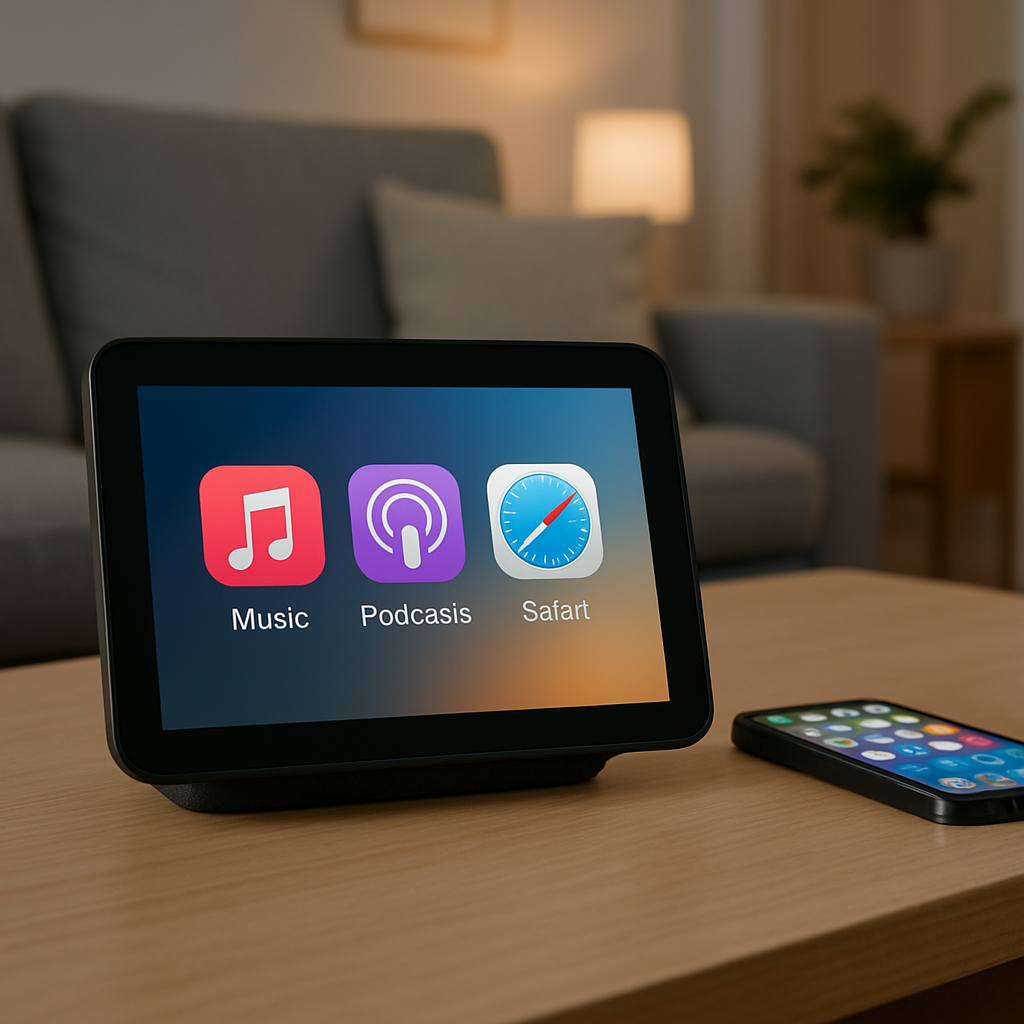
Apple’s upcoming HomeView smart display, priced at $299 with a 7-inch screen, has sparked questions about whether users will be able to install third-party apps. While it will support Apple’s own apps like Music, Podcasts, Safari, Audiobooks, News, and TV, the scope for external developers remains narrow. Only select third-party audio and video apps on an iPhone that are compatible may work on HomeView, rather than allowing full access to all app types.
What Apple has clarified so far
According to the official HomeView announcement, the device is meant to provide a smart home hub experience. It includes features such as smart accessory control, calendar viewing, FaceTime calling, and media playback. Among Apple’s built-in apps confirmed for HomeView are Music, Podcasts, Safari, Audiobooks, Apple Music Classical, News, and TV. Additionally, it will support certain third-party audio and video apps from your iPhone, offering a familiar experience across Apple devices.
The limits: iPhone nearby & existing CarPlay ties
Apple’s press materials introduce a key caveat: for many third-party apps to work on HomeView, a paired and compatible iPhone must be nearby. While the product page mentions that some content requires subscriptions and that app availability may vary by region, the compatibility with iPhone adds a further constraint.
Developers won’t likely need to build fully native HomeView versions of their apps. Instead, existing CarPlay apps are expected to be usable, particularly media apps like Spotify. If a supported CarPlay app is already installed on an iPhone, it may appear automatically on HomeView once the device is set up. Whether non-media CarPlay categories—such as communication or assistant apps—will be supported is still unanswered.
Apple has not yet explained how the iPhone proximity requirement will function in practice, or whether developers will need to take additional steps beyond supporting CarPlay to ensure compatibility with HomeView.
While HomeView promises a polished smart-display experience with both first-party and selected third-party apps, those hoping for wide‐open app support should temper expectations. That said, using CarPlay as the bridge is familiar territory for Apple, offering predictability for developers and users in terms of what will and won’t work initially.
What this means going forward: the initial launch version of HomeView is likely to feel more like a “smart home content extension” of the iPhone and CarPlay rather than a stand-alone app platform. As future firmware updates roll out, Apple may decide to broaden support—but for now, the message is clear: HomeView will offer tight integration with selected media apps via iPhone, not open app installs across all categories. Watch for Apple to detail developer guidelines and compatibility requirements as the device nears release.