Apple’s highly anticipated smart home hub, HomeView, officially landed this week alongside a new Apple TV 4K refresh and the HomePod mini 2. While excitement is high around what Apple is calling its “shared and personal” home screen touchpoint, reactions are mixed on whether HomeView’s innovations justify adding another smart display to a setup that already includes an iPhone, Apple Watch, iPad, or HomePod.
What HomeView Brings to the Table
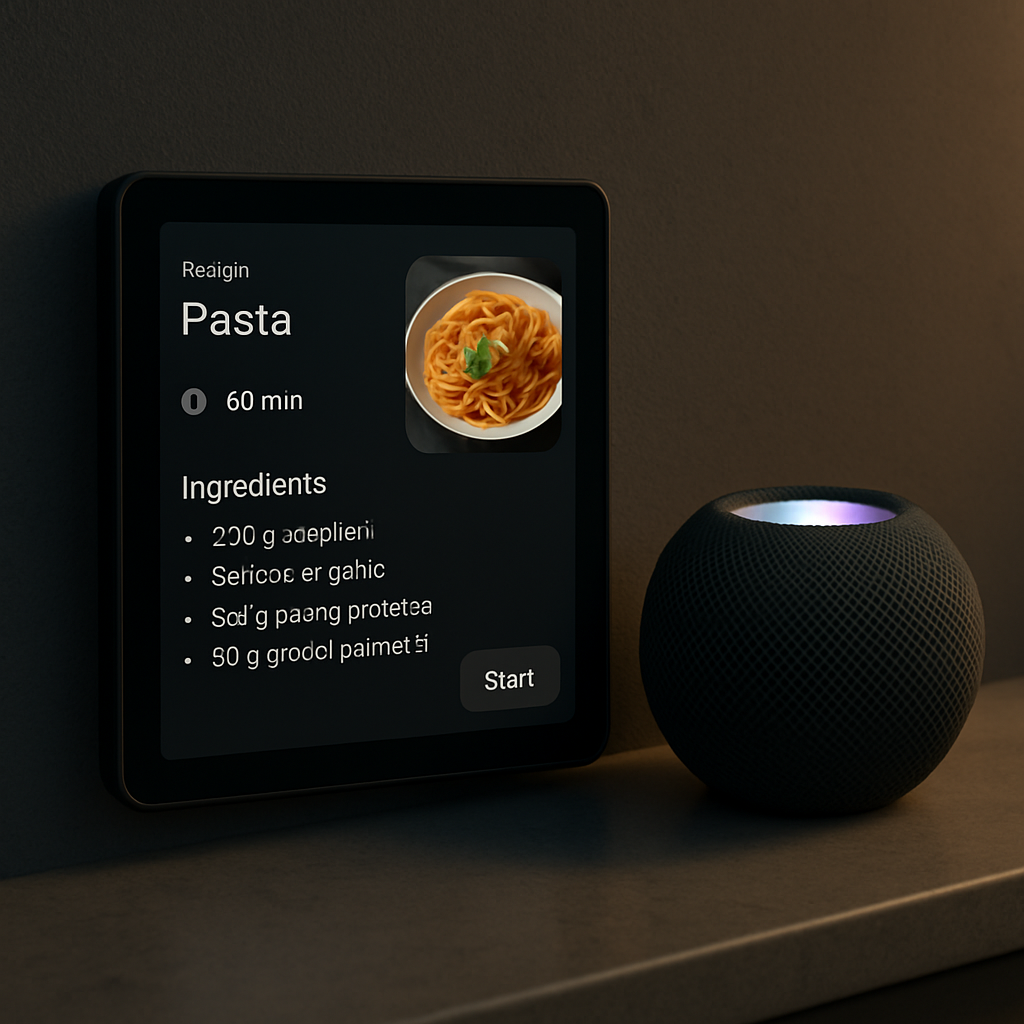
Priced at $299, HomeView features a 7-inch square display and is powered by Siri AI, offering tabs for timers, photographs, music, and smart home controls. Users can expect the interface to readjust based on proximity, dim to a near-black 0.3 nits in dark environments, and serve up guided recipes in the kitchen—complete with voice-handled timers.
One standout is its recognition of up to six users, allowing the display to shift between personalized home screens. Privacy safeguards ensure that sensitive data appears only when a recognized user’s paired device is nearby and recently unlocked. Basic Siri AI commands can be handled by HomeView itself, but more personal requests still require a compatible Apple Intelligence-ready device.
Trade-Offs and Limitations
There’s no App Store on HomeView, so users relying on audio and video services like Spotify or Audible will need to continue streaming from a paired iPhone or iPad through a CarPlay-style mirroring system. Although third-party media support exists, it feels less like native integration and more like a work-around.
For $299, HomeView comes in two forms: the tabletop model with built-in speaker hardware, including a woofer and passive radiators; and a wall-mounted version stripped of those components. Mounts for the wall variant start at $59.95, and notably, the device ships without a power adapter or cable. For users considering installation around the home, total setup costs can climb quickly.
Also unveiled, the HomePod mini 2 upgrades the original’s hardware with an S10 chip, adds a “Sound Glow” lighting ring, and finally delivers support for Siri AI. It keeps the same core speaker design and begins shipping on October 30 at a U.S. price of $149.
The Apple TV 4K deserves attention, too. Priced at $299, the new model brings an A19 chip, on-board microphones, a redesigned Siri Remote (also sold separately for $59), 128 GB of storage, Ethernet, and Thread connectivity. The upgrade caters especially to users who want expanded audio support: the unit can now pair with four HomePods (mini or full-size) to deliver a surround-sound setup, though the full rack cost can stretch north of $1,200.
Apple also introduced its Home Collection accessories—developed in partnership with LG and Schneider Electric. These include devices like a lock that unlocks via Ultra Wideband detection and one-tap setup for streamlined installation. A separate, reportedly in-development robotic home display and camera could add more functionality—but without video recording.
Finally, the OLED MacBook and iPhone Duo rumors resurfaced. The MacBook is expected to arrive later this month with a lighter chassis and touchscreen display, while the foldable iPhone Duo is stirring debate over whether its novel form factor justifies a new device category.
Amid all the upgrades, a common criticism emerges: HomeView’s functions feel incremental for users already heavily invested in Apple’s ecosystem. Why reach for HomeView when your Apple Watch does many of the timer, communication, or media tasks? Its premium begins to look steep when the alternative is using devices you already own.
Why it matters:Apple is attempting to reimagine what a shared household screen looks like—something between an in-home command center and a smart display. With heightened attention to face recognition, privacy, and ambient display design, HomeView stakes a claim in the evolving smart home landscape. Whether it becomes an indispensable part of users’ setups depends largely on price sensitivity and how much value people find in having yet another screen. It’s worth watching how accessory prices, third-party support, and everyday usage play out in real homes.