Hello Robot’s Stretch 4: Pioneering Practical Home Robotics
In the evolving landscape of home robotics, Hello Robot, a Martinez, California-based startup, is making significant strides with its latest innovation, Stretch 4. This fourth-generation home assistance robot is designed to operate effectively in real-world home environments, addressing the challenges that have hindered previous attempts at integrating robots into daily household tasks.
A Pragmatic Approach to Home Robotics
Unlike many Silicon Valley counterparts that aim to create highly complex humanoid robots, Hello Robot focuses on practicality and user-centric design. Founded in 2017 by CEO Aaron Edsinger, a former director of robotics at Google, and CTO Charlie Kemp, a professor at the Georgia Institute of Technology, the company emphasizes deploying robots that can perform useful tasks in actual homes. This approach contrasts with many robotics projects that remain confined to laboratory settings.
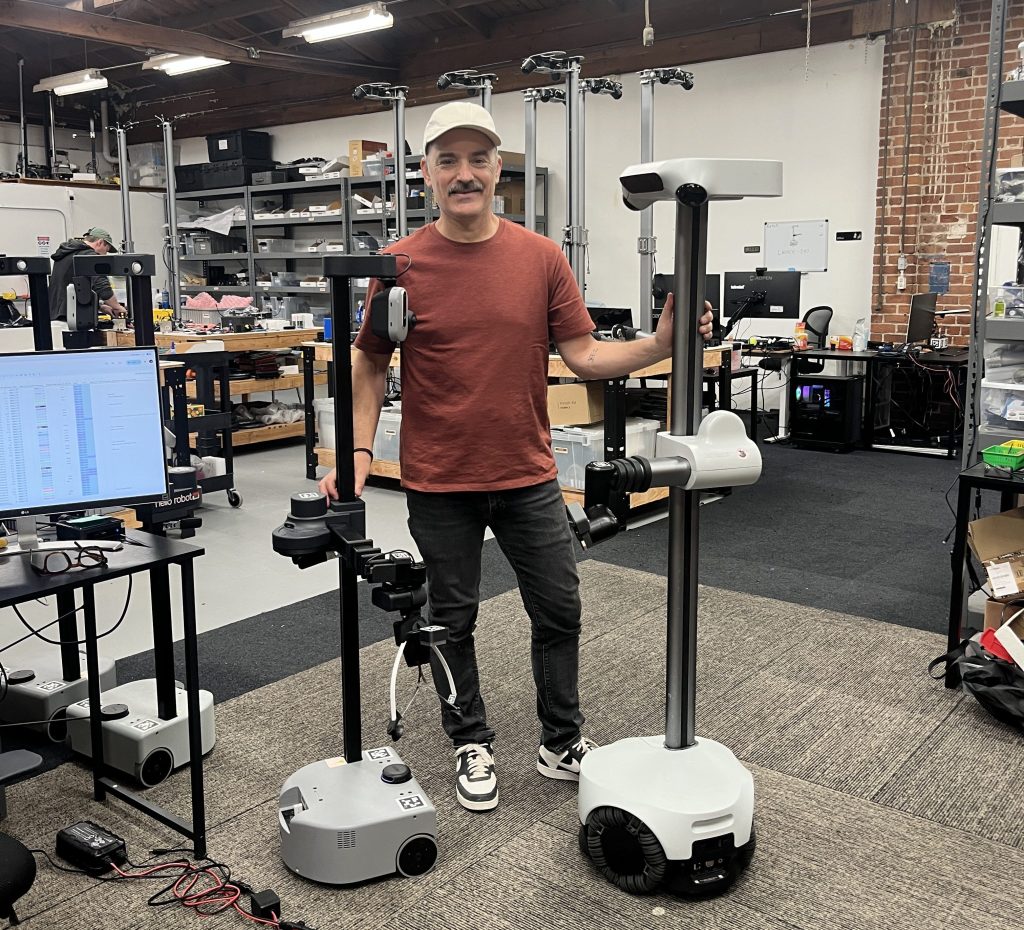
Stretch 4 features a design that balances functionality and simplicity. It comprises a wheeled base for mobility, a telescoping arm equipped with pinchers for manipulation, and a sensor-studded head that provides environmental awareness. This configuration allows Stretch to navigate and interact with household items effectively. An interesting design element is the robot’s eyes, which glow when the battery is low, giving it an expressive, albeit unintentional, angry appearance, as noted by engineer Blaine Matulevich.
Enhancing Independence for Individuals with Mobility Challenges
A compelling application of Stretch 4 is its role in assisting individuals with mobility impairments. Keith Platt, an investor and board member of Hello Robot, became quadriplegic in 2021. Seeking to regain independence, Platt collaborated with Hello Robot to integrate Stretch into his daily life. Using a voice-operated iPhone app, he can command Stretch to perform tasks such as fetching a protein shake—a process that initially took two hours but was refined to just a few minutes.
Platt emphasizes the profound impact of such assistance, stating that regaining the ability to perform simple tasks independently is huge not only for himself but also for his caregivers. This collaboration underscores the potential of home robots to enhance the quality of life for individuals with disabilities.
Prioritizing Safety and User Control
Hello Robot’s design philosophy centers on safety and user control. Stretch 4 operates with limited autonomy, ensuring that users remain in control of the robot’s actions. This approach minimizes risks associated with fully autonomous systems and aligns with the company’s commitment to creating robots that are safe and reliable in home environments.
Addressing the Challenges of Home Robotics
The development of home robots faces significant challenges, particularly in hardware design. Many existing robots are heavy and require substantial energy for operation, making them impractical for home use. Additionally, the potential for robots to cause damage when errors occur is a concern. Hello Robot addresses these issues by focusing on a design that is both functional and safe for household settings.
A Step Towards Practical Home Robotics
Priced at $30,000, Stretch 4 is positioned as an accessible option within the home robotics market. While this price point may still be considered high for the average consumer, it reflects the advanced capabilities and safety features integrated into the robot. Hello Robot plans to manufacture between 200 and 300 units at its Martinez headquarters, with the initial production run already sold out.
The company’s commitment to making Stretch accessible is evident in its design choices. For instance, Stretch is designed to be shippable in a standard cardboard box via common carriers like UPS or DHL, avoiding the need for specialized shipping and installation services that can drive up costs.
The Future of Home Robotics
Hello Robot’s approach represents a significant step forward in the integration of robots into home environments. By focusing on practical applications, user safety, and real-world deployment, the company is addressing many of the challenges that have hindered the adoption of home robots. As the field continues to evolve, innovations like Stretch 4 may pave the way for more widespread acceptance and utilization of robots in daily life.