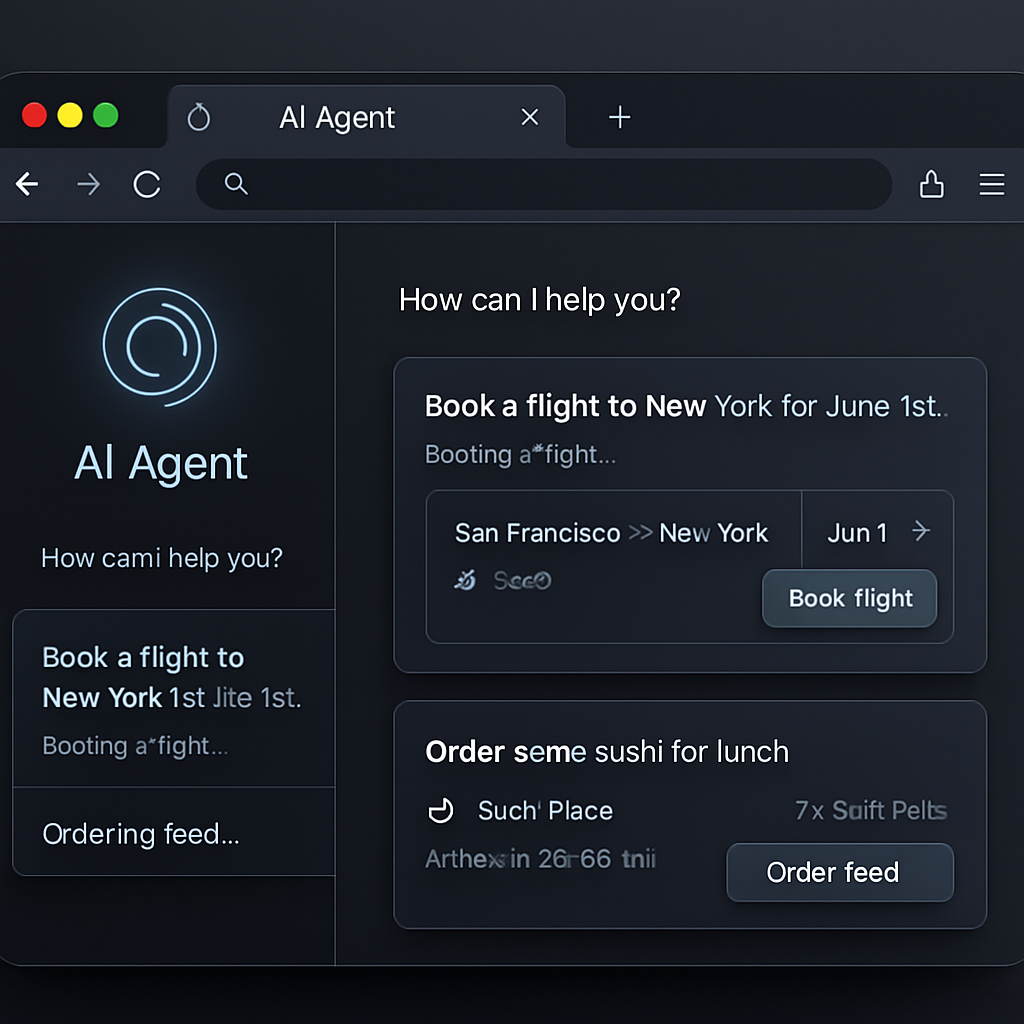
Hark, a startup that secured $700 million in Series A funding in May, has introduced Hark Handoff, an AI agent designed to autonomously perform tasks within web browsers. This development aims to streamline user interactions with websites lacking official APIs, such as Target, Walmart, OpenTable, and LinkedIn.
Handoff operates by analyzing a website’s structure and visual elements to determine necessary actions, including clicking buttons or entering information. This functionality enables it to execute a variety of tasks, from ordering food and booking travel tickets to shopping for essentials and making restaurant reservations. Users can issue commands, and Handoff will navigate the web to complete these tasks efficiently.
In a demonstration video, CEO Brett Adcock showcased Handoff’s capability to assemble a bouquet based on user-specified flowers, even accommodating vague instructions like “some of the florist’s choice.” However, the video only partially displays the process, leaving the full effectiveness of the agent open to further evaluation.
For this release, Hark employs a post-trained model, with plans to transition to a pre-trained model later this year. This strategy is intended to enhance the refinement of their data pipeline, training infrastructure, and techniques. Unlike large language models that predict the next token, Hark’s model anticipates the next action, such as a click or keyboard input at a specific location.
The AI agent landscape is becoming increasingly competitive, with major players like Google, OpenAI, and Anthropic developing similar technologies. Additionally, venture-backed startups such as Browser Use, Polar, Strawberry, and Aside are focusing on browser-based task automation.
Hark asserts that Handoff operates faster and at a lower cost compared to other models like GPT 5.5 and Opus 4.8. The company has initiated a waitlist for its platform, with plans to launch by the end of the summer.
As AI agents like Handoff become more integrated into daily digital interactions, they have the potential to significantly enhance productivity by automating routine tasks. However, the effectiveness and security of these agents will be critical factors in their widespread adoption. Users should remain informed about the capabilities and limitations of such technologies to make the most of their benefits.