Apple’s first folding phone, the iPhone Duo, arrives with a lot of expectations—and I had three core worries during early testing: MagSafe compatibility, software that actually takes advantage of its foldable form, and what the lack of Face ID would mean day to day. After spending time with a production unit, many of my concerns have been eased, even if not completely erased.
MagSafe Support: More Intact Than I Feared
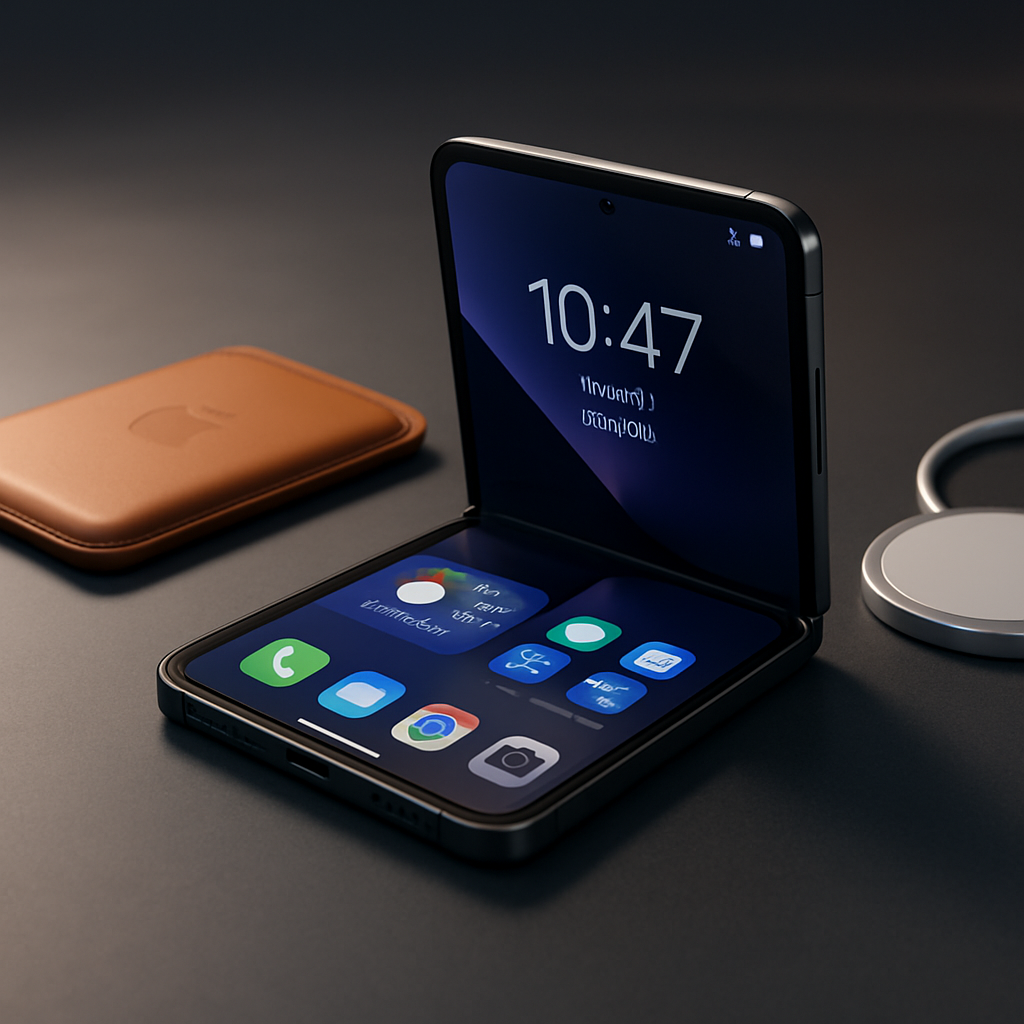
Major rumors ahead of launch had suggested the iPhone Duo might drop MagSafe entirely. Thankfully, that turned out to be false. The Duo still adheres to MagSafe, and in closed mode it works well with existing docks—nothing seems lost when resting the phone chest-high or on existing MagSafe stands. Open the Duo, and things get trickier: its hinge means many flat chargers or accessories no longer conform as cleanly.
What does help is that accessory makers are listening. Slimmer wallets from firms like Moft and ESR are already arriving, designed specifically for the Duo’s more compact body. There are also new battery packs such as BMX’s SolidSafe, which features a built-in stand and display, and manages to deliver 5 kWh capacity over the back, charging wirelessly faster than even the new iPhone Air. So while some old accessories may not fit well, replacements are on the way.
Software: Foldable Features That Feel First-Class
One of my biggest hesitations was that Apple would treat the Duo like an oversized “Pro Max” iPhone—nothing more than bigger screen space with the same UI stretched. But early experience shows a different story. Apple has introduced new StandBy modes with live weather animations, updated calendar views, and a Modular face that all feel made for this format. And whether placed in tent mode, propped upright, or laid flat, the phone adapts: StandBy works in both landscape and portrait, plugged in or not.
Multitasking also impresses. Splitting apps side by side works smoothly, with gestures becoming intuitive very quickly. Animations—especially those around opening and closing the fold—add polish rather than gimmick. Camera features like Dual Display, Smart Take, and Kid Cue are all usable and fun. Not all third-party apps are optimized yet—expect black bars or padding in some—but Apple’s own software sets a high bar, and its ecosystem seems likely to catch up swiftly.
Face ID Goes Missing—Touch ID and Apple Watch Try to Fill the Gap
Face ID is gone. In its place, Apple returned to Touch ID, embedded under the screen. It’s fast when it works, but still inconsistent with certain finger placements. To help bridge that gap, Apple Watch owners can unlock the Duo simply by swiping while wearing a watch that’s already unlocked and smoothed onto the wrist. When it works, it’s seamless; sometimes too much so—there were moments the phone unlocked in a pocket without intent.
On balance, Touch ID plus Watch unlock covers a lot of use cases, but it does feel like a compromise. For those who rely heavily on Face ID—for unlocking in dim light, or with masks, etc.—its absence might sting. I think a return of Face ID should be a priority in a future Duo revision.
The new iPhone Duo checks many of the boxes I thought Apple might miss. MagSafe isn’t perfect but functional, software delivers smart foldable features, and authentication methods do enough to make the lack of Face ID livable. It’s a strong first step, though with imperfections—Touch ID missed swipes, third-party apps aren’t fully optimized, and accessories are still catching up.
For those considering waiting: the Duo already shines in many respects. If you’re an early adopter, its strengths are real and compelling. But for users who prefer refined polish out of the box—or depend heavily on Face ID—it might be worth waiting for next gen when software, ecosystem, and biometric tools are more mature. Either way, Apple nearly solved my biggest concerns—and that’s more than I expected.