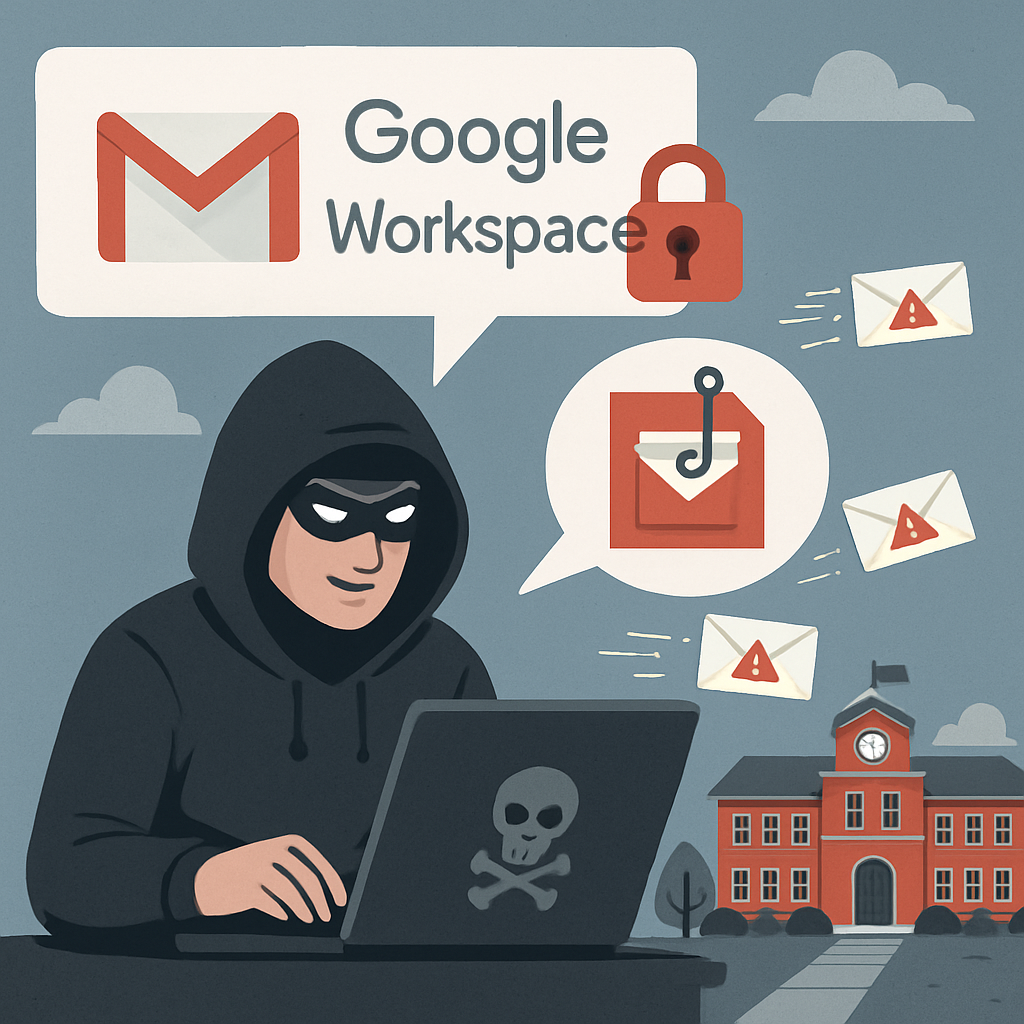
Cybercriminals are increasingly exploiting compromised Google Workspace accounts to distribute phishing and scam emails. By leveraging legitimate organizational domains, these malicious messages often evade traditional email security filters, making them appear trustworthy to recipients.
This tactic is particularly concerning for educational institutions, including schools and colleges. When attackers gain access to a legitimate account within such organizations, they inherit the account’s credibility, mailing habits, and domain reputation. Consequently, recipients are more likely to trust and engage with these deceptive emails, potentially leading to credential theft or financial fraud.
Recent observations have identified over 450 compromised educational domains utilizing Google Workspace for such malicious activities. However, this issue is not confined to the education sector; various organizations are at risk. The common denominator is the misuse of genuine Google Workspace accounts post-compromise, allowing attackers to disseminate deceptive content from recognized and trusted domains.
To mitigate these risks, organizations should implement robust security measures. Enforcing multi-factor authentication (MFA) for all Workspace accounts is crucial. Additionally, administrators should monitor for suspicious activities, such as unusual sending patterns, unfamiliar recipients, and unexpected login locations. Educating users to recognize and report suspicious emails can further bolster defenses against these sophisticated phishing campaigns.
As cyber threats continue to evolve, it’s imperative for organizations to remain vigilant and proactive in safeguarding their digital environments. Regular security audits, user education, and the implementation of advanced threat detection systems are essential steps in combating the misuse of trusted platforms like Google Workspace.