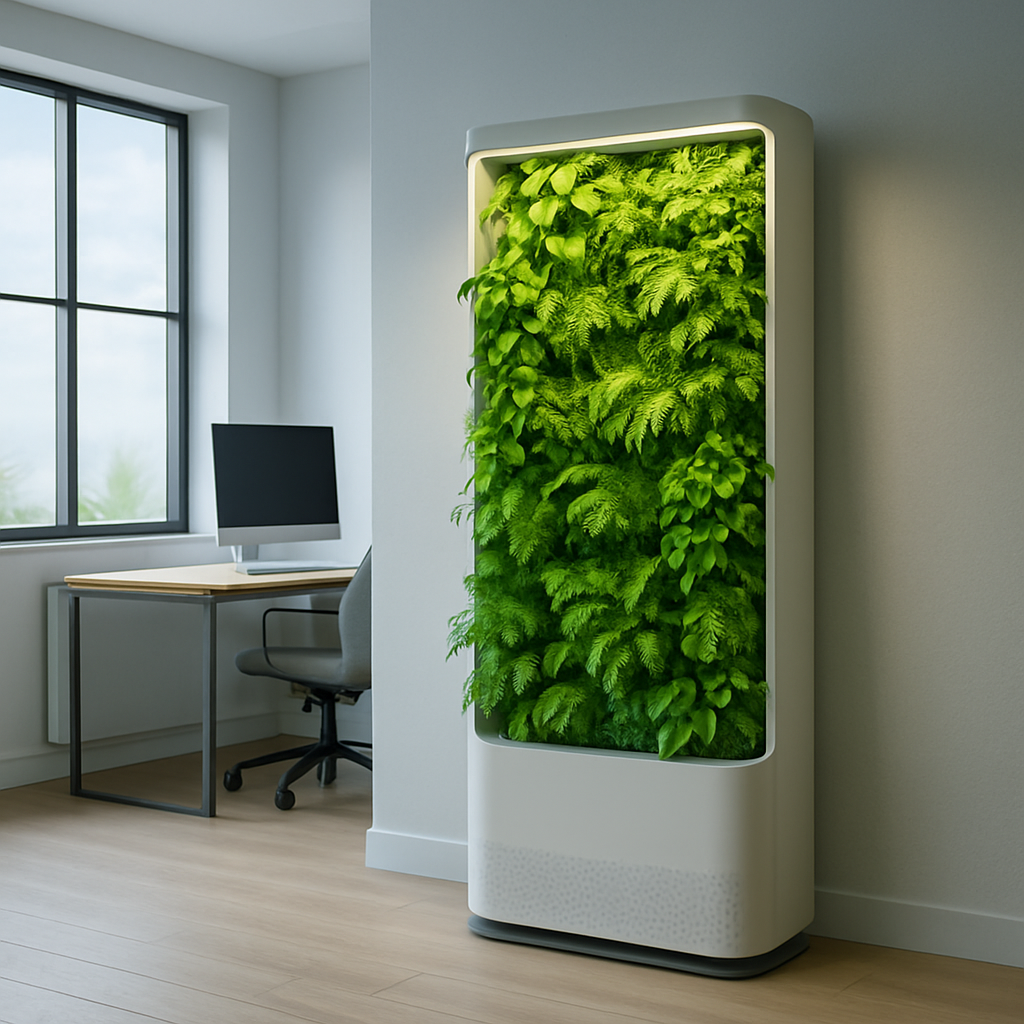
Indoor air might seem harmless in modern offices, but two engineering students discovered otherwise when they experienced absentee health issues from laser cutters, 3D printers, and soldering fumes. These incidents prompted Tanvi Thombre and Lakshya Saraf to cofound Greenairy—a startup designing smart plant towers intended to both beautify workspaces and fight invisible airborne toxins like VOCs (volatile organic compounds) including carbon dioxide, formaldehyde, and benzene.
Why traditional air purifiers aren’t enough
Even high-end air purifiers or HEPA filters excel at removing dust, pollen, and particulates—but they often fall short at handling persistent chemical pollutants. Greenairy’s founders aim to fill that gap by leveraging natural plant processes and microbial activity in a specially engineered vertical tower. Their solution doesn’t rely on filters that need constant replacement nor on devices that risk generating harmful byproducts.
Pilot results: promising reductions
Greenairy recently ran pilot studies in several Singaporean offices, comparing three setups: their plant tower, a medical-grade ionizer, and a conventional HEPA purifier. Using RESET-certified air monitors, the team found that the plant-tower setup achieved the lowest VOC levels while removing them faster than the other devices. Staff feedback also noted the space smelled fresher and felt more natural.
During regular working hours, results were striking: VOC levels—both average daily and during peak times—fell by about half. Founders noted even greater improvement over time, as the living microbes and plants in the towers matured and continuously intercepted incoming pollutants.
Next steps: certification and scaling
Greenairy has secured third-party validation from TÜV SÜD, and plans to publish full results soon. Production is still in its early stages; mass-manufactured pilot towers are expected to roll out in Singapore by the first half of 2027. Meanwhile, the company’s cofounders are divided geographically—one in Berkeley to focus on funding, the other in Singapore overseeing tests—and plan to reunite in Singapore when full operations begin.
This isn’t just about purifying air—it’s about rethinking how built environments manage invisible hazards. As businesses increasingly feel pressure to ensure healthier workspaces—whether for employee well-being or regulatory compliance—solutions like Greenairy’s plant towers could become part of a broader shift toward bio-integrated infrastructure. What to watch: how scalable and cost-effective these towers prove in varied climates, and whether verification studies hold up outside tightly controlled pilot settings.