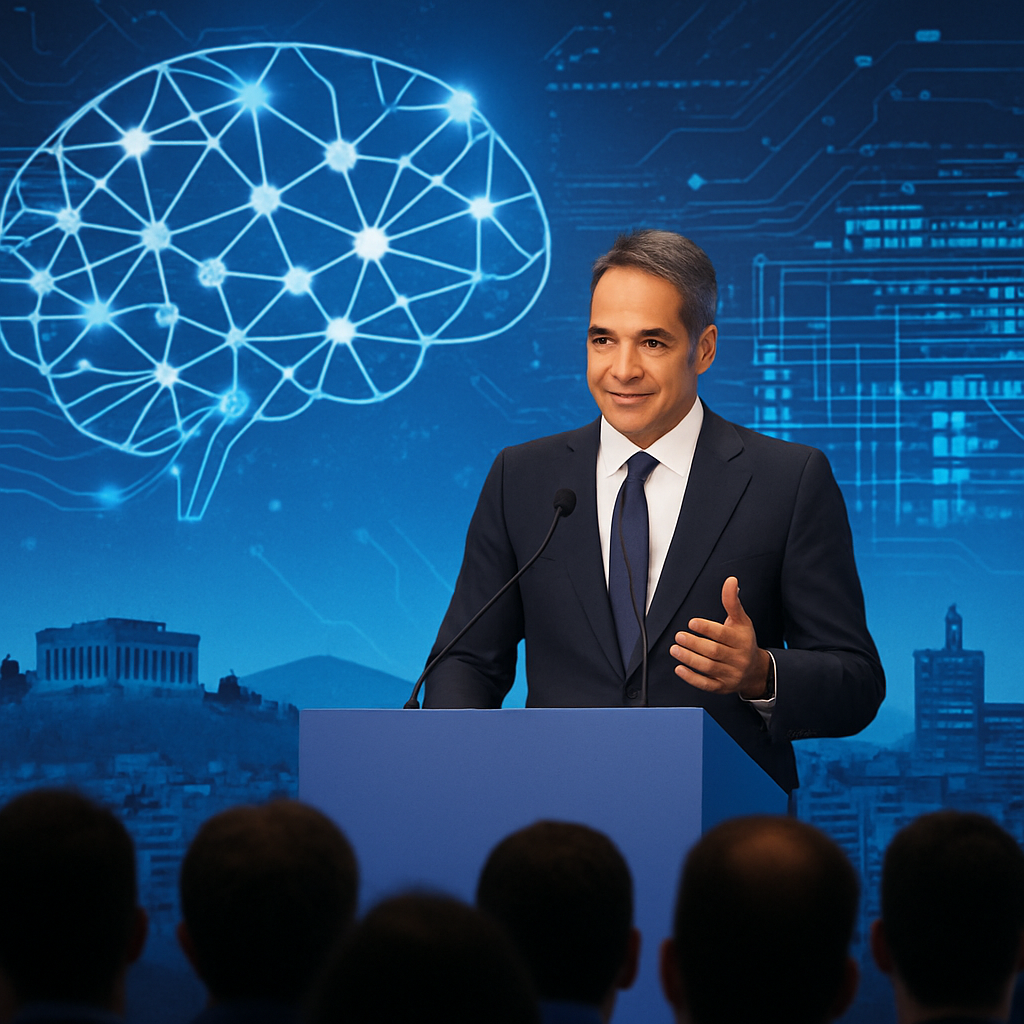
During a recent trip to San Francisco, Greece’s Prime Minister Kyriakos Mitsotakis made an unusual admission on the global stage: when it comes to governing artificial intelligence, he doesn’t have all the answers—or framework—solidified. Speaking at an event hosted by Endeavor Greece, the country’s arm of an entrepreneurship nonprofit, Mitsotakis described his visit as both an opportunity to attract tech investment and to gather insights into AI’s mounting challenges.
Building Greece’s Tech Appeal
Greece is gearing up for a notable change: the country is set to regain “developed market” status from MSCI next year, a shift that could open doors for investors. To bolster that positioning, Mitsotakis is promoting policy reforms. These include altering stock option taxation, easing labor laws, and offering returning Greek tech workers significantly reduced tax rates for up to seven years. Infrastructure investments also feature prominently: Greece channeled a large part of its €36 billion EU post-COVID recovery funds toward digital infrastructure, including a government services portal and a supercomputer from Hewlett Packard Enterprise located in Lavrio, which will power future AI and scientific research.
Facing AI Head On — Or Trying To
Despite the optimism, Mitsotakis was candid about Greece’s uncertainty around AI’s societal effects. The government is preparing a national ban on social media for children under 15 starting next January, citing concerns over addiction and the emotional impact of AI chatbots. He also raised concerns about “digital companions” replacing human relationships—suggesting policy is trying to keep pace with tech that’s rapidly changing how people interact.
In education, Greece has begun pilots with OpenAI to reduce administrative burdens on teachers and is testing personalized AI tutoring. But Mitsotakis emphasized that AI shouldn’t replace learning fundamentals, warning that students are already using chatbots to do assignments—something he says human complacency enables.
On infrastructure, Greece is welcoming data center investment, even as many nations push back due to high resource demands. Microsoft is building a data‐center cluster near Athens, and Amazon Web Services recently struck a deal with the country’s top utility to build what will become Greece’s largest data center in a former coal region.
His message was clear: job displacement due to AI is coming fast, and governments are not yet ready. Mitsotakis supports calls from frontier AI labs that urge caution, especially when even creators admit to gaps in understanding how models evolve. Smart regulation, he said, is inevitable—and though much of the shape of that regulation will be influenced by the United States, Greece is eager to participate in the debate.
What does all this mean? For Mitsotakis, Athens isn’t just a backdrop—it’s symbolic. He invoked the city’s philosophical legacy as a place where deep questions are asked of society, suggesting it could once again become ground zero for discussions around intelligence, humanity, and ethics in tech.
As the AI arms race accelerates—new models, more questions, fewer answers—Greece is openly dealing with uncertainty. Mitsotakis’s stance reflects a broader realization: that technological progress may be outpacing policy, and even leaders must often admit ambiguity. What to watch next will be how fast Greece can not only legislate smart regulation, but also build the institutions to enforce it—and whether its efforts will serve as a model for other nations trying to keep pace with AI’s uncharted future.