Google has introduced a new app called AI Edge Foresight, aiming to take on AI note-takers like Granola with a tool that works entirely on device and fully offline. Built for Mac computers running Apple Silicon, this app leverages Google’s EmbeddingGemma 2 model—featuring 740 million parameters — to capture and summarize meeting content directly on a user’s machine, even when there’s no internet connection. It covers in-person conversations as well as notes across apps.
Seamless Note-Taking with Smart Features
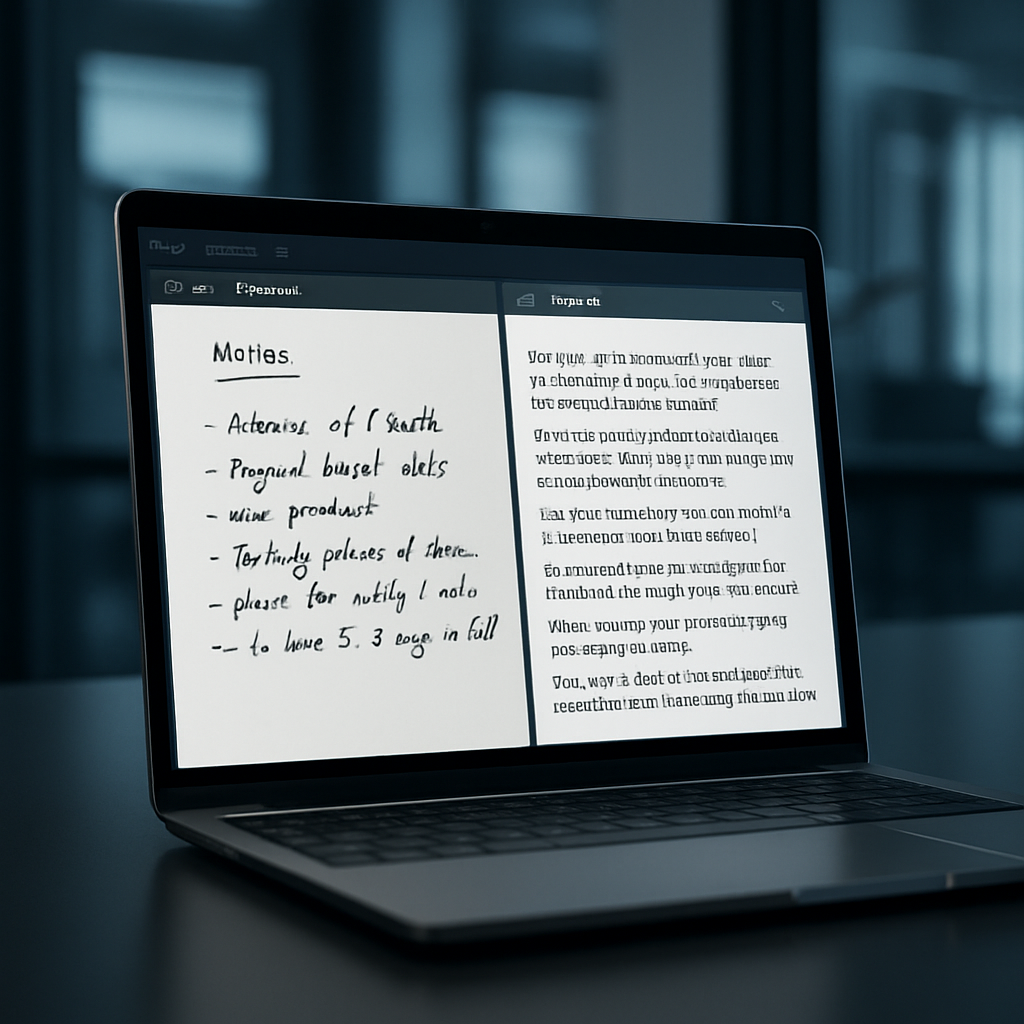
AI Edge Foresight delivers a dual-pane view: one side lets you type shorthand notes manually while the other side auto-generates summaries based on live transcriptions. The transcription feature pulls in a live transcript, and you can also interact with a built-in assistant powered by Gemma 4 to ask follow-up questions. Uploaded files — including PDFs, Google Docs, Microsoft Office formats, Markdown, plain text, and even web bookmarks — can be added to your personal knowledge base. That base can be referenced in real-time when topics come up in meetings.
Google confirms via its FAQ that the app is specifically optimized for Apple Silicon processors and that its offline capability extends to the full experience — transcribing, summarizing, and retrieving relevant information without needing an internet link. That makes it especially useful for travel or remote settings where connectivity may be limited.
Where This Fits in the Landscape
This is Google’s follow-up to an earlier experimental dictation app released in April, also focused on local-model processing. While that earlier app never moved into mainstream distribution, AI Edge Foresight appears positioned more directly at end users looking for productivity tools that protect privacy and reduce dependence on cloud services.
The meeting note-taker space has rapidly become crowded. Recent entries include Wispr, which added note-taking features, scheduling platform Calendly stepping into similar territory, and a shuffle in the sector as Superhuman acquired YC-backed note-taker Fathom.
Platforms like Granola are known for combining shorthand notes with live transcriptions and AI summaries. Google’s edition mirrors many of those features, but its offline model execution and integration with a knowledge base may prove decisive. Users get both the flexibility of manual input and the insight of AI-driven support.
Why It Matters:As awareness grows around data privacy and latency, more users want tools that don’t rely on cloud processing. By pushing a local-first note-taking app, Google signals that offline, AI-powered work is moving from experimental fringe into mainstream tools. What to watch: whether users accept the trade-offs of device-bound models, and if cloud-augmented features remain a competitive edge over local-only apps. For Google, success hinges on balancing performance, model size, and accuracy — especially when up against cloud giants.