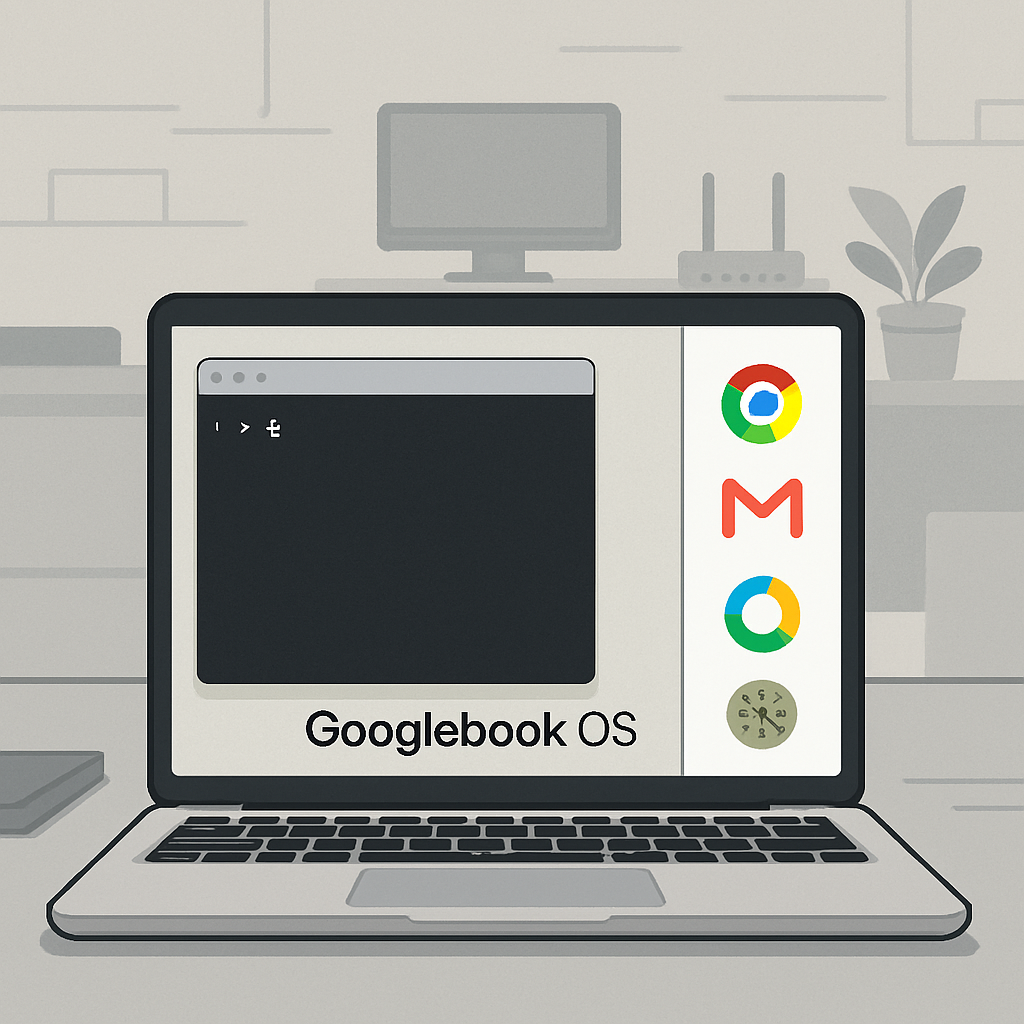
Googlebook’s Linux support is getting some overdue attention. While the device currently allows access to the Linux terminal, users hoping to run GUI Linux apps directly from the launcher haven’t had that experience yet. The company admits this is a limitation and is working toward fuller integration.
The Linux Terminal on Googlebook has never been designed for full desktop-style usability the way ChromeOS has handled Linux apps on Chromebooks. Even when Linux apps are installed, they appear alongside Android and web apps without the smoother, integrated user interface users expect. This has long been a point of contention for those looking to make Googlebook a more capable productivity machine beyond Android and web-based workflows.
What’s in the Pipeline
Google has outlined several upcoming improvements. The plan includes adding GUI Linux apps to the launcher so they fit naturally alongside native web and Android apps. There’s also work underway on hardware acceleration via GPU/NPU to handle heavier workloads, which would help make Linux-based tools feel more fluid. On the virtualization side, dynamic allocation of memory and storage is coming, plus improvements for long-running tasks through VM persistence.
Other features targeted at developers and power users include USB support for debugging (ADB over USB), network passthrough, and wireless ADB. The goal is to give the Linux VM environment enough flexibility to feel powerful without compromising security — for instance, private files remain isolated unless the user opts in.
Why It Matters
For now, Google is focused on AI workflows — command-line tools, scripting, agentic development — and less on general desktop Linux usage. The terminal is promoted as a starting point for building with AI, not as a full Linux desktop replacement. That said, the addition of GUI support and other enhancements suggest a shift toward enabling more traditional Linux productivity over time.
There’s no solid release date for these upcoming features. GUI app support integration into the launcher is still in development, and hardware-level upgrades are being prepared but not yet deployed. Google has reiterated that the near-term focus remains on refining the OS’s AI capabilities, particularly around command-line interactions and developer tools.
What this means: Googlebook is evolving from a web-and-Android-first device into a more capable workhorse for developers and tech-savvy users. Expect the upcoming updates — GUI Linux apps, better hardware acceleration, and enhanced VM tools — to redefine what people expect from this new platform. Observers should watch for beta release signals and performance benchmarks to see if Googlebook can match ChromeOS’s Linux usability without losing the simplicity of its Android-based design.