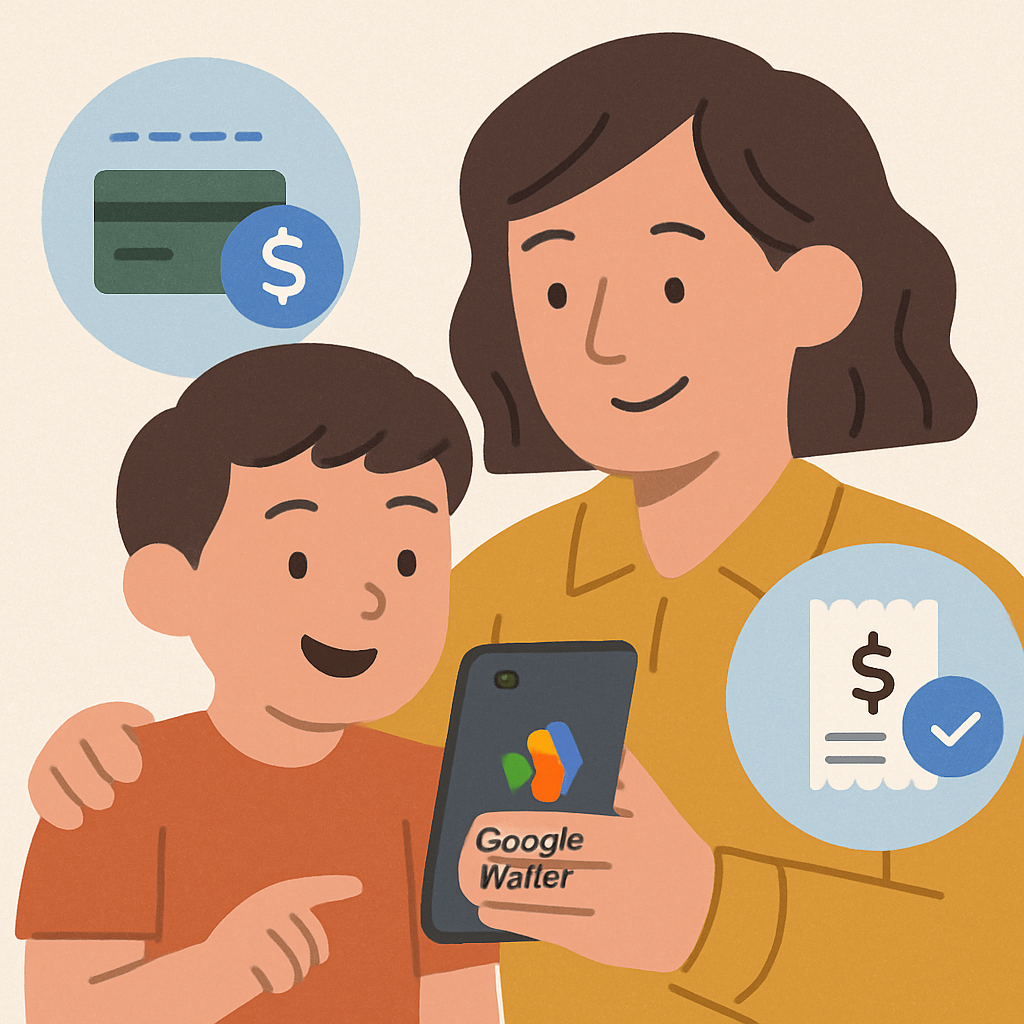
Google has unveiled a new feature in Google Wallet that enables parents to establish secure balances for their children under 18. This initiative aims to foster healthy financial habits among young users while providing parents with comprehensive oversight of their children’s spending activities.
With this update, parents can set daily spending limits, monitor transaction histories, and receive notifications for each purchase their child makes. Additionally, they have the capability to lock or unlock the account if the child’s device is lost or to implement a temporary “spending timeout” to pause expenditures at any time.
This enhancement aligns Google Wallet more closely with other financial tools like Apple Cash Family, which allows parents to send money to their children while managing spending controls and monitoring transactions. It also positions Google competitively against startups such as FamZoo and Greenlight, which offer prepaid debit card systems designed to teach children financial literacy.
Children can utilize their Android or Wear OS devices to make tap-and-pay transactions wherever Google Pay is accepted. This feature provides a means for kids to manage their own money without the necessity of a traditional bank account.
The rollout of this feature is currently limited to the United States, with no confirmed plans for expansion to other regions at this time.
This development builds upon Google’s previous announcement that allowed parents and guardians in select countries to enable their children to use digital payments on Android devices under parental supervision. In that update, a payment card could only be added with parental consent, and parents would receive an email notification for each transaction their child made. Additionally, children gained the ability to use Google Wallet to access supported passes, such as event tickets, library cards, and gift cards.
By integrating these parental control features, Google Wallet is enhancing its appeal to families seeking secure and manageable digital payment solutions for their children. This move not only promotes financial literacy among young users but also provides parents with the tools necessary to oversee and guide their children’s spending habits effectively.