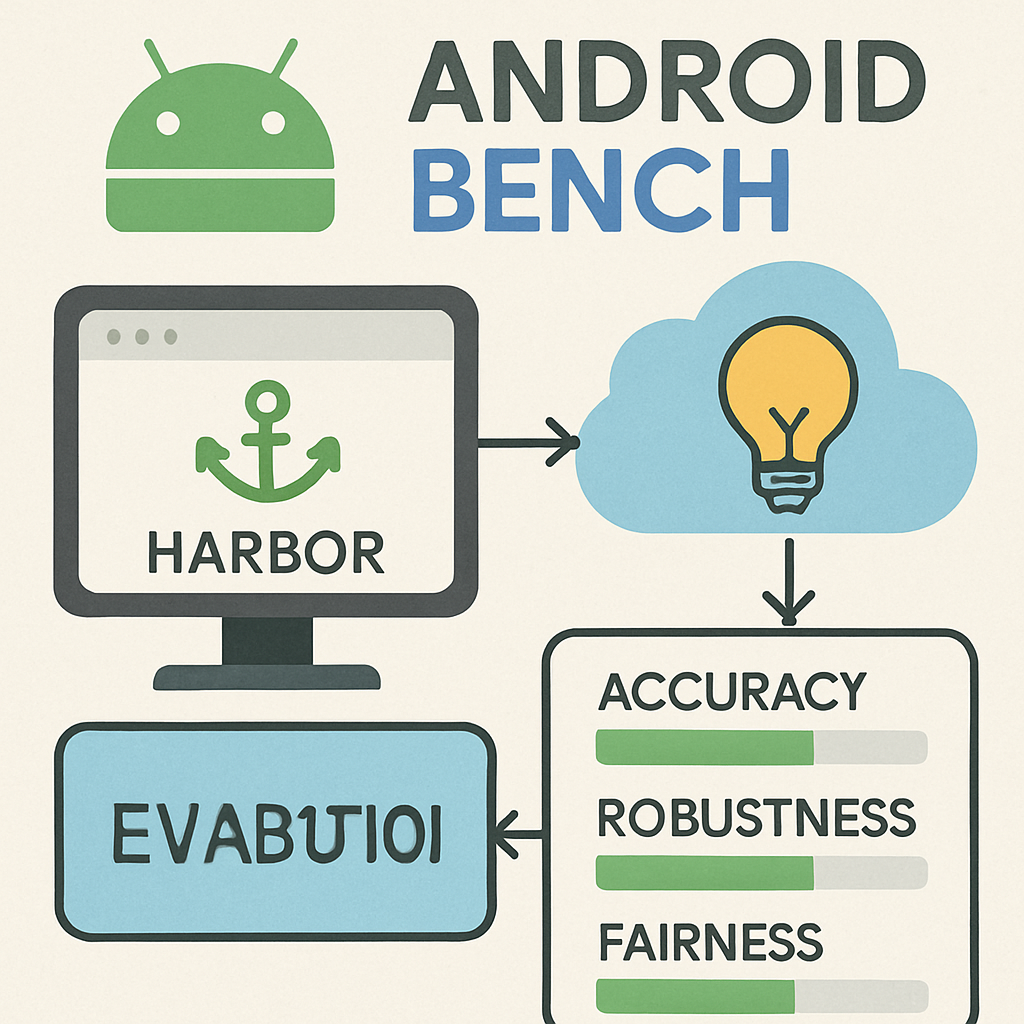
Google has announced significant changes to its Android Bench testing methodology, aiming to provide a more standardized and collaborative approach for evaluating AI models in Android development. The company is transitioning from its proprietary mini-swe-agent v1 benchmark tool to the widely recognized Harbor framework. This shift is intended to offer developers a consistent and transparent means of assessing AI models tailored to their specific use cases.
In addition to adopting the Harbor framework, Google is inviting the Android developer community to actively participate in shaping the Android Bench. Developers can now submit Android development tasks, which will be utilized to evaluate how various AI models handle real-world scenarios. This collaborative effort is designed to enhance the relevance and accuracy of the benchmarking process, ensuring it aligns closely with the practical needs of developers.
Reflecting these methodological updates, Google has refreshed the Android Bench rankings. The latest evaluations place Claude Fable 5 at the forefront, achieving a score of 84.5. This positions it ahead of GPT-5.5, which scored 80.2, and Claude Sonnet 5, which received a score of 76.2. These rankings are based on the models’ performance in Android coding tasks, with considerations for factors such as latency and cost.
For instance, Claude Fable 5 not only leads in performance but also demonstrates efficiency with an average latency of 8.0 milliseconds and an average cost of $133.2. In comparison, GPT-5.5 has a higher average latency of 15.7 milliseconds and a slightly increased average cost of $138.3. These metrics provide developers with a comprehensive understanding of each model’s capabilities and resource requirements.
By integrating the Harbor framework and fostering community involvement, Google aims to create a more dynamic and responsive benchmarking system. This approach ensures that the Android Bench remains a valuable resource for developers seeking to leverage AI models effectively in their projects.
These developments underscore Google’s commitment to enhancing the tools and resources available to the Android developer community. By standardizing benchmarking practices and encouraging collaborative input, Google is facilitating a more informed and efficient development process. Developers are encouraged to engage with the updated Android Bench to better understand and select AI models that align with their specific project requirements.