Google’s Universal Cart: Revolutionizing Online Shopping with Seamless Integration
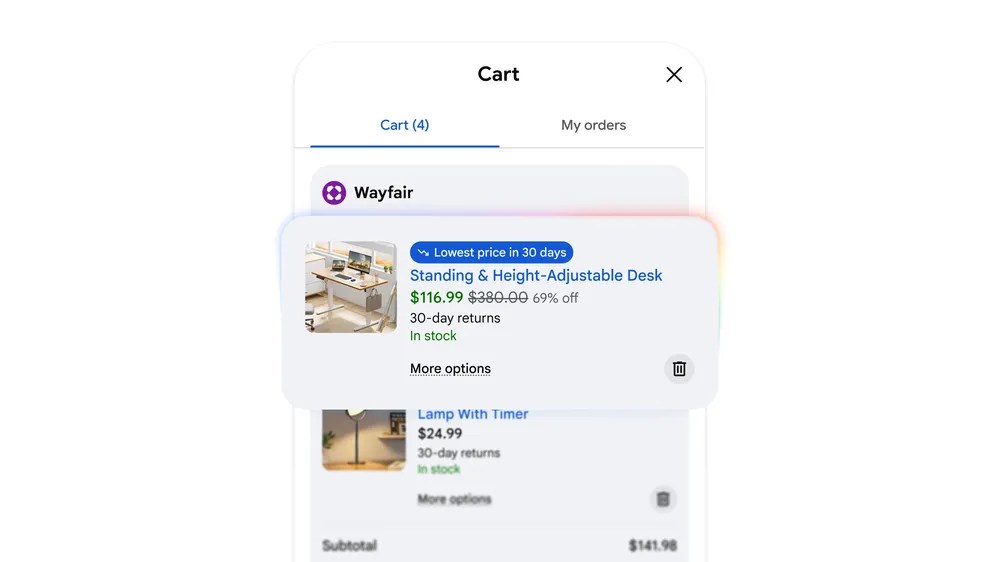
At the recent Google I/O conference, the tech giant unveiled Universal Cart, a centralized platform designed to streamline the online shopping experience by integrating various Google services. This innovative feature allows users to add products to a single cart while browsing through Google Search, interacting with the Gemini chatbot, watching videos on YouTube, or reading emails in Gmail.
Key Features of Universal Cart:
– Comprehensive Product Tracking: Once items are added, Universal Cart monitors deals, tracks price fluctuations, provides price history insights, and notifies users when products are back in stock.
– AI-Powered Decision Support: Leveraging artificial intelligence, Universal Cart assists users in making informed purchasing decisions. For instance, when assembling a custom PC, the system can identify compatibility issues between selected components and suggest suitable alternatives.
– Enhanced Savings Opportunities: Integrated with Google Wallet, Universal Cart can uncover hidden savings and optimize the use of reward points, benefiting frequent travelers and deal seekers.
The introduction of Universal Cart reflects Google’s strategic move to transform its AI assistants from passive recommendation tools into active participants in the e-commerce landscape. By offering a centralized shopping hub and developing infrastructure that enables software agents to autonomously complete purchases, Google aims to oversee a more significant portion of the consumer shopping journey and strengthen its relationships with merchants.
Integration with Universal Commerce Protocol (UCP):
Universal Cart is built upon Google’s open-standard Universal Commerce Protocol (UCP), facilitating seamless transactions with participating merchants. Users have the option to complete purchases directly through Google or transfer their cart to the merchant’s website to finalize the transaction. Initially launched in the United States, Universal Cart is set to expand to the Gemini app this summer, with subsequent integration into YouTube and Gmail. Plans are also in place to extend UCP to additional categories, such as hotel bookings and local food delivery services, and to roll out the service in Canada, Australia, and the United Kingdom in the near future.
Agent Payments Protocol (AP2):
In addition to Universal Cart, Google introduced updates to its Agent Payments Protocol (AP2), a system designed to allow AI agents to securely make payments on behalf of users within predefined parameters. Users can set specific conditions, including preferred brands, product types, and spending limits. When these criteria are met, the AI agent can autonomously complete the purchase. This protocol establishes a transparent and verifiable connection between the user, merchant, and payment processor, ensuring data encryption and maintaining a tamper-proof digital record for reference in cases of returns or disputes.
The integration of AP2 into Google’s suite of products is anticipated in the coming months, granting the company deeper insights into consumer behavior, from product discovery to final purchase decisions. This development is poised to have a significant impact on the commerce industry, with retailers and payment processors closely monitoring the implications of Google’s expanded role in the online shopping ecosystem.