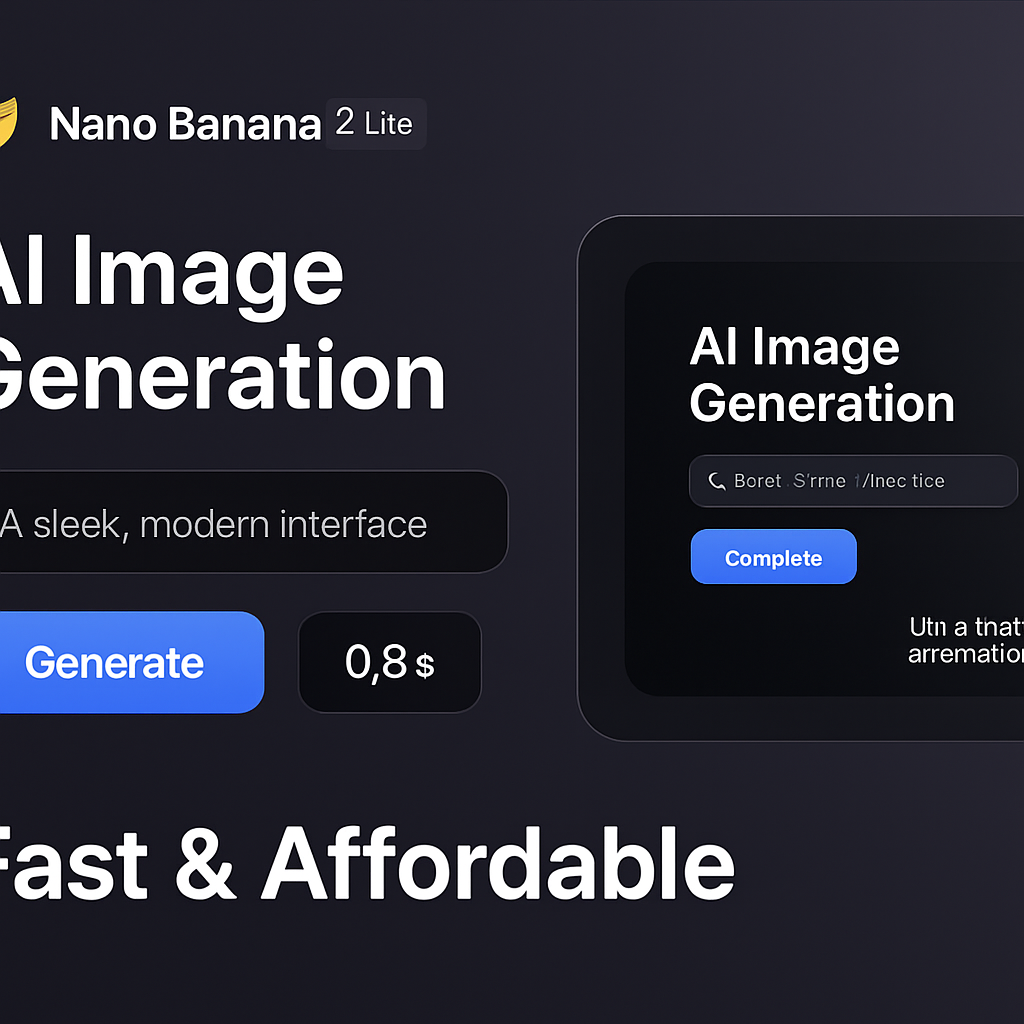
Google has introduced Nano Banana 2 Lite, the latest iteration of its AI-driven image generation model. This new version is designed to deliver images more rapidly and at a reduced cost compared to its predecessors.
With a latency of just four seconds per image, Nano Banana 2 Lite is tailored for users requiring swift image production. The cost efficiency is notable, priced at $0.034 per 1,000 images, making it an attractive option for large-scale content creation.
This release follows the earlier launches of Nano Banana and Nano Banana 2. The original Nano Banana, powered by Gemini 3.1 Flash, debuted last summer, while Nano Banana 2 was introduced in February, offering enhanced realism in image generation. Additionally, Google provides Nano Banana Pro, a more advanced and costly model aimed at specialized applications.
Google positions Nano Banana 2 Lite as optimized for high-volume, rapid workflows, distinguishing it from the more general-purpose Nano Banana 2. The company has made Nano Banana 2 Lite accessible through Google AI Studio, the Gemini API, and the Gemini Enterprise Agent Platform, effectively replacing the original Nano Banana model.
In conjunction with this launch, Google has expanded the availability of Gemini Omni Flash, initially presented at Google I/O earlier this year. Priced at $0.10 per second of video output, Gemini Omni Flash complements Nano Banana 2 Lite by enabling developers to create comprehensive multimedia experiences that integrate rapid image generation with video creation and editing.
Despite ongoing debates surrounding AI-generated content, Google continues to invest in tools that streamline the creation of images and videos. The introduction of Nano Banana 2 Lite underscores the company’s commitment to providing efficient and cost-effective solutions for content creators.
As AI-generated media becomes increasingly prevalent, tools like Nano Banana 2 Lite are poised to play a significant role in content production. Their ability to produce high-quality images swiftly and affordably could revolutionize workflows for marketers, designers, and developers. However, the broader implications of AI-generated content on creative industries remain a topic of active discussion.