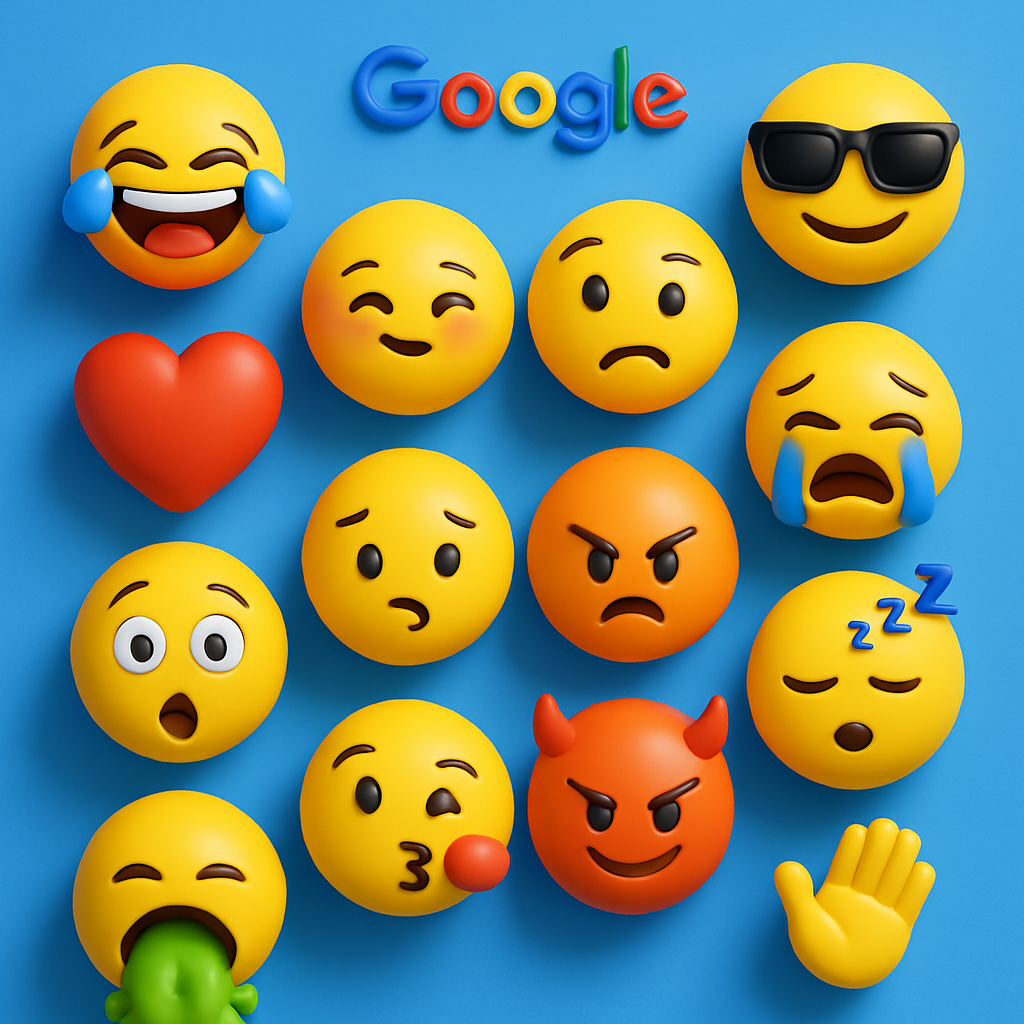
In celebration of World Emoji Day, Google has provided an in-depth look into the design process behind its new 3D Noto Emoji set, which will debut with Android 17. This comprehensive redesign encompasses all 3,977 emoji characters, transitioning them from their traditional 2D forms to more dynamic three-dimensional representations.
Historically, Google’s emoji designs have prioritized expressive qualities over hyper-realistic depictions. With the shift to 3D, the company aims to add depth and dimension without sacrificing the playful essence that users have come to appreciate. The design team emphasized the importance of infusing each emoji with character and vitality, steering clear of overly precise, lifeless models. For instance, while a real kangaroo might appear intimidating up close, Google’s rendition seeks to capture its playful spirit rather than anatomical accuracy.
To ensure these changes resonate with users, Google conducted extensive user studies to assess the impact of the new designs on digital communication. Key findings from these studies include a strong preference for full-body animal representations over disembodied heads, a consensus that adding props can hinder comprehension, and an understanding that even minor alterations—such as changing the direction of a wink—can lead to misinterpretations or unintended reactions.
The transformation from 2D to 3D required the design team to address several conceptual challenges. Questions arose about the unseen aspects of familiar emojis: What does the reverse side of a smiley face look like? Is it a hollow mask, a solid sphere, or a flat surface? These considerations were crucial in maintaining consistency and coherence across the emoji set.
Color contrast also played a significant role in the redesign. The team recognized that emojis with darker skin tones could become less visible in dark mode settings. To tackle this, Google developed an AI-powered contrast tool that analyzes each emoji at the pixel level, identifies instances of low contrast, and suggests adjustments to enhance visibility. This proactive approach ensures that the emojis remain clear and accessible across various display modes.
The new 3D Noto Emoji set is slated to launch on Pixel devices later this year, with plans to extend availability to all Google products subsequently. In line with Google’s commitment to open-source initiatives, all characters will be accessible as 3D models in .OBJ file format, allowing developers and designers to integrate them into their projects seamlessly.
This evolution in emoji design reflects Google’s dedication to enhancing digital communication by making it more expressive and inclusive. By addressing both aesthetic and functional aspects, the company aims to provide users with a richer and more engaging messaging experience. As these 3D emojis roll out, it will be interesting to observe how they influence user interactions and whether they set a new standard for emoji design across platforms.