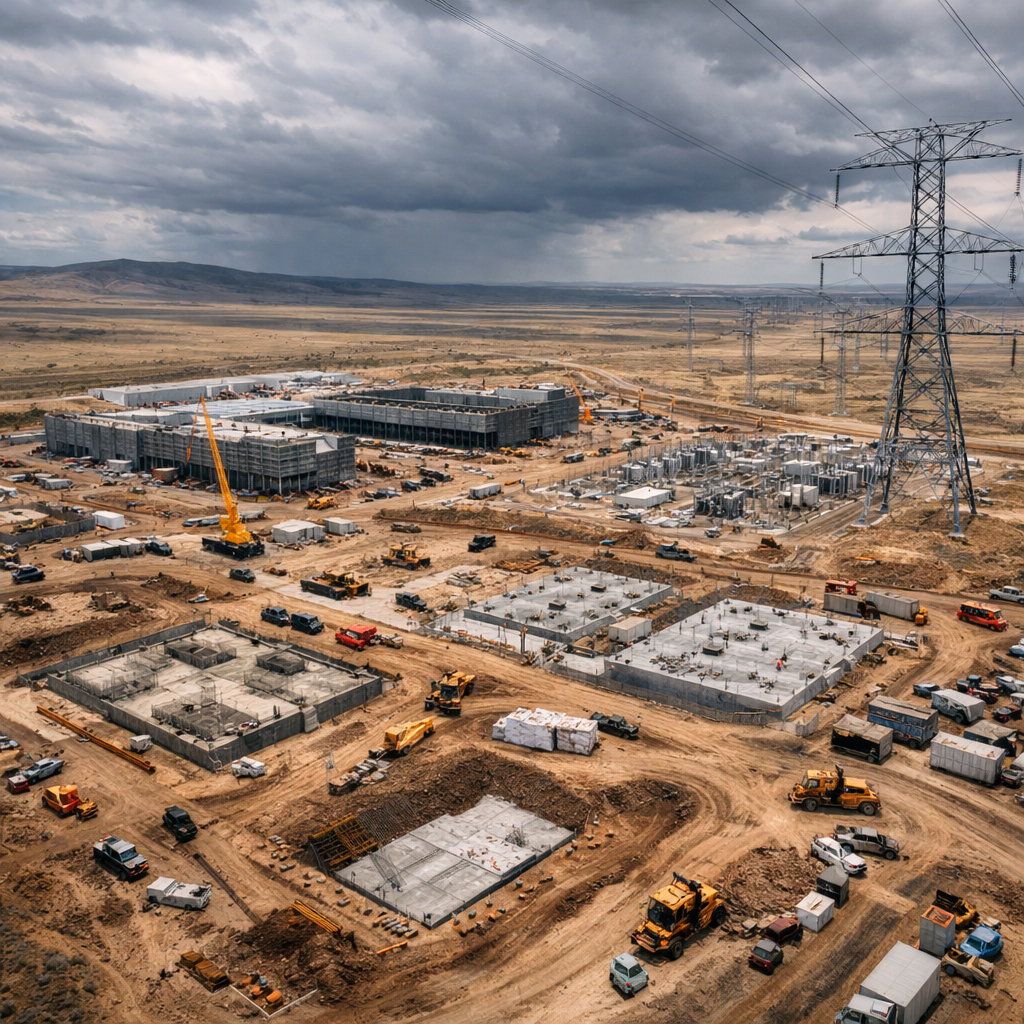
Denver-based data center company Crusoe recently sold its unfinished data center project in southeast Wyoming to Google, following concerns from the tech giant about escalating costs and delays under Crusoe’s management. The deal brings a troubled campus into Google’s portfolio as it seeks to secure capacity for its AI operations and cloud infrastructure.
What Happened in Wyoming
Crusoe, valued at roughly $30.9 billion, transferred ownership of the Wyoming project after Google expressed worry about its cost structure and the speed of its progress. The original plan, announced last year by Crusoe together with Tallgrass—an infrastructure firm backed by Blackstone—was to build out the facility to a full 10 gigawatts of power capacity. The terms of Google’s payment for the unfinished site have not been disclosed in public records.
Once under Google’s wing, the company affirmed it will invest $17 billion to finish building out the data center campus. Despite this major shift, Crusoe hasn’t exited its partnership entirely: it’s still working with Google on a separate data center near Amarillo, Texas. That project signals an ongoing role for Crusoe in Google’s broader infrastructure ambitions.
What This Means for Crusoe and the Data Center Business
The Wyoming deal sheds light on the challenges that independent developers face in bringing hyperscale data center projects to completion. Securing reliable power supplies, managing construction costs, and meeting aggressive timelines are increasingly tough, especially with pressure from communities and regulatory bodies adding more complexity.
For Crusoe, which got its start in cryptocurrency mining—using otherwise flared natural gas for processing power—the company has diversified significantly. It leases data center space for customers who supply their own GPUs, offers its own compute capacity for AI inference workloads, and rents out servers. Its projects include massive campuses in places like Abilene, Texas, for Oracle and OpenAI, as well as a 900-megawatt site next door for Microsoft slated to come online mid-2027. Meta also counts among its clients, and it recently landed a multi-year, multi-billion-dollar cloud deal with trading firm Jane Street.
In September, despite the setback in Wyoming, Crusoe closed a $3.9 billion funding round—an affirmation of investor confidence. The round was accompanied by the addition of board members including JB Straubel, founder of Redwood Materials and a Tesla board member, who has also done business with Crusoe in energy storage.
Why Google Stepped In
Google was initially expected to be a customer for the Wyoming facility but ultimately raised concerns about its viability under Crusoe’s management. Rather than abandon the project, Google chose to assume control, signaling urgency in securing reliable infrastructure to meet rising demand for cloud and AI services. This mirrors broader trends in the industry, where major cloud providers are increasingly opting to internalize these asset-heavy operations rather than risk delays via third-party developers.
The deal also highlights how even well-capitalized, high-profile developers run into obstacles when attempting massive infrastructure builds. Regulatory approvals, community pushback, equipment shortages, and power supply issues remain persistent risk factors, particularly for projects in remote or less-developed regions.
Adding to its stability, Crusoe still has solid momentum: beyond its collaborations with Google, Oracle, OpenAI, Microsoft, and Meta, the company plans over its Texas sites to deliver output for customers and AI companies under earnest timelines. Investors seem reassured, given its successful fundraise and board expansion.
This transaction is more than a property sale—it’s a vivid case study in how the future of AI data infrastructure is being reshaped. As demand continues to surge, cloud titans like Google may take on more direct control of facilities or enter earlier into ownership, especially when independent developers face cost overruns or delays.