Google Unveils Vibrant Gradient Icons Across Workspace Apps
Google has initiated a comprehensive redesign of its Workspace application icons, introducing a vibrant gradient aesthetic that signifies the company’s evolution in the AI era. This visual overhaul is now being implemented across various platforms, including web interfaces, Android, and iOS devices.
Web Interface Enhancements
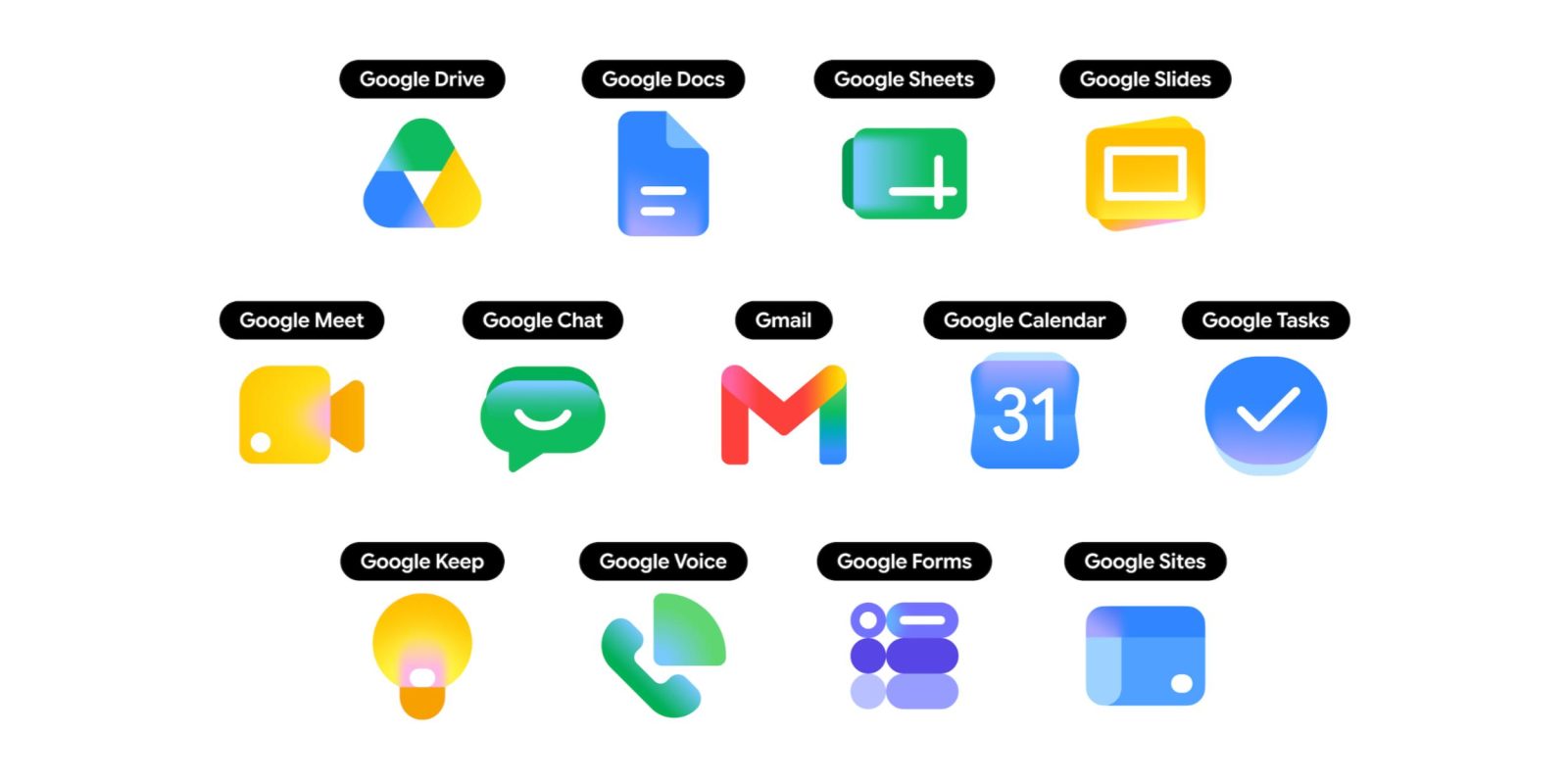
The first noticeable change appears in the web app launcher, accessible from the top-right corner of most Google websites and within Chrome’s New Tab page. Users will observe updated icons for a suite of applications, including Gmail, Google Drive, Docs, Sheets, Slides, Calendar, Chat, Meet, Vids, Forms, Keep, Voice, and Tasks. These icons are also being integrated into the top-left corners of specific Google apps, such as Google Keep and the homepages for Docs, Sheets, Slides, Vids, Forms, and Sites. However, it’s important to note that the favicons and editor logos within these applications remain unchanged at this time.
Addressing Previous Design Critiques
This redesign addresses prior criticisms regarding the uniformity and lack of distinction in Google’s iconography. The new icons exhibit more distinct colors and shapes, moving away from the previous mandate that required the inclusion of all four company colors in each icon. Notably, Gmail retains the multi-color scheme, while other applications adopt more unique color palettes. Additionally, the removal of the Workspace page container allows for larger and more recognizable icons, enhancing user experience.
Mobile Platform Rollout
The gradient icons are now being deployed to mobile platforms, with updates rolling out to both iOS and Android devices. This ensures a consistent visual identity across all user interfaces, reinforcing Google’s commitment to a cohesive and modern design language.
Historical Context and Design Philosophy
This initiative is part of a broader effort by Google to modernize its visual branding. In May 2025, Google updated its iconic ‘G’ logo for the first time in a decade, introducing a gradient design that symbolizes the surge of AI-driven innovation and creative energy across its products and technology. The company emphasized that while staying true to its iconic four colors, the brighter hues and gradient design reflect its evolution in the AI era.
Application-Specific Updates
Several Google applications have undergone individual icon redesigns as part of this initiative:
– Google Drive: The new icon eliminates the red color, focusing on the classic green, yellow, and blue that align with the three editor apps.
– Google Wallet: The redesign introduces subtle gradients and a slight glow effect, modernizing the icon while maintaining its recognizable rectangular design.
– Google Photos: The updated icon features a gradient fade starting at the center, giving a subtle glow effect that aligns with the app’s focus on AI-powered features.
– Google Maps: The new icon retains the pin shape but modernizes it with a thinner top ring and a larger inner circle, removing the diagonal partitions for a cleaner look.
Material Design Integration
In addition to icon updates, Google is redesigning its web app launcher with Material 3 Expressive elements. This includes a rounded container for app icons, a lighter or darker background depending on the theme, and a more intuitive interface for arranging shortcuts. These changes aim to enhance user experience by providing a more visually appealing and user-friendly interface.
Conclusion
Google’s rollout of gradient icons across its Workspace apps represents a significant step in the company’s visual evolution, reflecting its commitment to innovation and user-centric design. By addressing previous design critiques and embracing a more distinct and vibrant aesthetic, Google enhances the user experience across its platforms. As these updates continue to roll out, users can expect a more cohesive and modern interface that aligns with Google’s advancements in AI and technology.