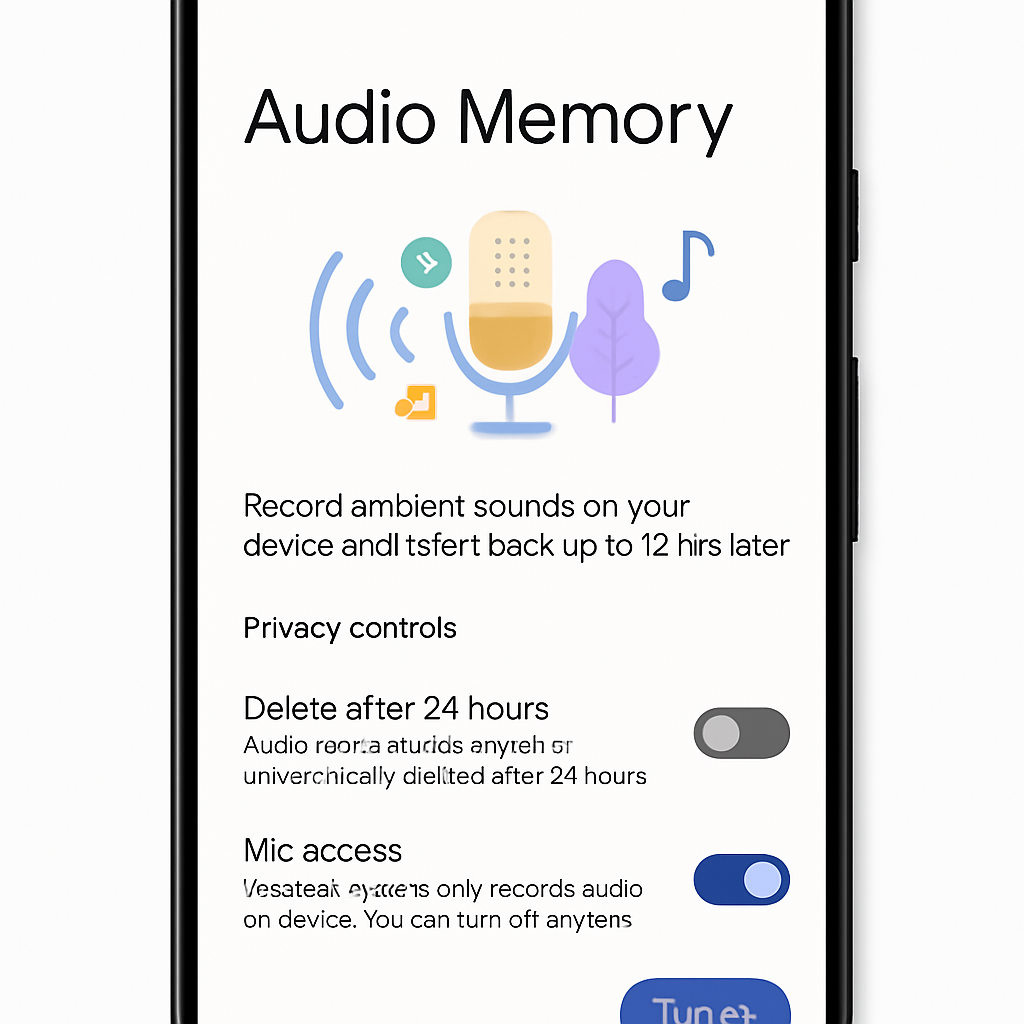
Google is developing a new feature for its Pixel smartphones called “Audio Memory,” designed to monitor and record ambient sounds throughout the day. This functionality aims to capture various audio elements, including music playing nearby and significant conversations.
Integrated within the latest version of Android System Intelligence for the Pixel 10, “Audio Memory” is codenamed “blueflax.” When activated, it will track the sounds users encounter daily, encompassing both environmental music and important dialogues.
While specific details are limited, it’s anticipated that “Audio Memory” will function similarly to existing AI-driven note-taking applications. These apps passively record surrounding conversations, transcribe them, and generate concise summaries. This suggests that Pixel users might soon have an automated method to document and revisit their daily interactions.
Additionally, “Audio Memory” is expected to enhance the current “Now Playing” feature, which identifies music playing in the vicinity. A new component, “Music on your device,” will provide information about songs played or heard within other applications, enriching the user’s music history.
Privacy remains a priority for Google. The feature will operate on-device using the Private Compute Core, ensuring that background conversations and audio are not transmitted to Google’s servers. If a song isn’t recognized locally, a brief digital fingerprint may be sent securely to Google to search the cloud, but the actual audio remains on the device.
Users will have control over which applications can utilize “Audio Memory” to identify music, offering a customizable experience. The onboarding interface for this feature highlights its capabilities and reassures users about data security.
As smartphones continue to evolve into comprehensive personal assistants, features like “Audio Memory” represent a significant step toward integrating AI seamlessly into daily life. By passively capturing and organizing auditory experiences, Pixel devices could offer users a more enriched and interactive engagement with their environment. However, the success of such features will heavily depend on maintaining user trust through robust privacy measures and transparent data handling practices.