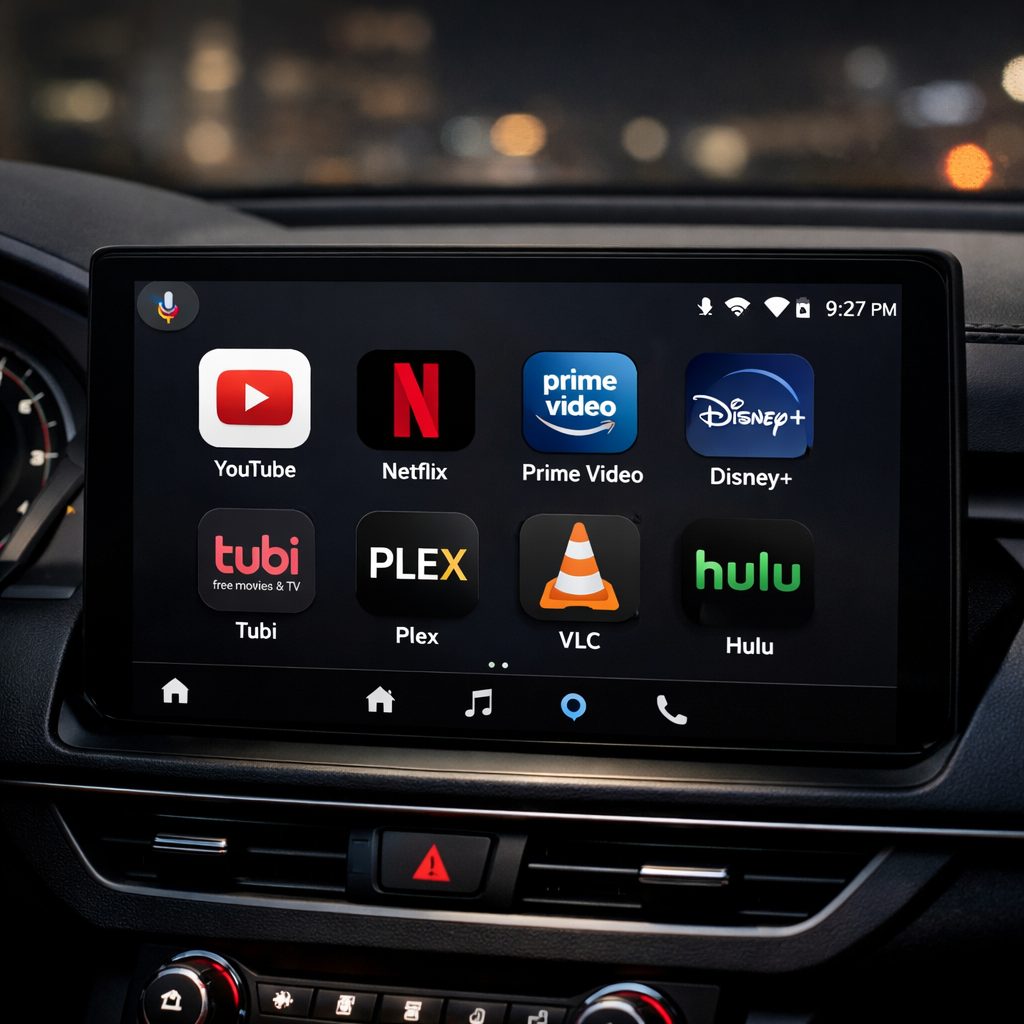
Google’s plan to bring video apps and a web browser to Android Auto by the end of 2026 is falling behind, after a recent update shed little light on timing.
What Google Promised — and What’s Delayed
Back in May 2026, Google said that select vehicles would soon allow video apps like YouTube to run on Android Auto. The company added that once a vehicle shifts out of park, video playback would defer to background mode. It also revealed browser apps were in the pipeline.
Now, at its Android Dev Summit, Google reiterated that video and browser functionality for Android Auto is still “coming soon,” but offered no firm release window. While video apps are now live on Android Automotive (built-in systems), and browser apps are in beta, the projected launch on phone-projected Android Auto remains undetermined.
Other Android Auto Updates in Progress
While video and browser support lag, Google is pushing forward with updates for other Android Auto app categories. Audio apps are being refined via the Cars App Library, and messaging and calling apps are also under active development. But these improvements don’t address the year-end goal for video and browser functionality.
The missed deadline comes at a time when integrating full multimedia capabilities into car interfaces is becoming standard. Drivers expect more than navigation and music — streaming video and web browsing have increasingly been viewed as essential, especially as automakers build richer infotainment systems.
For users, the delay means continued limitations: video apps via phone projection are still unavailable, and browser use in the car will likely remain constrained until Google finalizes its implementation. Automakers that have built in Android Automotive are farther along, but that only covers a subset of vehicles.
Analytically, this shows how ambitious timelines in the automotive tech space often run into operational and safety-related complexities—especially for features involving video. Watching content while driving raises regulatory concerns, safety standards, and technical hurdles like latency and distraction mitigation. What to watch next: when Google moves from vague promises to clear dates, what safety measures will accompany the launch, and whether automakers will uniformly adopt the new features. Until then, drivers eager for full Android Auto functionality may have to wait well into 2027 to see it materialize.