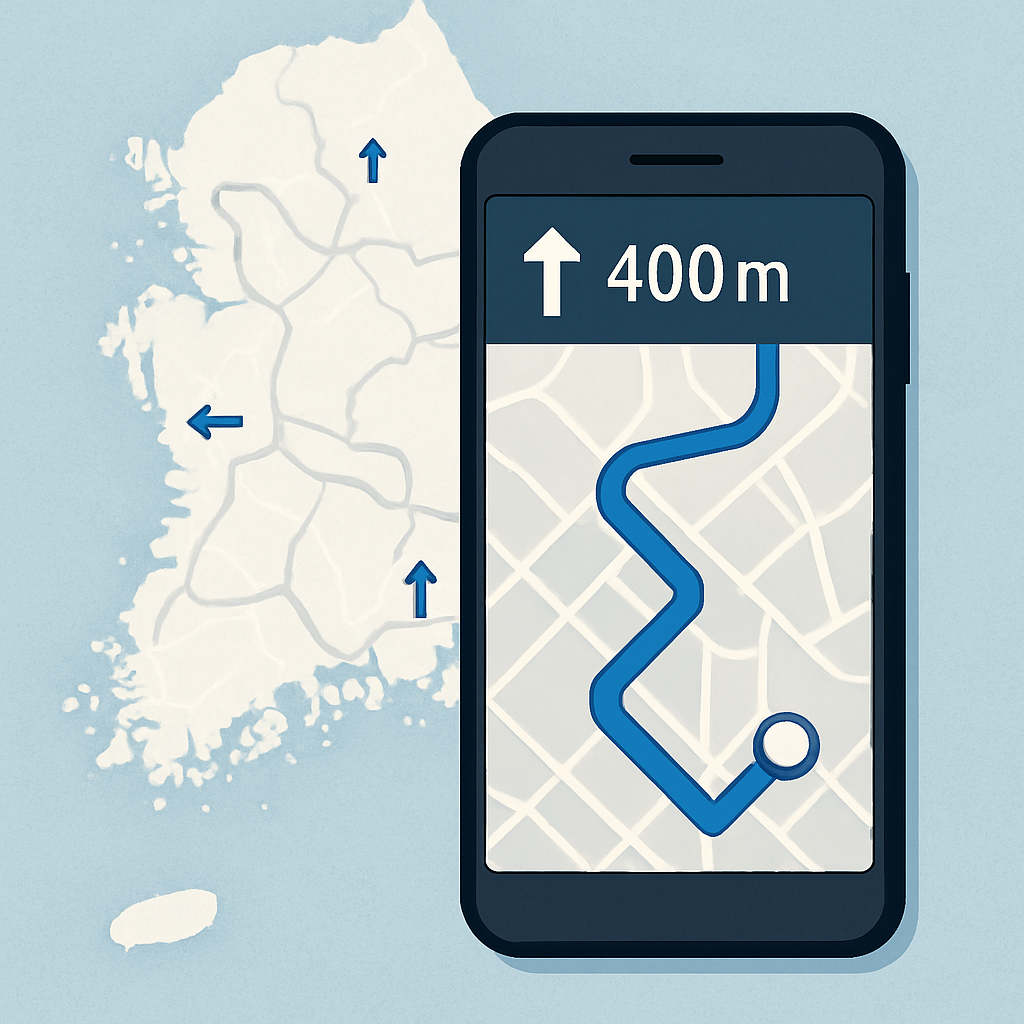
Google Maps is set to finally roll out full turn-by-turn navigation in South Korea, filling a gap that has kept the service incomplete in the region. Currently, Google Maps in South Korea only offers location search, reviews, and public transit routing. Key navigation features — like driving or walking directions with real-time guidance — haven’t been available. Local competitors like Naver Map and Kakao Map lead the market, enjoying up to three times as many users as Google’s app.
This change is now in motion. Google has hired a Strategic Partnerships Development Manager whose role includes working closely with both private firms and government entities in South Korea to support the navigation rollout. The move follows earlier approval by the South Korean government for Google to use high-precision map data on servers outside the country — though with requirements to blur military and other sensitive sites, and to disable certain latitude-longitude data.
Why the delay?
Until now, legal and regulatory restrictions have prevented Google from offering full navigation features. South Korea has long imposed tight controls over mapping data, especially anything that could reveal precise locations of military or security installations. These rules required data blurring and limits on sharing geographic coordinates. Even though Google Maps is available for many purposes, these constraints meant it couldn’t fully match what users in most other countries experience.
What’s next
Google says its objective is to deliver “full-functioning Google Maps capabilities” in South Korea, which includes turn-by-turn directions. The company is now collaborating with local partners to bring this service to market, though no precise timeline has been made public. For users, this could mean finally getting driving, walking, and possibly biking navigation from Google Maps without switching to regional alternatives.
Even beyond user convenience, this marks a turning point for Google in South Korea. By resolving regulatory hurdles and integrating government-approved data policies, Google is positioning itself to better compete in a market long dominated by local mapping services. For local developers and businesses, improved mapping functionality could enhance logistics, geotargeting, and tourism tools.