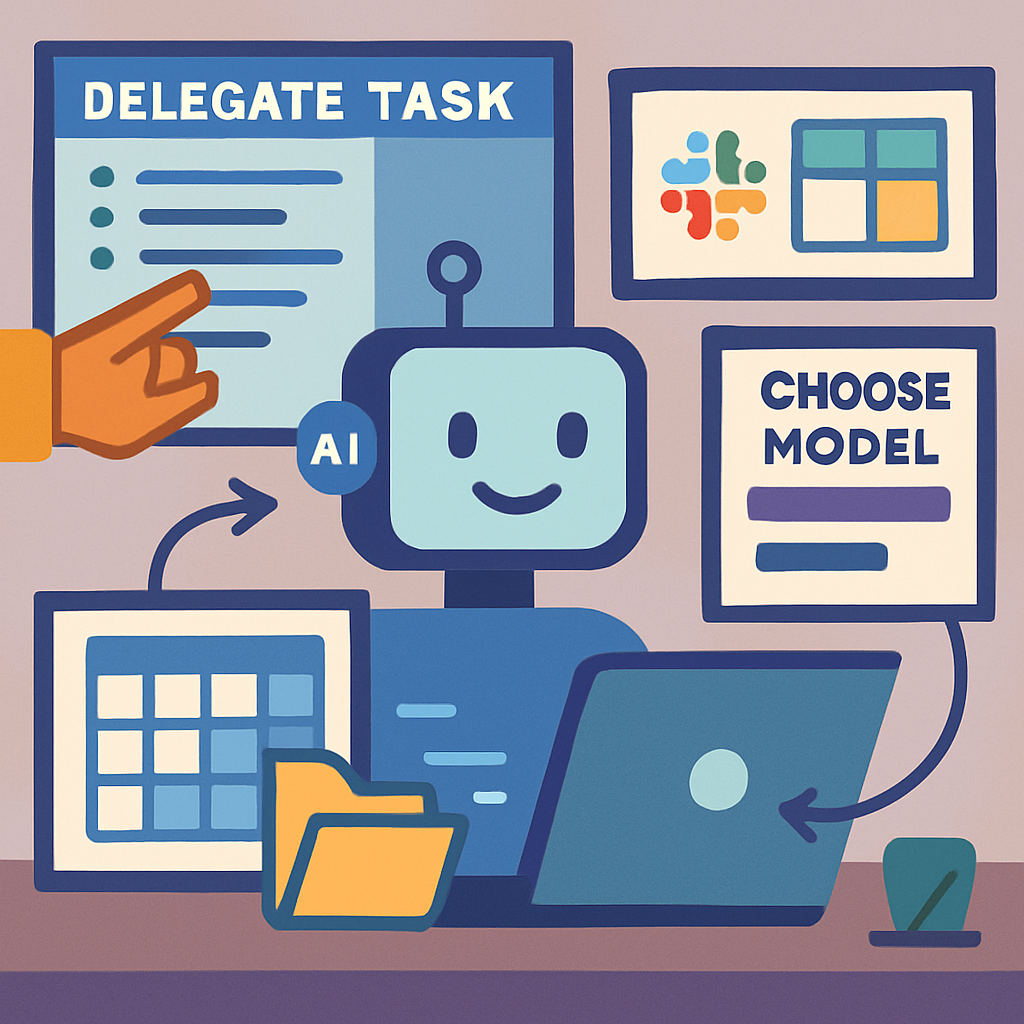
Google is introducing a new level of task automation to its AI suite by transforming Gemini into an “agentic” system—one capable not just of chatting, but of taking genuine action. Revealed at Google Cloud’s event on October 8, 2026, the update is currently being rolled out for enterprise users before a wider release later. The idea is that Gemini will now accomplish user objectives autonomously, leveraging internal systems, custom tools, and data integrations.
From Reactive to Proactive AI
Traditional AI tools respond to prompts; this upgraded Gemini is built to execute complex tasks end to end. Businesses can assign it objectives—not just instructions—and it will then strategize, plan, and act. That includes invoking specialized models, coordinating subagents, and working across platforms such as Google Workspace, Microsoft 365, Slack, Jira, Confluence, Git, BigQuery, Databricks, Postgres, Snowflake, and more.
One standout is the ability to bring attachments into instructions—files, folders, project-specific resources—and allow Gemini to draw on skills to tackle tasks independently. There’s also a model selection feature: by default Gemini picks the optimal model, but users can override that with third-party options like Anthropic’s Claude or privately-sourced open-source models in future.
Built for the Enterprise First
Given Gemini’s enterprise traction—over 90% of Fortune 100 companies use Gemini Enterprise and more than one billion users overall—Google is prioritizing businesses for this agentic shift. The intention is to address challenges like security, performance, and scalability before a consumer-launch.
Users will monitor Gemini via a “tasks inbox”: a dashboard showing what the AI is doing, its internal reasoning, delegation of subagents, skill usage, code execution, and progress. The agent will have its own presence — a Workspace account, email, knowledge of teams, time zones, calendars, and approval workflows. It can be summoned via tags, emails, sharing, or group chat, and its actions are tracked in an audit log attributed to the agent, not a human. The agentic system works across iOS and Android devices, Mac and Windows desktops, command line tools, as well as integrations with Microsoft 365, ServiceNow, Slack and more.
Early adopters include organizations like On, Shopify, PayPal, and large enterprises such as BNP Paribas, Orange Spain, Ulta Beauty, Merck, and others. To help control costs, Google is introducing flexible spending tools including real-time spend caps, multi-model orchestration, and smart routing across models.
For security and accessibility, Gemini supports the Model Context Protocol (MCP), allowing businesses to connect internally hosted or private MCP servers to the agent. That opens the door to running context-aware models safely within corporate networks.
By making this leap, Google mirrors broader trends in AI—agents like Meta’s Muse, message-based agents like Instinct, and recent tools from OpenAI—but pulls ahead in integrating enterprise needs around compliance, cost, and context.
Analytical Take:This isn’t just an incremental update—it’s a shift from AI as assistant to AI as executor. For businesses, agentic Gemini could transform workflows, especially where repetitive or procedural tasks dominate. But success hinges on trust: securing corporate data, model governance, and transparency. What to watch in the coming months: how well Gemini handles unstructured tasks, how customers respond to model choice, and whether this sets a new baseline for enterprise AI agents in a competitive market.