Google has completed the rollout of its Gemini AI integration within Chrome for Android users in the United States. This enhancement introduces a suite of AI-driven features designed to streamline and enrich the mobile browsing experience.
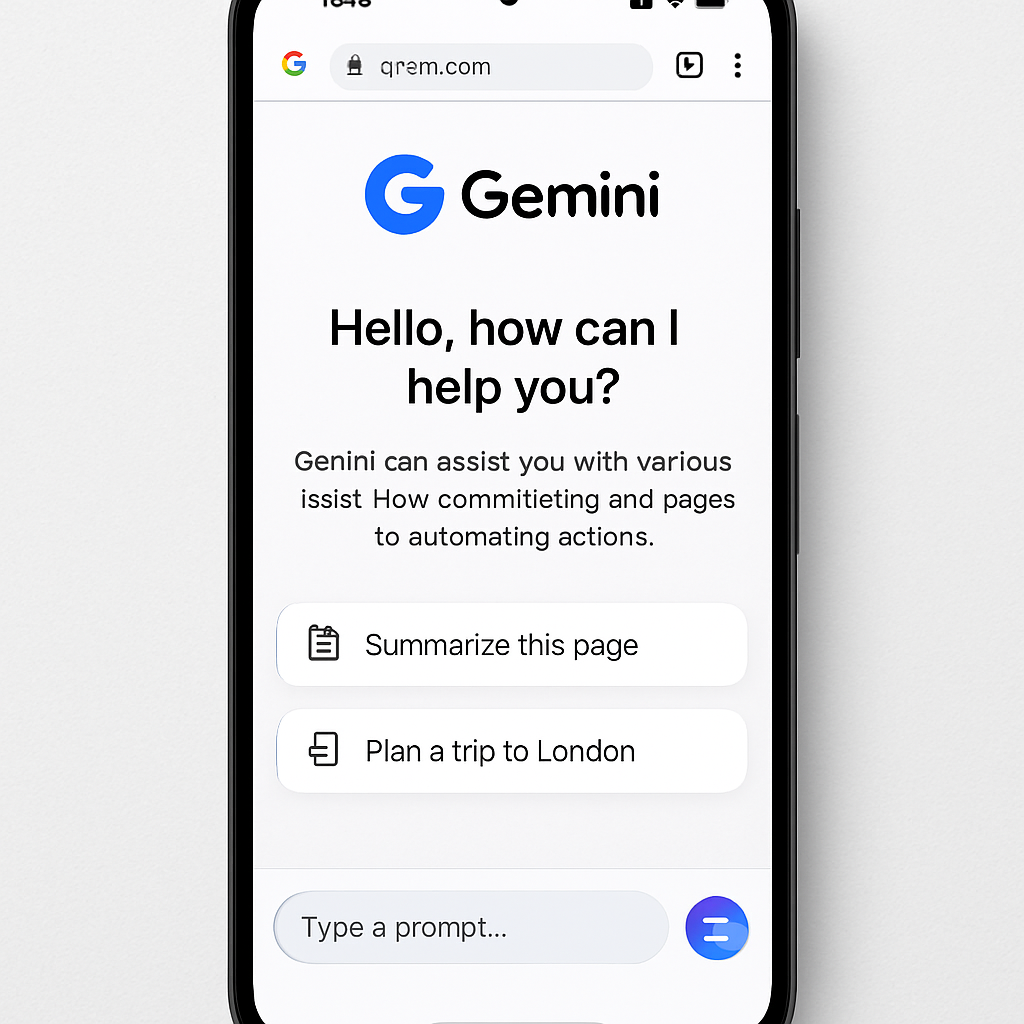
Users can access Gemini directly from the Chrome interface. A spark icon, representing Gemini, is now positioned adjacent to the address bar or within the three-dot menu. Engaging this icon reveals a slide-up interface that mirrors the desktop version, ensuring a consistent user experience across platforms.
One of the standout features is the ability to summarize web pages and answer context-specific questions. For instance, while reading an article, users can prompt Gemini to provide a concise summary or delve deeper into specific topics mentioned. Additionally, the integration of Nano Banana technology allows for on-the-fly image editing directly within the browser, eliminating the need for third-party applications.
For subscribers of Google AI Pro and Ultra, the ‘auto browse’ functionality offers a significant advancement in task automation. This feature enables the browser to autonomously perform routine tasks such as booking parking for events, updating recurring online orders, or organizing travel itineraries. Importantly, for sensitive actions like financial transactions, the system mandates explicit user confirmation, ensuring security and user control.
To tailor the experience, users can manage the contextual integration of their current page within Gemini’s prompts through the settings menu. Furthermore, the ‘Personal Intelligence’ feature can be toggled on or off, allowing Gemini to access data from connected applications like Calendar and Keep to provide personalized responses.
This integration signifies a pivotal shift in mobile browsing, blending AI capabilities directly into the user’s workflow. By embedding Gemini into Chrome for Android, Google aims to offer a more intuitive and efficient browsing experience, reducing the need to switch between apps and enhancing productivity. As AI continues to evolve, such integrations are likely to become standard, setting new expectations for user interaction with digital platforms.