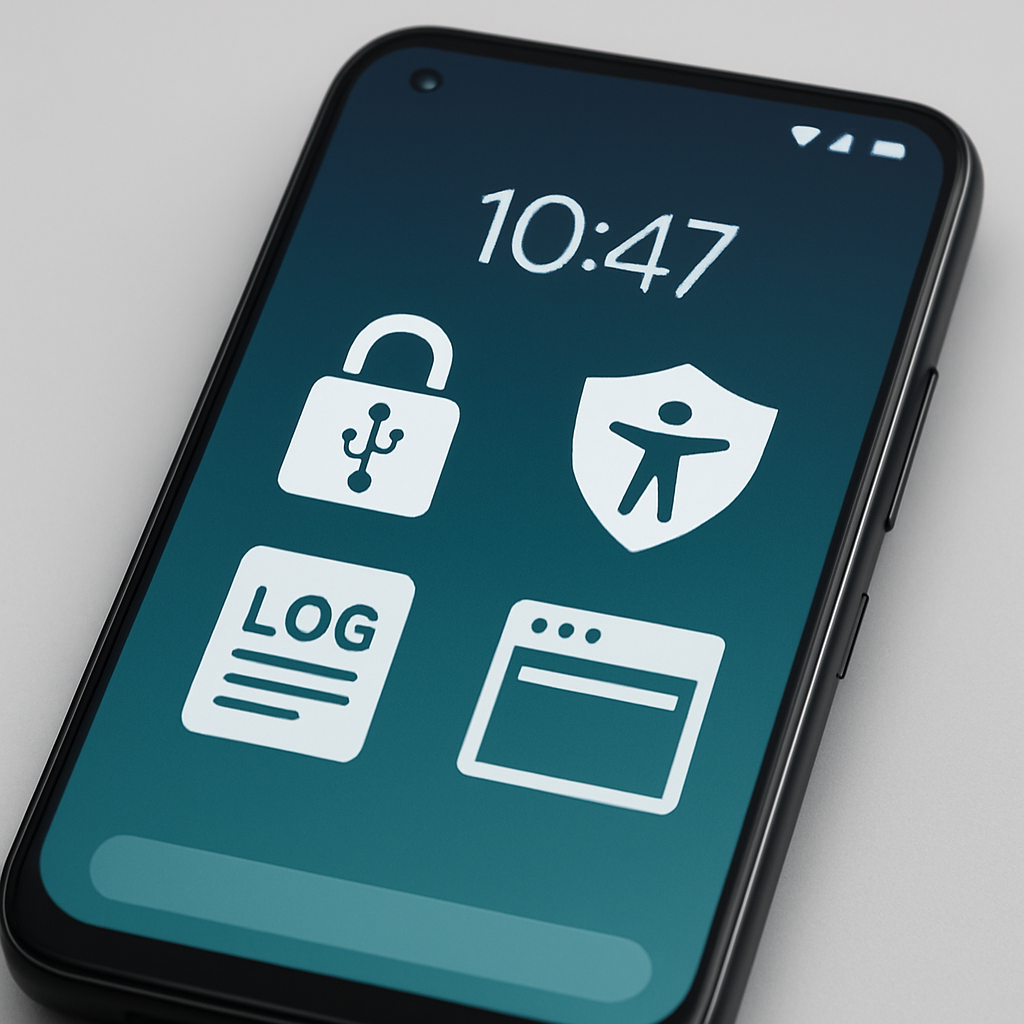
Google has introduced six new protections in Android 17 aimed at users who face higher levels of risk—such as journalists, public figures, and political figures. Rolled out officially on October 1, 2026, these enhancements build on the security groundwork laid in Android 16, targeting sophisticated threats like unauthorized access, fraud, and abuse of sensitive permissions. Notably, these changes are not a response to a specific malware campaign, but part of a broader effort to strengthen devices against emerging attack vectors.
Key Features Added in Android 17’s Advanced Protection
The update includes two features that help lock down device functionality, two that aim to preserve evidence if a device is compromised, and a management view so users can see which apps comply with advanced protection rules. Four of the six are available broadly on Android 17 devices; the remaining two are restricted to certain models.
- Intrusion Logging: This feature captures security events and network behavior, storing them encrypted in the cloud for up to a year. Logs are accessible only to the device’s owner, and users must opt-in separately—not enabled by turning on advanced protection alone.
- USB Protection: Locks down new USB connections to charging-only when the device is locked, preventing unauthorized data transfer or tampering via accessories or public charging stations. This applies to Pixel 6 and newer, as well as select Android 17 phones.
- Accessibility Protection: Limits use of accessibility APIs to only those apps verified as accessibility tools, cutting off a common route used by malware or scams without disabling legitimate assistive software.
- Disable WebGPU: Turns off WebGPU in Chrome when advanced protection is active, reducing exposure to complex browser exploits tied to hardware-accelerated graphics features.
- Failed Authentication Lock: Locks the device completely after repeated authentication failures in settings or secured apps, intended to thwart physical tampering or brute-force attempts. This is only available on select Android 17 devices.
- View Supporting Apps: Adds a dashboard showing which installed apps detect and adapt when advanced protection is enabled, helping users understand how their apps interact with these enhanced defenses. Developers may also receive status notifications.
Why These Protections Matter
The protections aim to tackle methods attackers frequently abuse—granting accessibility permissions via deceptive apps to spy on users, steal data, or install malware. Disabling WebGPU helps guard against browser attacks that exploit graphics APIs. Meanwhile, Intrusion Logging provides a much-needed way to retain tamper-resistant records, especially useful when digital footprints are wiped. USB Protection and the Failed Authentication Lock guard against physical threat vectors.
Google notes that not all mechanisms are created equal: hardware differences mean some phones won’t have access to features like USB Protection or Failed Authentication Lock. Also, certain safeguards require manual activation—even after enabling advanced protection mode.
For now, users enrolled in Advanced Protection should keep watch for system updates indicating feature availability. Once the enhancements land, navigating into the Advanced Protection settings will be necessary to toggle on key functions like Intrusion Logging.
Analytical Take: These changes mark a pivotal shift toward a threat model that assumes adversaries with deep technical resources—from state actors targeting activists to sophisticated fraudsters. By bundling protections across multiple attack surfaces (accessibility, browser exploits, USB vulnerabilities), Android 17’s new advanced protection features acknowledge that modern attacks are multi-vector. What to monitor going forward is not just which devices receive full feature support, but how seamlessly users can enable and manage protections. Security defaults matter, but only if people can understand and use them. Android is headed in a direction where security isn’t an afterthought; the challenge will be adoption and device fragmentation.