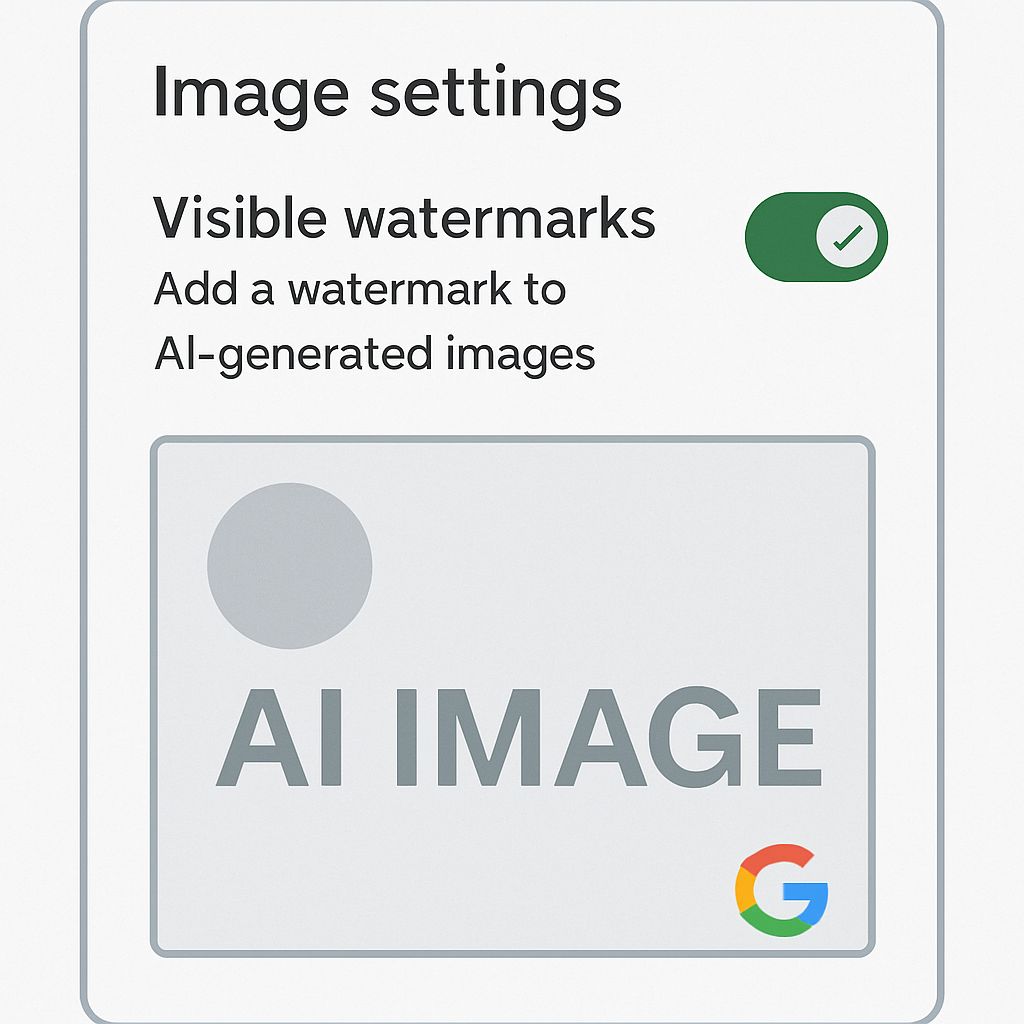
Google has announced a new feature that enables users to remove visible watermarks from AI-generated content, including images, videos, and audio produced by its models. This update applies to Google’s Nano Banana, Omni, and Lyria models, with the option to disable visible watermarks available in the Gemini app and Google’s video editor, Flow. Support for this feature in Google Search is expected to follow soon.
Despite the removal of visible watermarks, Google emphasizes that invisible watermarks, such as those embedded by SynthID, and metadata adhering to the C2PA standard will remain intact. These invisible markers are designed to maintain transparency and allow users to verify the AI-generated nature of content through tools like Gemini or Search.
To implement this feature, users can navigate to Settings > Media Watermark within the respective applications to toggle the visible watermark on or off. The rollout of this functionality is scheduled to occur over the coming days.
In addition to this update, Google is open-sourcing a new library called Credentio. This library aims to assist developers in embedding local validation mechanisms within their applications, further supporting the identification and verification of AI-generated content.
This development follows recent industry discussions on the use of watermarks in AI-generated content. For instance, Anthropic’s decision to include watermarks in text and files generated by its AI model, Claude, to comply with European Union regulations, has sparked debate. Google’s approach seeks to balance creative control for users with the necessity of maintaining transparency and authenticity in AI-generated media.
By allowing the removal of visible watermarks while preserving invisible ones, Google addresses the needs of professionals and creatives who may find visible markers intrusive, without compromising the ability to trace and verify the origins of AI-generated content. This move reflects a broader industry trend towards providing users with greater control over AI tools while upholding standards for transparency and authenticity.