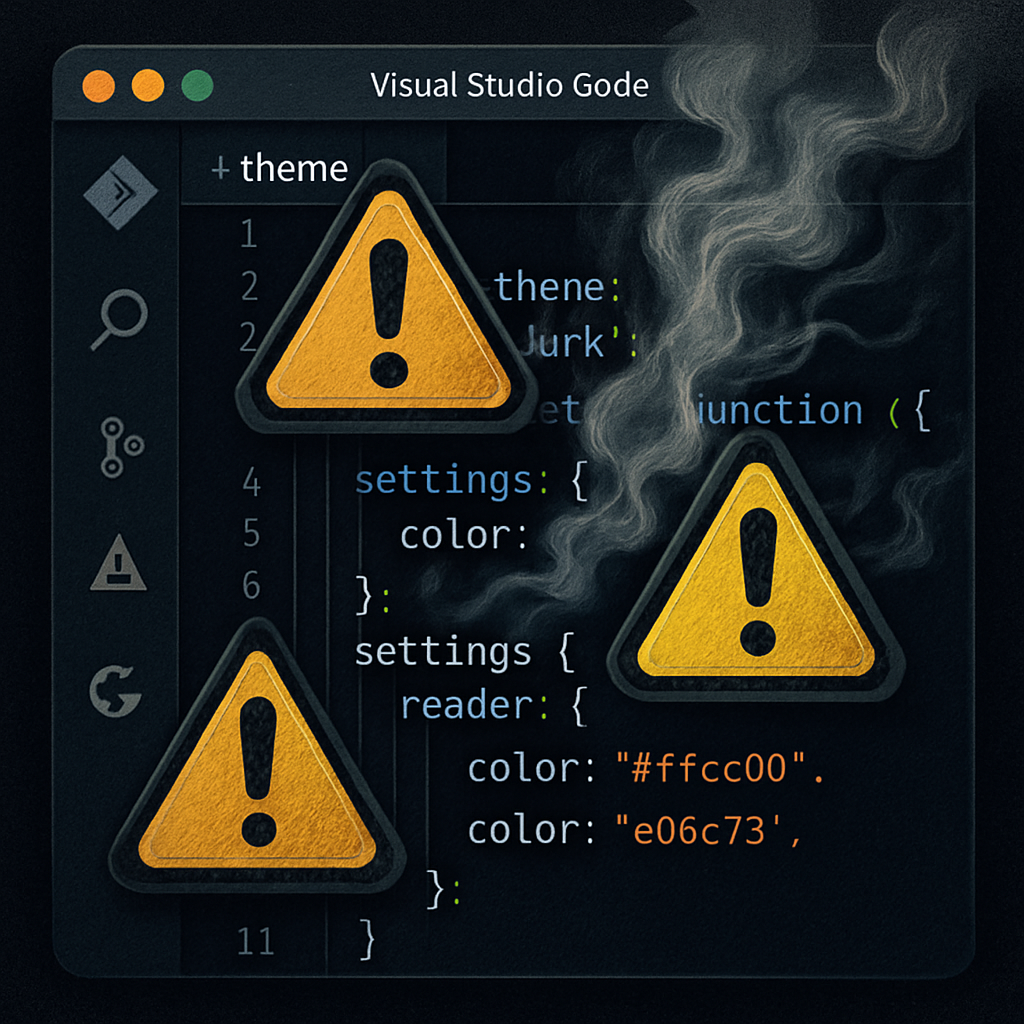
Developers are under fresh threat: a covert supply-chain campaign dubbed GlassWorm has been found distributing malware through deceptive Visual Studio Code theme extensions. Themes purportedly meant to change the editor’s appearance are concealing malicious code that grants attackers persistent access to development machines. The campaign, active since around October 2025, spans the Visual Studio Marketplace and Open VSX.
How the Malware Operates
Investigators discovered that some themes—like Aurora Nocturne Night Theme—embed malicious code within what appears to be a simple visual theme. In this case, the extension hid a Windows downloader inside the package despite having a repository that only showed theme-related content. The executable JavaScript was deeply obfuscated: heavily compressed, placed on a single line, and including payload instructions encoded with invisible Unicode characters. Once decoded, it downloaded attacker-controlled content and ran a temporary batch script without alerting the user.
An extension called Cosmic Nebula Themes went even further: it decrypted embedded JavaScript using AES-256-CBC encryption, then executed it. Before carrying out payload operations, the code checks whether the system is set to a Russian timezone or language—if so, it lies dormant. Payload download locations were switched dynamically using Solana blockchain memos.
Which Themes Are Impacted
Socket.dev identified multiple linked extensions across both registries. Two extensions have been confirmed to include an active payload, including Aurora Nocturne Night Theme and Cosmic Nebula Themes. Other themes, such as Coca-Cola Christmas and Aurora Borealis Studio Theme, are linked to the cluster but haven’t yet shown active malicious behavior—though they contain suspicious executable components that raise red flags.
Shared branding, matching theme configuration files, overlapping development contributors, and even code reuse help tie these extensions together. Investigators also found instances where blog posts appeared to promote these themes as if they were independent recommendations, forming part of what is likely a promotional network to legitimize the malicious ones.
Risk & Response
Once installed, GlassWorm extensions may have already compromised machines—even if they’ve since been removed. Because the malware can execute scripts and download additional payloads, the damage isn’t undone simply by uninstalling the extension. Moneycloud-style techniques like executing with cmd.exe /cand hiding execution windows amplify the risk.
Indicators of compromise include specific SHA-256 hashes corresponding to malicious JavaScript files, domain names used for payload delivery (such as fingercakes4sale[.]store), file paths like out/extension.js, and names of confirmed malicious extensions. Companies affected by or using these tools are urged to audit all theme extensions installed across development environments—even those from reputable registries.
Microsoft has removed the confirmed malicious themes from the Visual Studio Marketplace after being notified. However, installed versions of these extensions on developer machines remain unchanged unless manually purged.
To defend against threats like GlassWorm, organizations should inspect beyond public repos: examine activation scripts, network behavior, code that runs after installation, and whether downloads are triggered dynamically. Version changes, promotional activity, and cross-registry linkages are all signals worth investigating. Treat hosts where malicious actions were performed as compromised and conduct appropriate credential reviews.
This isn’t just another extension scandal—it’s a wake-up call. What matters now is not just scanning code, but continuously watching how tools behave and evolve. Supply-chain attacks are growing in complexity, and developer toolchains—once assumed benign—are emerging as a primary vector. Vigilance over marketplaces, vigilant monitoring of theme packages, and awareness of obscure indicators are no longer optional; they’re essential.