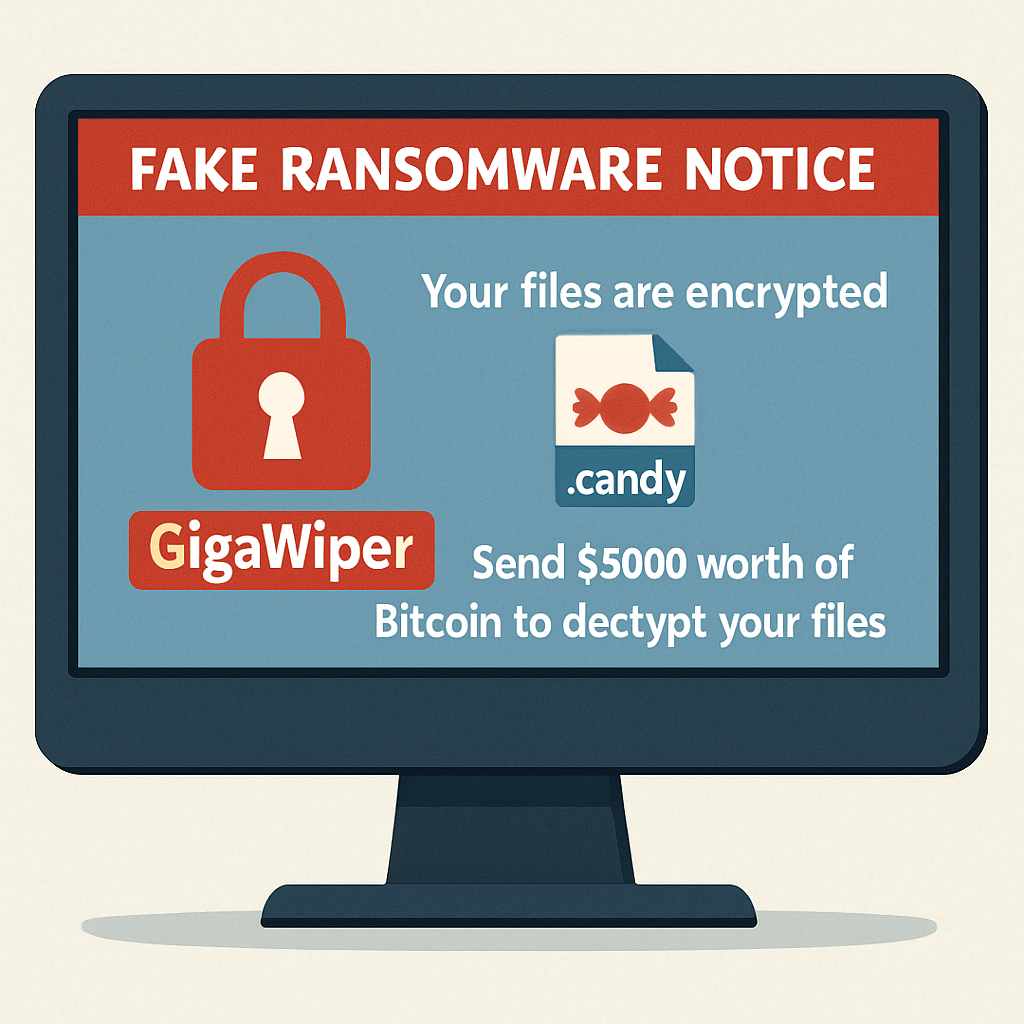
A newly identified malware, dubbed GigaWiper, is posing a significant threat to Windows systems by combining data-wiping functionalities with deceptive ransomware tactics. This sophisticated malware not only erases data but also employs fake ransom notices, leaving victims with irrecoverable losses.
GigaWiper’s emergence marks a concerning evolution in cyber threats, as it integrates multiple attack vectors into a single, potent package. Unlike traditional ransomware that encrypts files and demands payment for decryption keys, GigaWiper goes a step further by permanently destroying data, rendering recovery impossible even if a ransom is paid.
Technical Breakdown of GigaWiper’s Operations
The malware operates through a series of destructive commands:
- Physical Disk Wiping: GigaWiper identifies and targets physical drives, particularly those containing the Windows installation. It removes partition references, overwrites raw data in large segments, and forces system reboots, effectively crippling the operating system and associated data.
- Fake Ransomware Encryption: The malware encrypts files using randomly generated keys that are not stored or transmitted, appending a “.candy” extension to affected files. This process mimics ransomware behavior but offers no avenue for data recovery, as the encryption keys are irretrievably lost.
- Boot and Log Tampering: GigaWiper deletes critical system files related to boot and recovery processes and clears Windows event logs. These actions not only disrupt system functionality but also hinder forensic investigations and incident response efforts.
Communication between the malware and its operators is facilitated through RabbitMQ for command reception and Redis for status updates. This setup allows for coordinated attacks across multiple systems, enhancing the malware’s effectiveness and reach.
Persistence Mechanisms and Evasion Tactics
To maintain a foothold within infected systems, GigaWiper employs several persistence strategies:
- Registry Manipulation: The malware creates a OneDrive-related registry key to monitor its execution status, blending in with legitimate system processes to avoid detection.
- Scheduled Tasks: It establishes a scheduled task named “OneDrive Update” set to execute at startup and periodically thereafter. This task ensures the malware remains active and can reinitiate its destructive processes if interrupted.
By masquerading as familiar Windows components, GigaWiper reduces the likelihood of detection by users and security software, increasing the duration and impact of its presence within compromised systems.
The advent of GigaWiper underscores the escalating sophistication of cyber threats targeting Windows environments. Its combination of data destruction and deceptive tactics necessitates a reevaluation of existing security protocols. Organizations must prioritize comprehensive backup solutions, implement robust endpoint detection and response systems, and foster a culture of cybersecurity awareness to mitigate the risks posed by such multifaceted malware. Vigilance and proactive defense measures are essential in safeguarding against the irreversible damage that GigaWiper and similar threats can inflict.