A fresh wave of GhostAction attacks has breached 346 GitHub repositories by hijacking two maintainer accounts to introduce a fake “security audit” workflow aimed at harvesting secrets such as API tokens, credentials, and cloud keys. Targets included popular projects like Uber’s athenaDriver and the widely used kitao/pyxel repo, which has over 18,000 stars on GitHub. The malicious commit names included “Add security audit workflow” and “Update security audit workflow.”
How the Attack Works
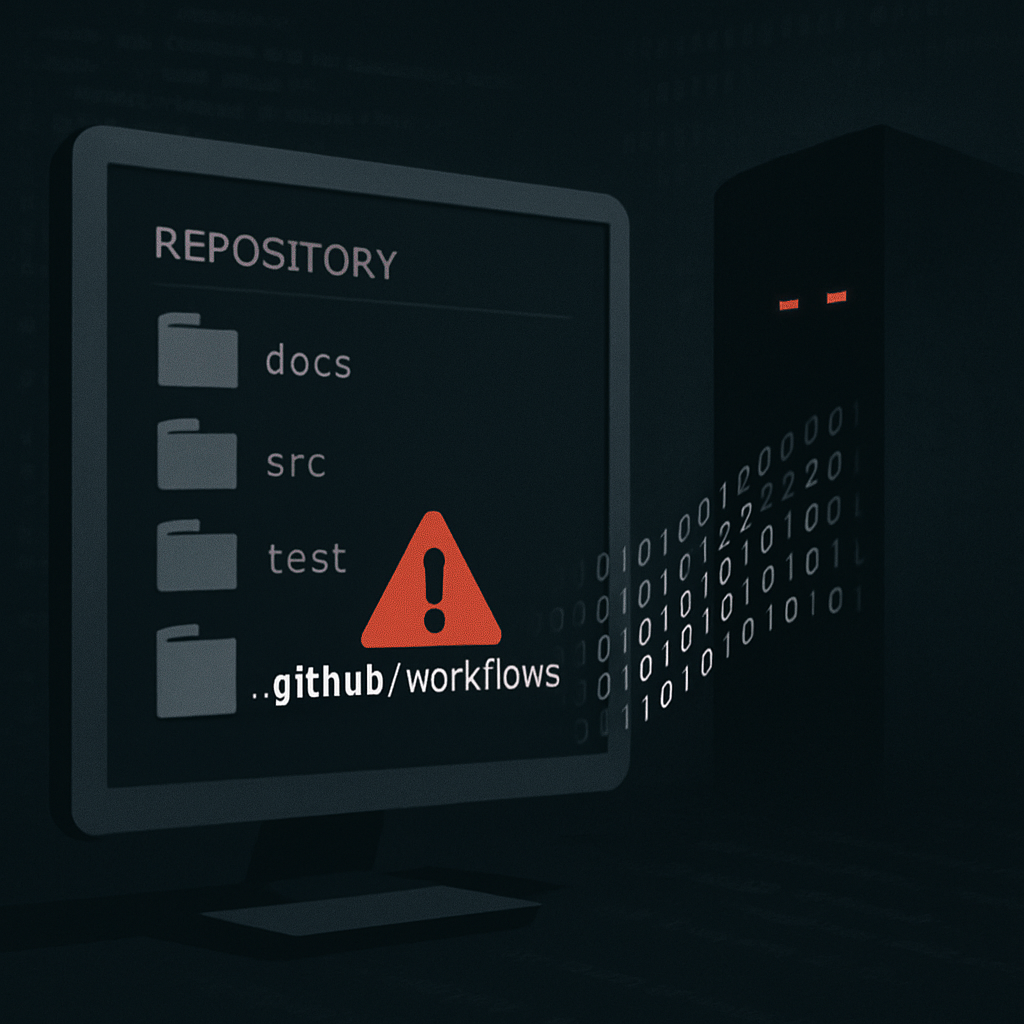
The threat actors inserted a .github/workflows/security-audit.yml file into compromised repos, which runs automatically whenever developers push new code. This fabricated workflow sends sensitive CI/CD credentials—like personal access tokens, package publishing tokens, and PyPI or crates.io passwords—to a command-and-control server via HTTP POST requests. The malicious script also hunts through full repository histories—enabled by fetch-depth: 0—allowing exposure of secrets hidden in old commits, branches, or tags. Keys from AWS, Google APIs, Slack, OpenAI, Anthropic, GitHub, and GitLab are among those actively searched and exfiltrated.
Scope and Evolution
Investigators found that 318 public repos under the henrywoo account (279 of them forks), 27 under kitao, plus Uber’s athenaDriver were affected. Some of the repositories hadn’t been touched in years, indicating attackers leveraged automated discovery rather than handpicking targets.
This attack is an escalation of previous GhostAction campaigns. In September 2025, 817 repos were compromised and more than 3,300 secrets stolen. A later wave from August to September 2026 hit about 772 public repos and captured 2,577 secrets. Unlike earlier versions that focused largely on GitHub Action secrets, this latest iteration also digs up credentials embedded in source code and historical commits.
Risks & Recommended Defenses
The fallout could extend beyond the compromised repos. If attackers use stolen credentials from PyPI, npm, Docker Hub, or crates.io, they could publish malicious versions of trusted packages—potentially spreading impact across users and production systems. Open-source libraries are particularly vulnerable to downstream supply chain disruptions from such poisoned releases.
So far, there’s no evidence that malicious packages have been published via PyPI or crates.io in this wave. But project maintainers must treat any workflow execution as a red flag. They should revoke exposed credentials, purge secrets, check GitHub Action history, scan full Git history, and monitor communications to malicious endpoints (notably the IP 193.32.204.199).
Preventative measures include enforcing strict review of workflow changes, implementing GitHub secret scanning with push protection, restricting permissions under the principle of least privilege, and using branch protections to guard sensitive configuration files.
What this means: The GhostAction campaign represents a dangerous refinement in supply chain threats. Attackers are no longer content with just stealing active secrets—they’re mining history. The real message here is that the security of CI/CD pipelines depends not just on what’s in _today’s_ codebase, but what’s been committed over time. Organizations of all sizes should treat repositories as living assets, always at risk, always to be monitored. Maintain vigilance across history, tighten workflow governance, and anticipate that attacks will continue to evolve—and so must your defenses.