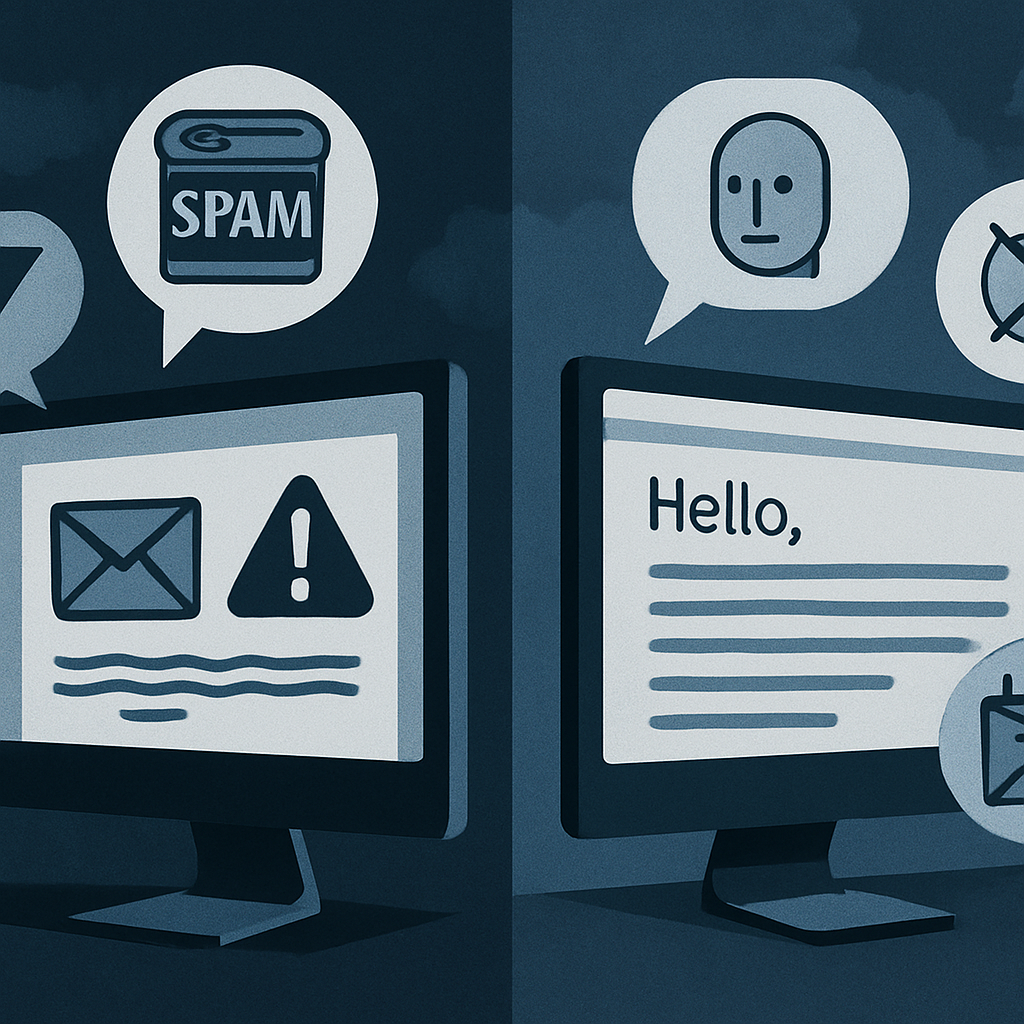
Email threats are morphing fast. Messages once easy to flag—full of broken grammar, mismatched signatures, or copied templates—are now polished, personalized, and uniquely crafted per recipient. The behavioral cues that spam filters relied on for decades are fading. That’s the finding from Proofpoint’s latest insights shared at its Protect 2026 conference. Generative AI is erasing behavioral tells, undermining behavior-only detection in favor of what a message is trying to do.
Behavioral Signals Fade as AI Elevates Attack Craft
Behavior-only detection tools historically flagged email threats by spotting oddities: strange sender infrastructure, awkward phrasing from non-native speakers, templates reused without variation, or requests that didn’t match the conversation’s flow. But generative AI eliminates those limits. Attackers use it to draft messages with flawless language in any locale, tailor responses to threads based on a recipient’s role and timing, invent plausible conversation histories, and create unique texts for each target—crippling signature matching and template-based detection.
Consider one recent campaign: a threat actor targeted over 30 real estate agents at the same firm. Each agent received an individualized message from a different account, in distinct language, about different properties—but all ended with the same push: join a video meeting. One message even used a genuine Google redirect (clean reputation) and ended with a link parameter that led elsewhere. Filters found nothing unusual in infrastructure or content; the only shared signal was the attacker’s goal.
Wider Attack Types: Disruption, Fraud, and Supply Chain Risks
Beyond traditional phishing, AI-enabled campaigns are now tailored for disruption as well. Hundreds of unique messages—some insulting, others embedded with manipulated imagery—can be crafted at scale. These may carry no malicious links or credential requests and can pass as angry emails from individuals. The danger isn’t a single message but the pattern across many targets.
Business Email Compromise (BEC) remains a standout example of AI’s impact on fraud. One case included a message with a fabricated thread between an executive and an auditor, agreeing on a loyalty rebate and payment terms. All this—with fields, hours, and invoices plausible enough to pass casual inspection—was put together by a single language model in seconds during past attacks that took attackers hours.
Shifting from Behavior to Intent-Based Detection
Behavior-based analysis is now struggling because attackers can craft messages that look entirely normal yet carry malicious intent. Proofpoint argues that detecting intent—what a message is trying to achieve—has become the only reliable signal. To that end, it introduced the “Nexus Intent-Based Detection Model” as part of its Agentic Collaboration Security system. This model evaluates the objective of each message, whether the request is plausible given the relationship, and what technique is used—all regardless of how polished or benign the message appears.
The detection stack operates in three tiers. “Flash models” process most messages within half a second combining machine learning, threat intelligence, computer vision, and language modeling. More ambiguous messages—less than one percent—move to a second tier scrutinized for tone, topic, and organizational context. The rarest of cases reach a deep-thinking tier, where models consider profiles of privileged individuals, content beyond text, and extended thread histories.
Statistics Reinforce the Urgency
Federal crime data underscores how AI is already reshaping digital threats: in 2025, the FBI’s Internet Crime Complaint Center (IC3) logged over 22,000 complaints connected to AI-related scams with losses approaching $900 million. Business Email Compromise alone generated more than $3 billion in reported losses across nearly 25,000 complaints. These numbers offer a picture of threat actors using scale, speed, and increasingly human-like precision to bypass defenses.
Defense strategies are evolving too. Proofpoint introduces its Threat Investigation Agent, which spans email, identity, browser, messaging, and supplier systems. In one incident, an automated BEC attack reached dozens of internal users—but the system intervened within four minutes: restoring settings, blocking URLs, deleting malicious rules, and stopping outbound messages while keeping some higher-risk actions under human oversight.
This is not just a transition in tools—it’s a transformation in mindset. When bullets are hard to see, you must watch the strings pulling them.
What this means: As AI makes every message look legitimate, what remains valuable is not how something looks but what it seeks to achieve. Expect detection systems to move beyond checking syntax or sender history toward reasoning about goals, context, and relationships. What to watch next: whether intent-analysis tools scale without overwhelming false positives, how defenders balance speed and thoroughness, and whether regulatory norms emerge to standardize what intent-based detection can do and what it should do.