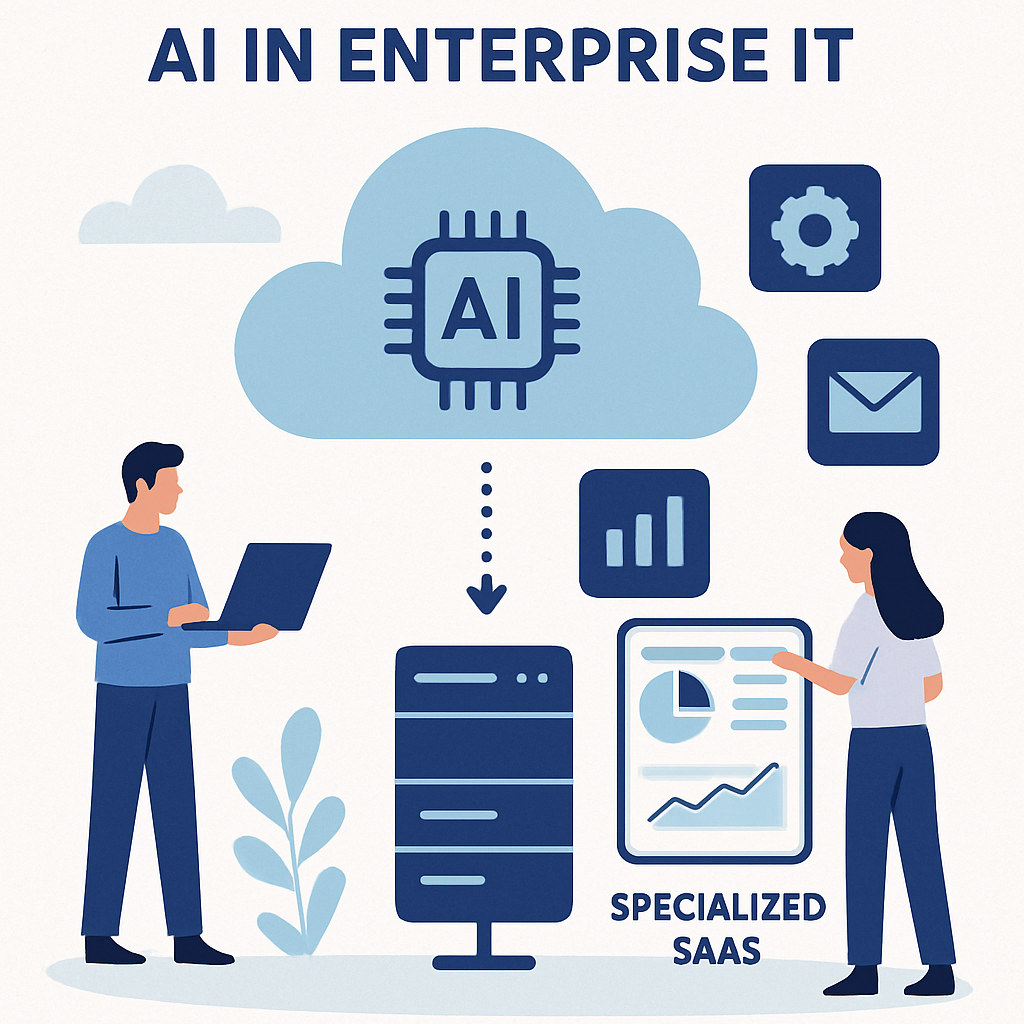
The rise of generative AI (Gen-AI) has sparked discussions about its potential to replace specialized Software as a Service (SaaS) tools within IT departments. Some suggest that powerful AI models could consolidate various enterprise applications into a single, all-encompassing solution. However, this perspective overlooks the complexities and specific requirements of enterprise IT environments.
Reflecting on the evolution of cloud computing offers valuable insights into AI adoption. In the early 2010s, there was a widespread belief that businesses would swiftly transition entirely to the cloud. In reality, this migration has been gradual, with many organizations still in the process of moving to cloud-based infrastructures. Similarly, the integration of AI into enterprise workflows is expected to follow a prolonged trajectory rather than an abrupt overhaul.
Enterprise IT relies heavily on specialized tools designed for specific functions, such as device management, network monitoring, and security information and event management (SIEM). These tools are tailored to meet the unique demands and regulatory requirements of corporate environments. While AI models excel at generating text and code, they lack the inherent capabilities to manage the intricate and regulated aspects of enterprise IT systems. Therefore, it’s unlikely that organizations will replace their established vendors with general-purpose AI solutions.
Security and support considerations further reinforce the necessity of specialized SaaS tools. Dedicated vendors offer products that are specifically designed to address the unique challenges of enterprise IT, providing robust security measures and comprehensive support. Relying solely on AI models for critical IT functions could introduce significant risks, as these models may not be equipped to handle the complex security and compliance requirements inherent in enterprise environments.
In conclusion, while generative AI holds promise for enhancing certain aspects of IT operations, it is not poised to replace specialized SaaS tools. Instead, the future of enterprise IT will likely involve a synergistic approach, integrating AI capabilities into existing tools to augment their functionality without compromising the specialized features and security they provide.