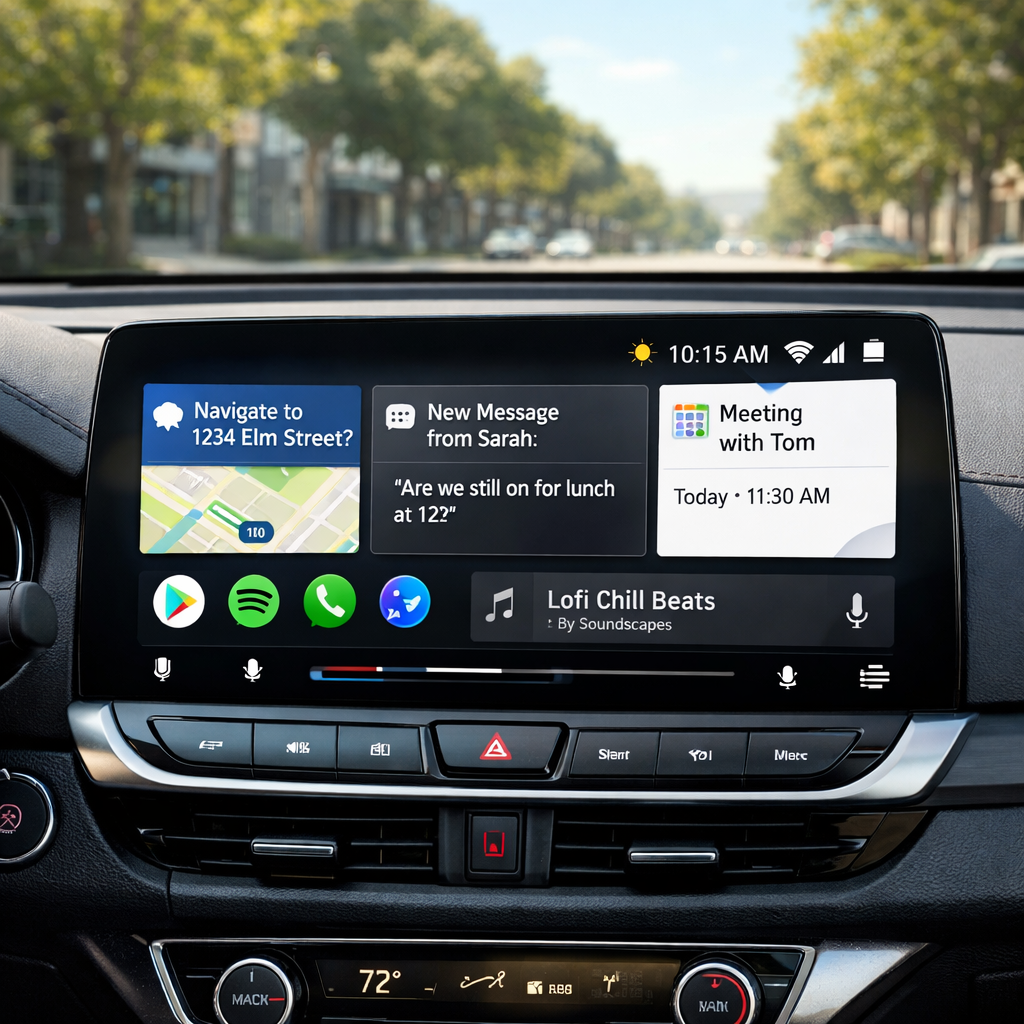
Android Auto is gearing up for a smarter future — but only if you’ve got one of Google’s newest phones. The company has confirmed that its Gemini Intelligence system is being extended to Android Auto, bringing proactive, personalized suggestions to drivers. This update is limited to users with Pixel phones that include Gemini Intelligence.
Gemini Intelligence works by connecting the dots across your apps to surface timely suggestions when they’ll be most useful. For example, if someone texts asking where to meet for your Pilates class, Android Auto might pull up the confirmation email and offer to send the address with just one tap. It’s a feature aimed at reducing distractions and making navigation and communication smoother while driving.
Which pixels qualify — and when this starts
This proactive feature is explicitly exclusive to Pixel phones with Gemini Intelligence — currently the Pixel 10 and 11 series. These phones are already getting new Gemini Intelligence features with Google’s recent “Pixel Drop.” Though Google announced this Android Auto expansion earlier this year, recent updates have laid the groundwork for it to start rolling out soon.
What it means for Android Auto users
Android Auto users have long wanted smarter integration with their phones. This update signals Google pushing its AI efforts deeper into car interaction, building not just hands-free voice or map features, but anticipatory intelligence tied to real-world context. It’s part of a broader move toward more seamless experiences—linking messages, emails, calendar items, and location data.
As this rollout begins, Pixel 10 and 11 owners should keep an eye out for Android Auto updates or notifications indicating the availability of proactive suggestions. For drivers without a compatible Pixel, this feature likely won’t arrive — at least not immediately.
Overall, this addition marks a meaningful shift in how smart assistants behave on the road. Rather than relying on you to ask, they’ll start giving — thoughtfully chosen — suggestions. That could transform how much information drivers have at their fingertips, without overwhelming them behind the wheel.
From a safety and usability standpoint, this is a major step. Google tying Gemini Intelligence to Android Auto in a context-aware way offers both convenience and distraction reduction — so long as users are willing to adopt the newer Pixel models. What to watch for: how these suggestions balance usefulness with intrusiveness, how accurate the context recognition becomes, and whether this policy of Pixel exclusivity expands over time. As cars and phones grow smarter together, this could redefine what driving with tech really looks like.