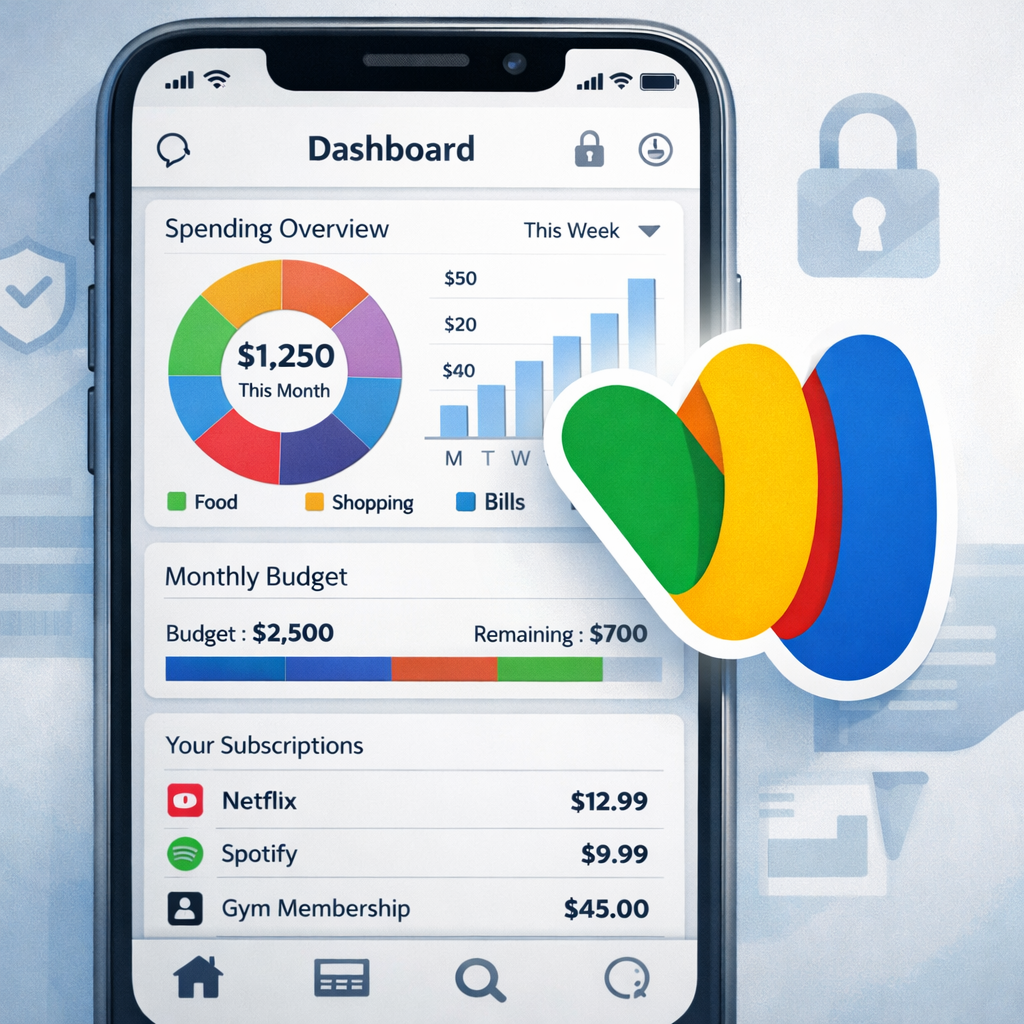
Google has rolled out a new integration between Gemini and Google Wallet for U.S. users, enabling deeper personal finance insights based on spending history. The update allows access to features like visual summaries, budget projections, and a breakdown of recurring expenses, all powered by your transaction history.
What the Integration Offers
The new feature lets Gemini analyze spending patterns tied to your linked financial accounts, and generate things like charts tracking cash flow, asset allocation, and quarter-by-quarter expenses to help you save toward goals. Users can also identify forgotten subscriptions or ones that have gone up in price and build budgets for future events—such as holidays—based on their last year’s spending habits. It’s all conversational: ask Gemini for specific insights and receive data-rich responses.
How It Works & Privacy Protections
The setup is read-only and uses Plaid to securely connect your bank and credit card accounts to Google Wallet. Gemini won’t have the ability to transact, move, or invest any funds—its role is purely analytical. Users will need to opt in through Gemini’s Connectors section, and the Wallet integration works across Android, iOS, and the web.
This addition builds on Google’s existing “Personal Intelligence” ecosystem, which incorporates signals from Gmail, Photos, Search, and YouTube to tailor responses. It comes alongside the recent launch of Google’s Memory Summary feature, which launched just this week. Users interested in turning it on can navigate to Customize → Connectors in their Gemini app.
What this means: Integrating Gemini with Google Wallet bridges the gap between passive finance tracking and AI-driven analysis. For users feeling disconnected from their words, this feature could become a game-changer. It shifts Gemini from being just a chat tool to a financial assistant able to help plan, budget, and take proactive steps. Key watch: how accurately AI parses transactions, and whether this read-only access keeps privacy concerns at bay. Over time, users may expect more capabilities—like alerting to overspends or projecting cash flow—so this could just be the beginning.