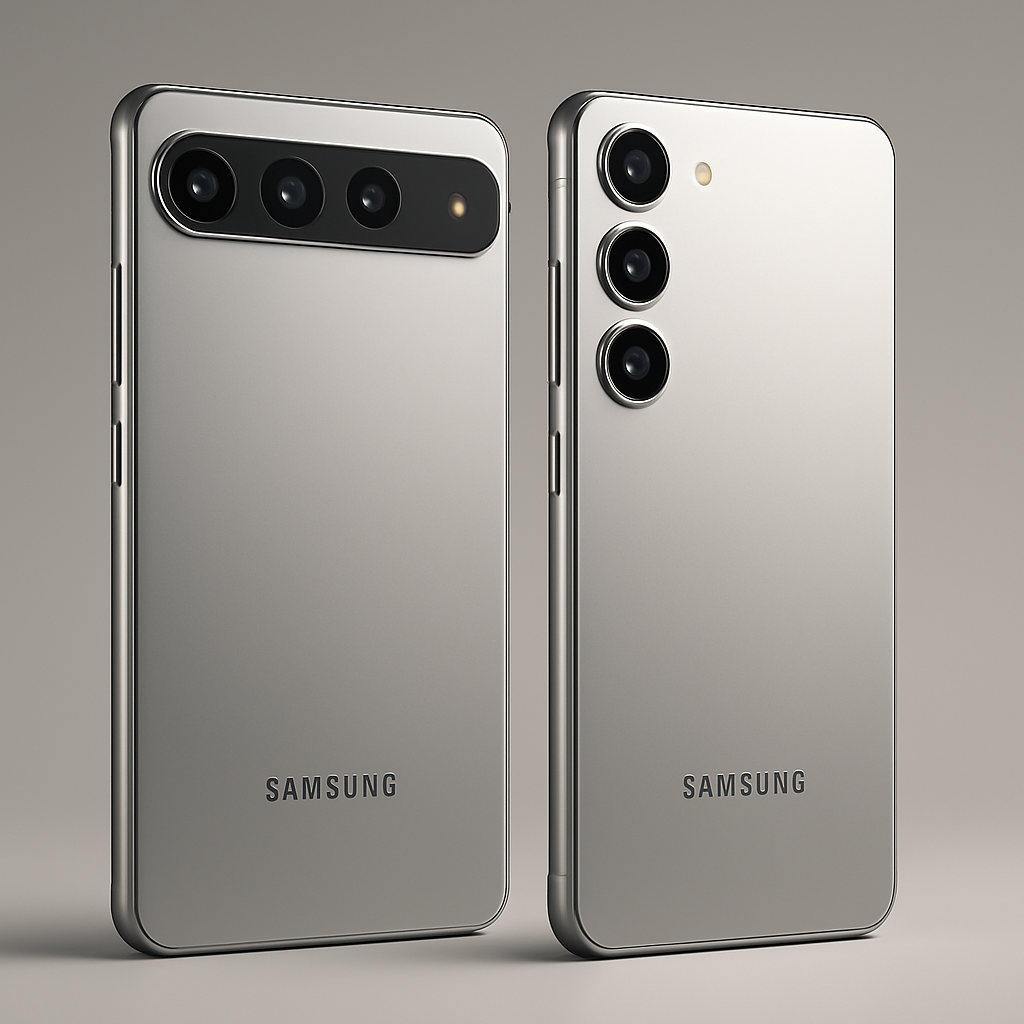
Recent leaks about Samsung’s upcoming Galaxy S27 reveal the standard model is sticking closely to its S26 predecessor—with almost identical size and styling—while the Ultra variant is embracing a major visual shift. The Ultra introduces a sweeping new camera layout that spans the full width of the back panel, abandoning the compact lens cluster in favor of a bold ‘plateau’ design.
Standard S27: Familiar for better or worse
The Galaxy S27 base model reportedly won’t deviate much from the current S26. The leaked renders show minimal changes in dimensions—only minute millimeter differences here and there. It keeps its 6.3-inch display for readers who prefer a smaller flagship, and generally sticks with the same design DNA that Samsung’s maintained since the Galaxy S23. In short: the standard S27 is more evolutionary than revolutionary.
Ultra shifts to a wider rear camera plateau
In contrast, the Galaxy S27 Ultra is making a visible departure with its rear camera system. The new renderings depict a full-width plateau spanning behind all lenses—a design that echoes Apple’s recent moves with its high-end phones. Though it may serve practical purposes like enhanced Qi2 charging stability or reducing wobble when the device rests face-down, it’s clearly a stylistic reimagining for Samsung’s top-tier model.
Internals remain murky. There’s uncertainty over whether Samsung will use its own silicon once again or rely on a new Snapdragon chip. Storage layout, RAM amounts, and pricing are also unconfirmed—though a price increase seems plausible, based on recent leaks tied to the Ultra and expectations for the standard version.
Samsung hasn’t confirmed a release date yet, but leaks suggest the Galaxy S27 line will debut early next year.
Why it matters: Samsung’s decision to diverge design between standard and Ultra models could mark the start of a strategy that further segments its flagship range. For consumers, it raises questions about what you’re paying for: is it all about looks, camera hardware, charging tech—or something deeper? The Ultra’s sweeping facelift might attract those who value aesthetics and innovation, while the standard model offers predictability and established familiarity. What to watch: whether Samsung also mixes up specs, battery tech, or display features to match the visual differences in the Ultra, and how that affects pricing and appeal.