Google has revamped its Gemini app, shifting the model-selection experience for free-tier users. As of October 2026, anyone on the free plan loses the ability to manually pick Gemini models. Instead, they’ll be assigned the “Auto” mode, which uses behind-the-scenes logic to decide which AI model handles each request. The “Auto” mode may assign prompts to Flash-Lite for speed, or upgrade to Flash or Pro when deeper reasoning is needed.
Thinking Levels Replace Old “Extended” Option
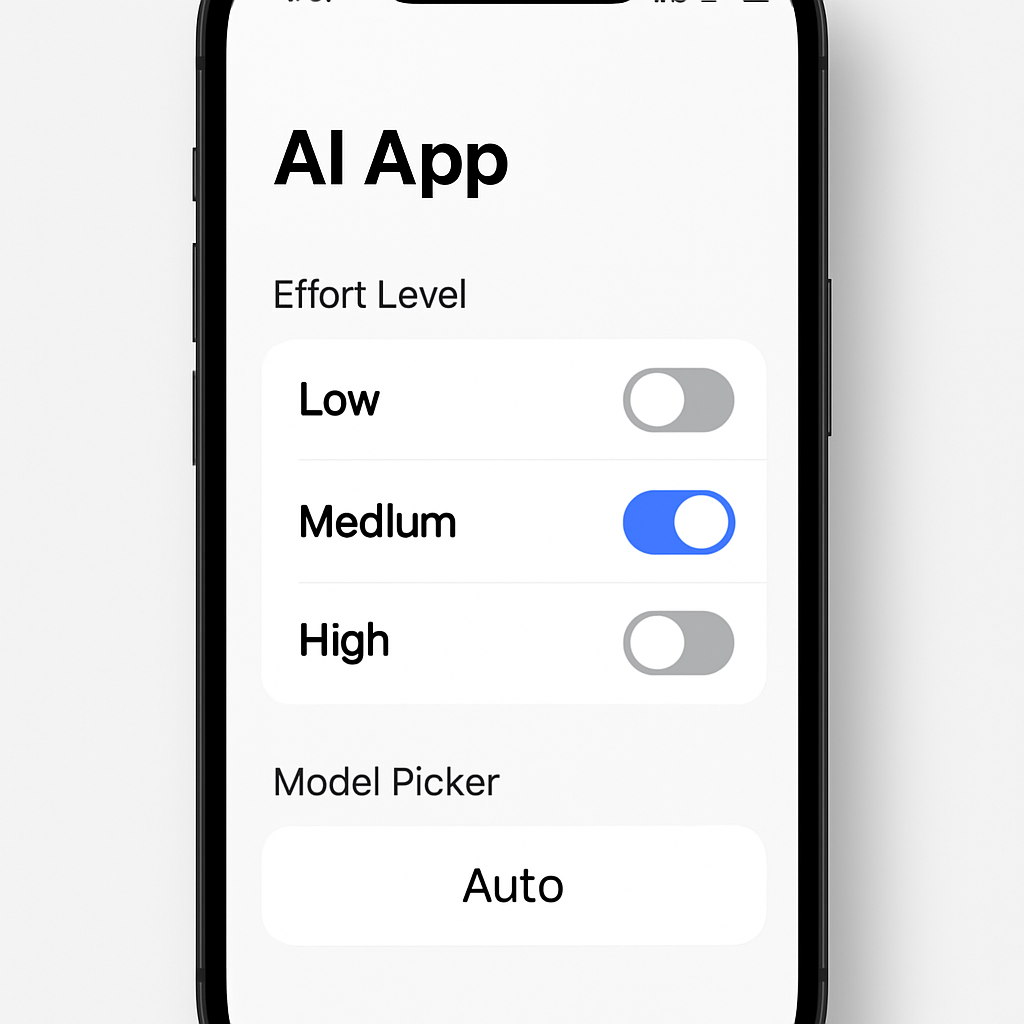
In addition to auto-selection, Google is introducing three new “effort levels” that let users control how much reasoning the responses receive. These levels—Low (quick & efficient), Medium (balanced depth), and High (extra thorough)—take over from the former “Extended” setting. The new effort levels are rolling out to free users broadly, and will also be available to subscribers.
What This Means for Free and Paid Tiers
Free users see two major changes: model choice is removed and is always “Auto,” and all prompts will go to Flash-Lite unless “smart model selection” picks otherwise. If a user disables smart model selection, every response will default to Flash-Lite. Meanwhile, subscribers under the AI Plus plan are facing limits too—they’ll be restricted to only Flash-Lite and Flash (version 3.8) models.
This rollout is already visible for most free accounts in the U.S. as of the evening (Pacific Time) of October 9, 2026, with Google reportedly pushing the update broadly and rapidly.
Previously, free users could choose specific models to handle their prompts. Now, Auto mode automatically selects between Flash-Lite, Flash, and Pro depending on prompt complexity—this simplification aims to streamline the experience but also limits user control.
The effort levels framework appears to align Gemini with Google’s broader AI tools such as Studio and Antigravity, which offer similar thinking settings. These levels let users influence response style and speed without having to pick which exact model is used.
In short, Google is simplifying the experience for free users while shifting parts of its previous paid functionality into Auto and effort-based mechanisms.
Looking ahead, users will want to watch how the change affects response accuracy, depth, and overall satisfaction—especially for those who used model-switching to get particular styles of answers. While the update may reduce confusion, it raises questions around trade-offs between speed and intelligence in generative AI models and what ultimately justifies paying for higher tier access.