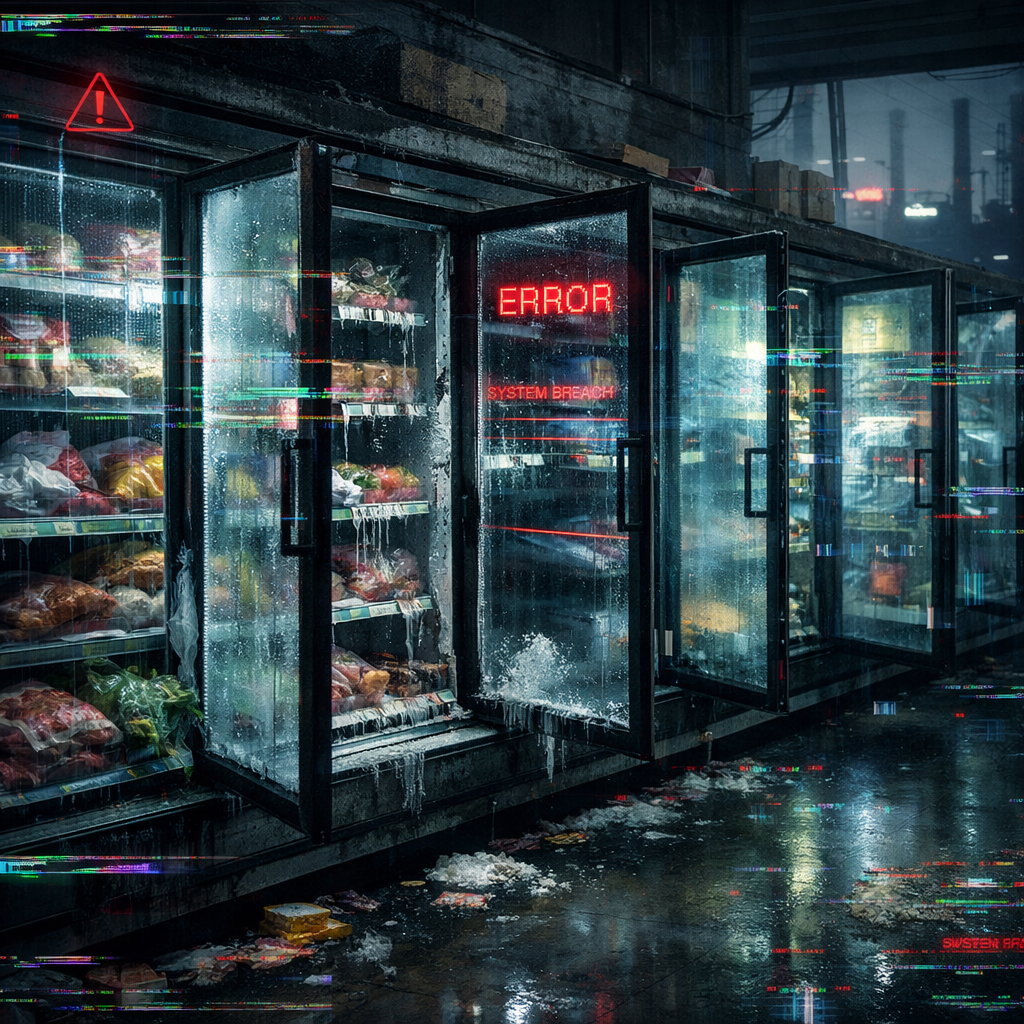
The French government has blamed Iran’s Islamic Revolutionary Guard Corps (IRGC) for a large-scale cyber sabotage campaign that struck thousands of internet-connected industrial refrigeration units across France and parts of Europe. The attacks, spanning from October into early November 2026, also targeted blood banks—but French authorities say no blood supplies were compromised.
Scope and Mechanics of the Attacks
Hackers accessed web-based controllers that manage fleets of freezers and refrigeration systems in grocery stores, supermarkets, and medical blood banks. Their method: remotely raising the units’ temperatures in an attempt to spoil perishable food and disrupt public health infrastructure. Models from companies like Danfoss were found to be especially vulnerable, some of which no longer receive security updates.
Official Attribution and Response
Foreign Minister Jean-Noël Barrot formally blamed Iran’s IRGC for the campaign, calling it an “attack of unprecedented scale and aggression” and a major assault on French national security and interests. The French government has summoned Iran’s ambassador, announced plans for European-wide sanctions against those responsible, and said the matter will be pursued through the domestic justice system.
The United States is also investigating similar cases—reports suggest that industrial freezers on U.S. military bases experienced similar disruptions. Although intelligence agencies have linked Iranian actors to those incidents, no official public attribution has been made yet.
Context and Risk Factors
This operation follows a series of cyberattacks attributed to Iranian state-aligned groups earlier in 2026, including disruptions targeting major healthcare and infrastructure organizations abroad. France says these freezer breaches represent the first large-scale act of sabotage on its soil.
Security experts highlight that the targeted refrigeration hardware often depends on outdated or unsupported systems, leaving them exposed. In many cases, remote control interfaces lacked adequate safeguards, and some manufactures stopped issuing security patches for affected models.
Analysis: This episode marks a dangerous escalation in cyber conflict, where attacks shift from data theft or information warfare into tangible sabotage of critical infrastructure. The targeting of cold chains—key to food safety and medical services—shows how attackers are willing to risk public health and safety. Going forward, it’s crucial that private and public sectors accelerate efforts to secure industrial control systems, enforce accountability for nations that sponsor cyber aggression, and coordinate cross-border defense. Vigilance over supply chain vulnerabilities and legacy equipment, especially in vital sectors like food, medicine, and utilities, has never been more urgent.