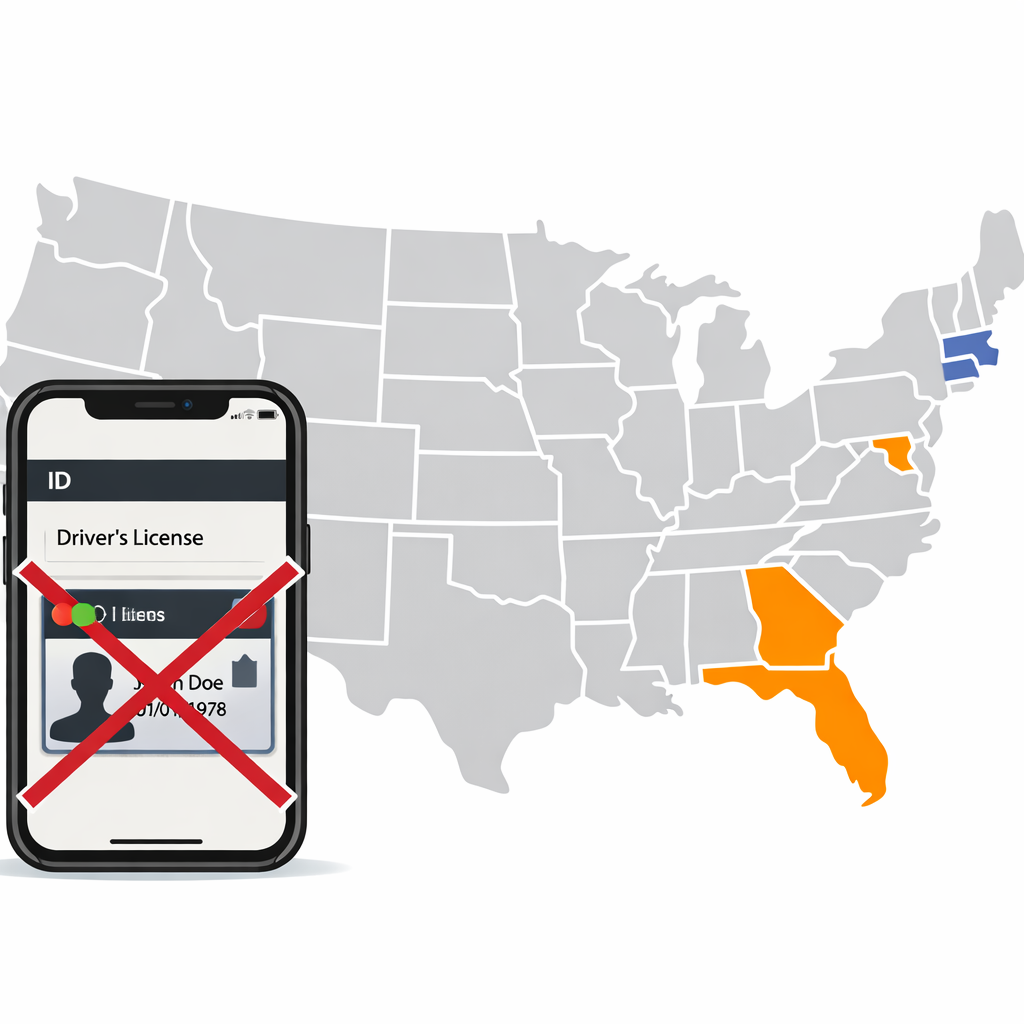
Apple’s push to let U.S. residents store state driver’s licenses and IDs in Apple Wallet continues apace—but two states have made clear they won’t be joining anytime soon. Florida and Rhode Island have both signaled that they’re unlikely to support digital driver’s licenses in Apple Wallet in the near future. The reasons—and potential timelines—differ significantly between them.
Florida: Political Opposition and App Shutdown
Florida recently introduced redesigned physical driver’s licenses and state ID cards. At the same time, the state offered no indication it would be embracing the Apple Wallet digital ID feature. Governor Ron DeSantis has publicly opposed digital driver’s licenses, arguing that they pose risks of governmental abuse. His stance appears definitive: “No digital ID,” he stated in November 2025.
This isn’t merely posturing. Florida previously permitted a digital ID through its Smart ID app, but in 2024, that program was abruptly ended. The app was removed from app stores as the state moved to select a new vendor. Until that new version launches—if ever—residents must rely on their physical IDs for official identification. The state has not indicated a shift in this stance.
Rhode Island: Waiting for Demand and Broader Buy-In
In Rhode Island, the reluctance comes not from political opposition, but from a calculation by leadership in the motor vehicle and DMV space. Walter “Bud” Craddock, who heads the state DMV and chairs the AAMVA International Board of Directors, has questioned whether there’s enough demand yet to justify investing in digital driver’s license (or mobile driver’s license—MDL) systems.
Craddock points out that until recently, no airport in New England could accept mobile driver’s licenses (an important use case through TSA), making widespread adoption difficult to justify. He’s also expressed reservation about building a one-off system just for Apple Wallet—instead preferring cross-platform compatibility to avoid duplicate infrastructure and reduce development cost. With leadership set to change in the near future, Rhode Island may revisit the issue in 2027 depending on priorities.
Where Things Stand Across the Country
Currently, around sixteen U.S. states allow residents to add a driver’s license or state ID to Apple Wallet. These include Arizona, California, Illinois, Ohio, Virginia, and others, plus Puerto Rico. More states are expected to adopt the feature in coming months. Florida and Rhode Island stand apart because they’ve publicly pushed back on adoption. Neither state is listed by Apple among those supporting Wallet-based driver’s licenses.
Some key distinctions: Florida’s opposition is political and aligns with the governor’s stance, while Rhode Island’s reluctance stems from cost-benefit questions and concerns about usability and platform duplication. There’s no formal law in Rhode Island rejecting the feature; it remains an issue of prioritization.
What Residents Should Do
If you live in Florida or Rhode Island, keep using your physical driver’s license or state ID. The chances of adding your license or ID to Apple Wallet are slim in the short term—but that could change depending on leadership and demand. In states that already offer Wallet-based digital IDs, the feature enhances convenience—especially for TSA checkpoints and digital ID verification—but legal acceptance still varies.
Bottom line: While digital driver’s licenses are spreading, state-level politics, technical infrastructure, and cost considerations remain major obstacles. States like Florida and Rhode Island show that even with Apple’s push, not every state will go digital at the same pace—or at all—for some time.
Analytically, this divide underscores how digital ID adoption depends not only on technology, but on political culture and regulatory frameworks. Governors and DMV leadership matter—and so do external factors like which airports accept mobile IDs. For the digital ID movement, these holdouts could shape how services roll out nationwide. Watch Florida’s legislation and Rhode Island’s next leadership moves: they may determine whether these states become exceptions or late adopters in the push for digital identity.