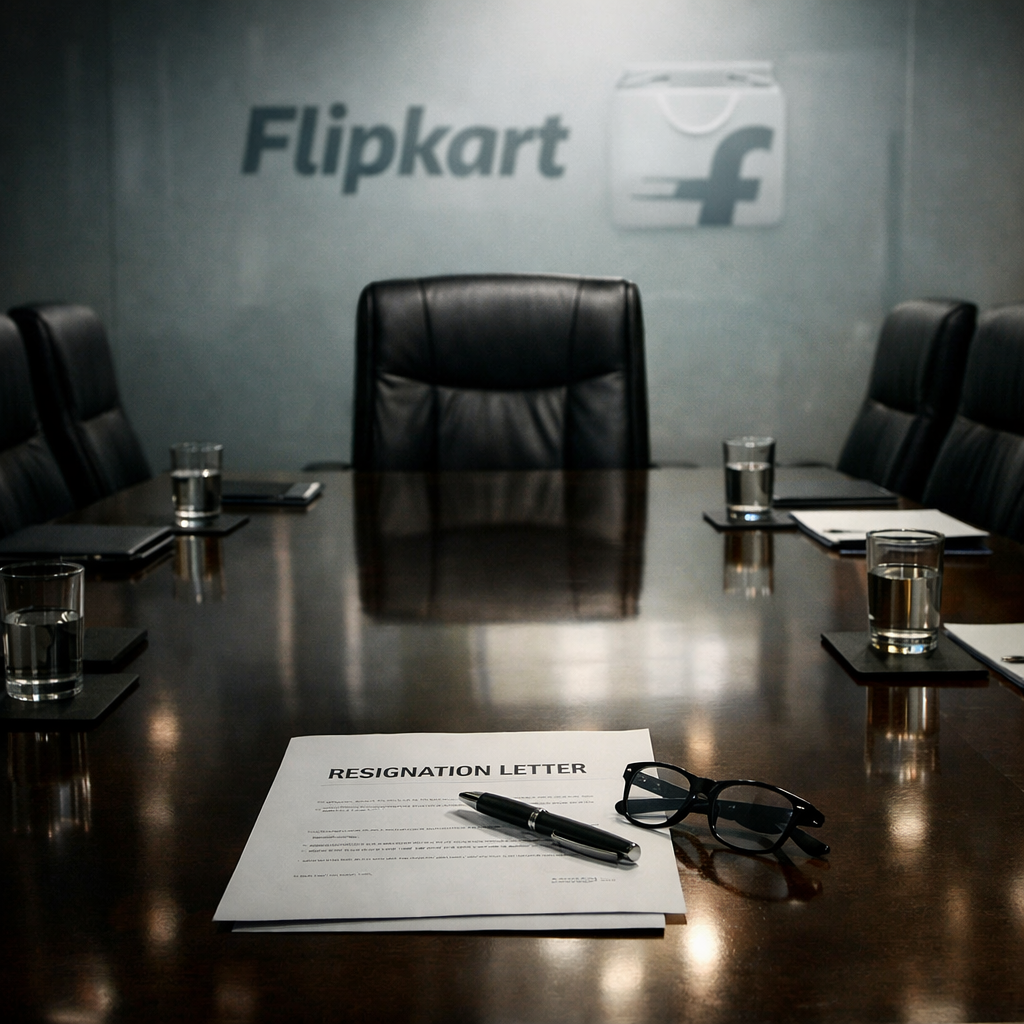
After more than 11 years at Flipkart — including nearly a decade leading the company — Kalyan Krishnamurthy will leave his role as CEO next week. His departure comes amid growing uncertainty around Flipkart’s long-anticipated initial public offering (IPO). The company confirmed that Balaji Thiagarajan, its chief product and technology officer, will take charge on an interim basis until a permanent replacement is named.
Tenure, Growth, and Shift in Strategy
Krishnamurthy, who joined Flipkart in 2015 as part of the investment arm of Tiger Global, assumed the CEO position in 2017. He led the company through its acquisition by Walmart in 2018 and transformed it into one of India’s biggest e-commerce players. Under his leadership, Flipkart scaled rapidly, reaching over 500 million registered users and more than 1.4 million sellers. The platform now lists over 150 million products across more than 80 categories.
Flipkart also broadened its offerings. It introduced faster delivery services via its “Flipkart Minutes” initiative and entered the food-delivery arena with “Eat-in by Minutes.” These moves reflect the increasing demand in India for quick commerce — consumers expect near-instant access not just to electronics or fashion, but groceries and meals too.
IPO Uncertainty and Leadership Shift
Flipkart’s next steps toward going public have been murky. Earlier this year, the company relocated its headquarters from Singapore to India in what appeared to be a move to prep for an IPO. However, in May, Walmart reportedly instructed Flipkart to postpone its public listing and instead focus on boosting profitability first. That delay appears closely linked to Krishnamurthy’s exit.
The company stated Krishnamurthy’s final day will be December 4. A formal announcement of his successor is expected in the coming weeks. Thiagarajan, in his interim role, brings deep product and technology experience; his previous roles include leading engineering initiatives at major global tech firms and running his own startup focused on AI assistants for finance.
Flipkart began in 2007 as an online bookstore, founded by Sachin and Binny Bansal. Over time it expanded into a massive marketplace, and under Krishnamurthy it overtook Amazon in India in terms of gross merchandise value. Walmart, the majority owner since 2018, acknowledged Krishnamurthy’s impact, pointing to the governance, growth trajectory, and culture instilled during his tenure.
While the official reason for his departure hasn’t been detailed beyond the IPO delay, the move underscores internal and external pressures tied to profitability, regulation, and market timing in one of the world’s most competitive e-commerce markets.
Why This Matters
This leadership transition signals a pivotal moment for Flipkart. Its IPO plans have been on thin ice, and investors will be watching closely whether profitability objectives will be met and whether the new leader, once appointed, maintains the aggressive growth path or shifts toward consolidation. In the broader picture, this reflects tensions seen across global startups: growth is expected, but achieving it sustainably enough to satisfy public markets is becoming a high bar.
For Walmart, the change could influence how it positions Flipkart not just as a regional champ, but as a candidate for global investment attention. Ultimately, the coming weeks will be telling: who leads Flipkart next, what financial shape the company is in, and whether the IPO that’s been pushed back becomes a reality or remains an ambition.