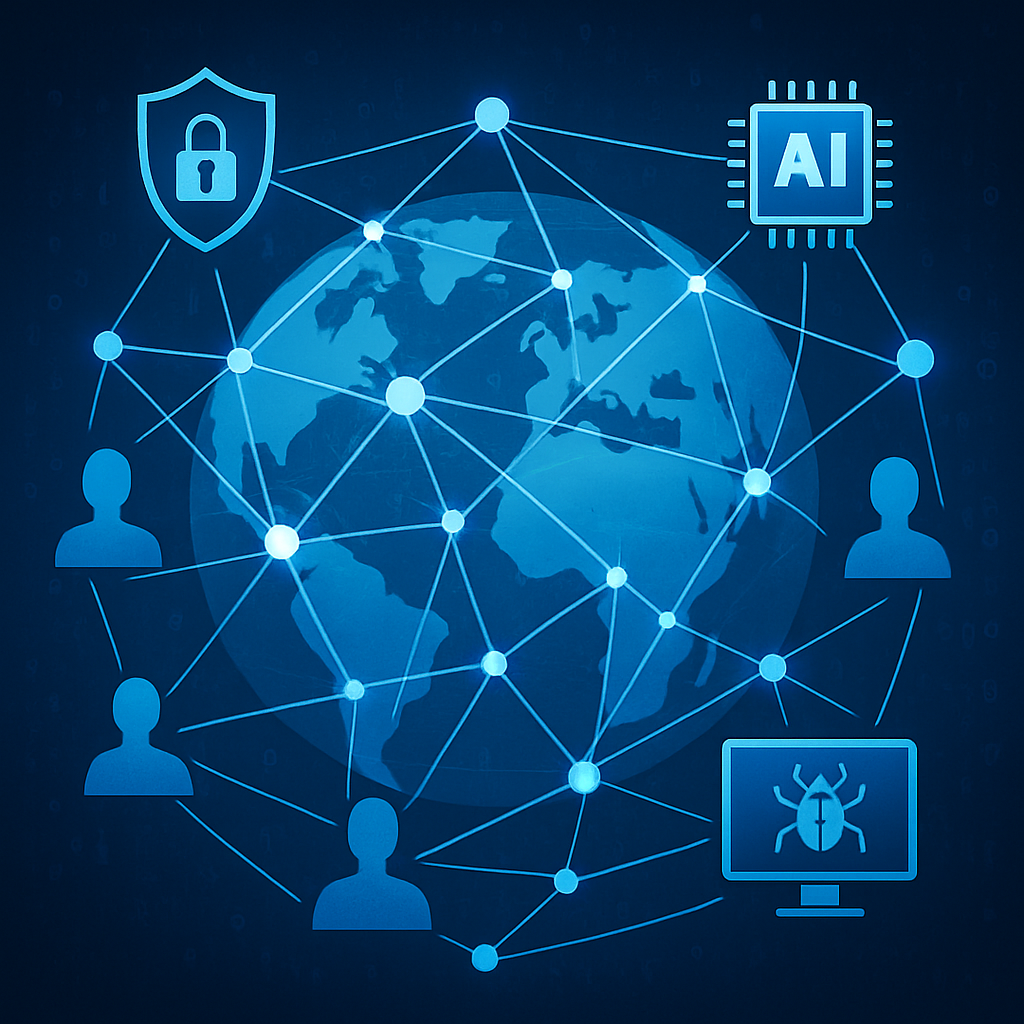
The intelligence agencies of the Five Eyes alliance—comprising the United States, United Kingdom, Canada, Australia, and New Zealand—have jointly called for a comprehensive approach to counter the escalating cyber threats amplified by artificial intelligence (AI). In a statement released on June 22, 2026, these agencies emphasized the necessity for governments, businesses, and critical infrastructure operators to adopt a “whole-of-organization and whole-of-society response” to effectively address these challenges.
AI is fundamentally transforming the cyber threat landscape, enabling adversaries to conduct attacks with unprecedented speed, scale, and sophistication. The agencies highlighted that the timeframe for emerging risks has contracted dramatically, shrinking from years to mere months. This acceleration demands a proactive and coordinated defense strategy.
AI’s Dual Role in Cybersecurity
While AI offers powerful tools for defenders, it also equips malicious actors with capabilities to automate attacks, rapidly identify vulnerabilities, and scale operations with minimal effort. This dual-use nature of AI underscores the urgency for organizations to reassess their cyber resilience strategies. The agencies stressed that cyber risk should not be viewed solely as a technical issue relegated to IT departments but recognized as a core business risk requiring active engagement from executive leadership and boards.
Emphasis on Foundational Security Practices
Despite the advanced threats posed by AI, many breaches continue to result from basic security lapses, such as unpatched systems, weak access controls, and outdated infrastructure. The agencies warned that legacy and unsupported systems are becoming strategic liabilities, especially as attackers leverage AI to exploit these weaknesses more efficiently. They advocate for the adoption of secure-by-design and secure-by-default principles in software and system development to mitigate these risks.
Organizations are encouraged to implement layered security approaches and bolster their incident response and recovery capabilities. Integrating AI-driven tools into security operations can enhance anomaly detection, improve vulnerability management, and accelerate incident response. However, the success of these measures hinges on effectively embedding security into the core business strategy, rather than merely deploying additional tools.
Collaboration and information sharing across public and private sectors are deemed critical to collective defense. By working together, organizations can better anticipate threats and respond more effectively. The Five Eyes agencies concluded with a clear warning: cyber resilience is not optional. In the face of rapidly evolving AI-driven threats, a unified and proactive approach is essential to safeguard national security, economic stability, and public safety.
This call to action underscores the imperative for organizations to not only invest in advanced security technologies but also to foster a culture of cybersecurity awareness and preparedness at all levels. As AI continues to evolve, staying ahead of potential threats requires continuous adaptation and collaboration.