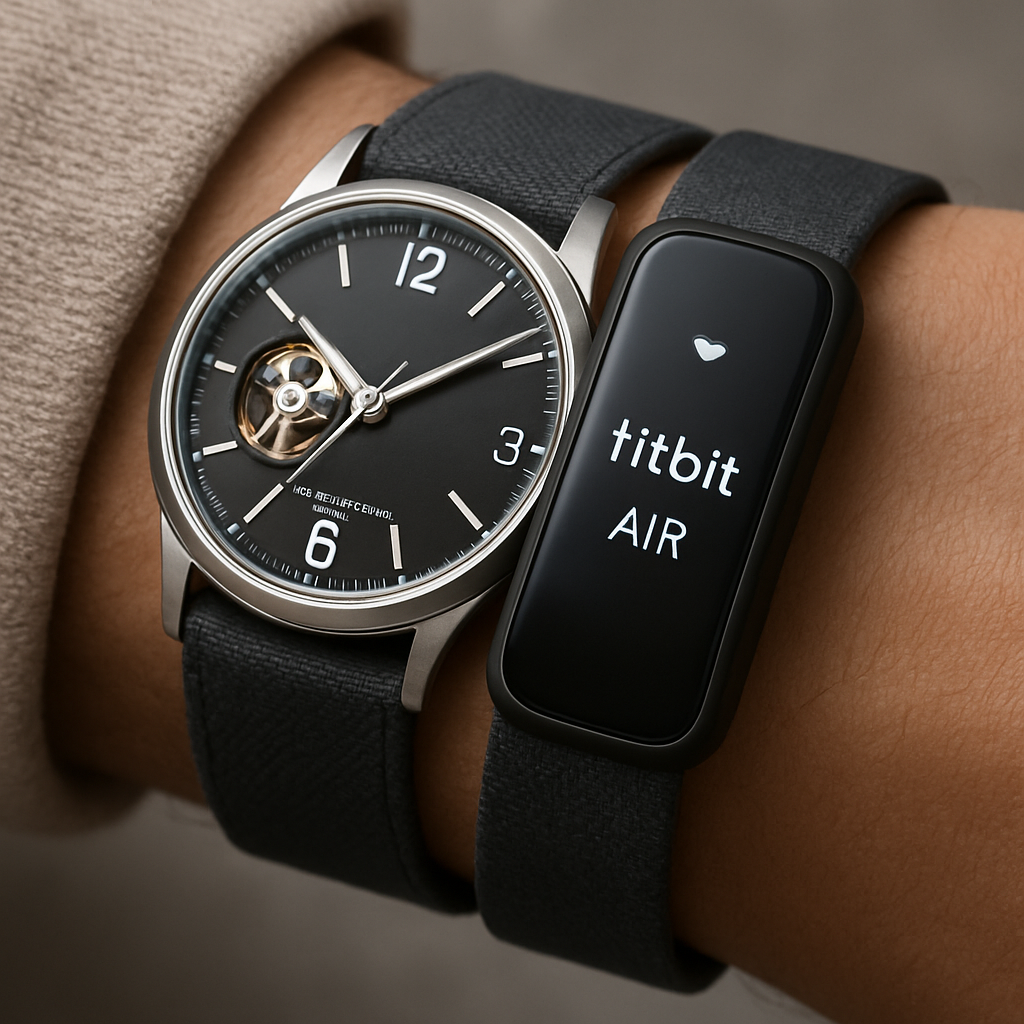
Fitbit Air users are creatively integrating their automatic watches with the fitness tracker’s strap, allowing both devices to be worn simultaneously on a single band. This approach maintains the functionality of both devices without the need for multiple wristbands.
The Fitbit Air, a screenless fitness tracker, is designed to be worn alongside traditional timepieces. Users have discovered that by threading the Fitbit Air’s strap through the spring bars of their automatic watches, they can wear both devices on one wrist. This setup positions the watch face on top and the Fitbit Air sensor beneath the wrist, ensuring both devices function effectively.
To achieve this integration, users can follow these steps:
- Detach the Fitbit Air strap while keeping the sensor attached.
- Remove the existing strap from the automatic watch, leaving the spring bars in place.
- Thread the Fitbit Air strap through the watch’s spring bars, similar to how a single-pass NATO strap is used.
- Secure the strap so that the watch face is on top of the wrist and the Fitbit Air sensor rests underneath.
It’s important to note that the Fitbit Air’s strap is 18mm wide. Therefore, this method works best with watches that have a lug width of 18mm. While some users have successfully adapted this technique for watches with 19mm or 20mm lugs, slight gaps may be present.
Currently, strap options for the Fitbit Air are limited, and alternative bands like NATO or Marine Nationale straps are not readily available. However, Google has released design specifications to encourage third-party manufacturers to produce compatible straps, suggesting that more options may become available in the future.
While Google does not officially endorse this integration method, it offers a practical solution for users who wish to wear both a traditional watch and a fitness tracker without the inconvenience of multiple wristbands.
This innovative approach highlights the adaptability of wearable technology and the creativity of users in customizing their devices to fit personal preferences. As third-party accessories become more available, such integrations may become more common, offering users greater flexibility in how they wear and use their devices.
Source: 9to5Google