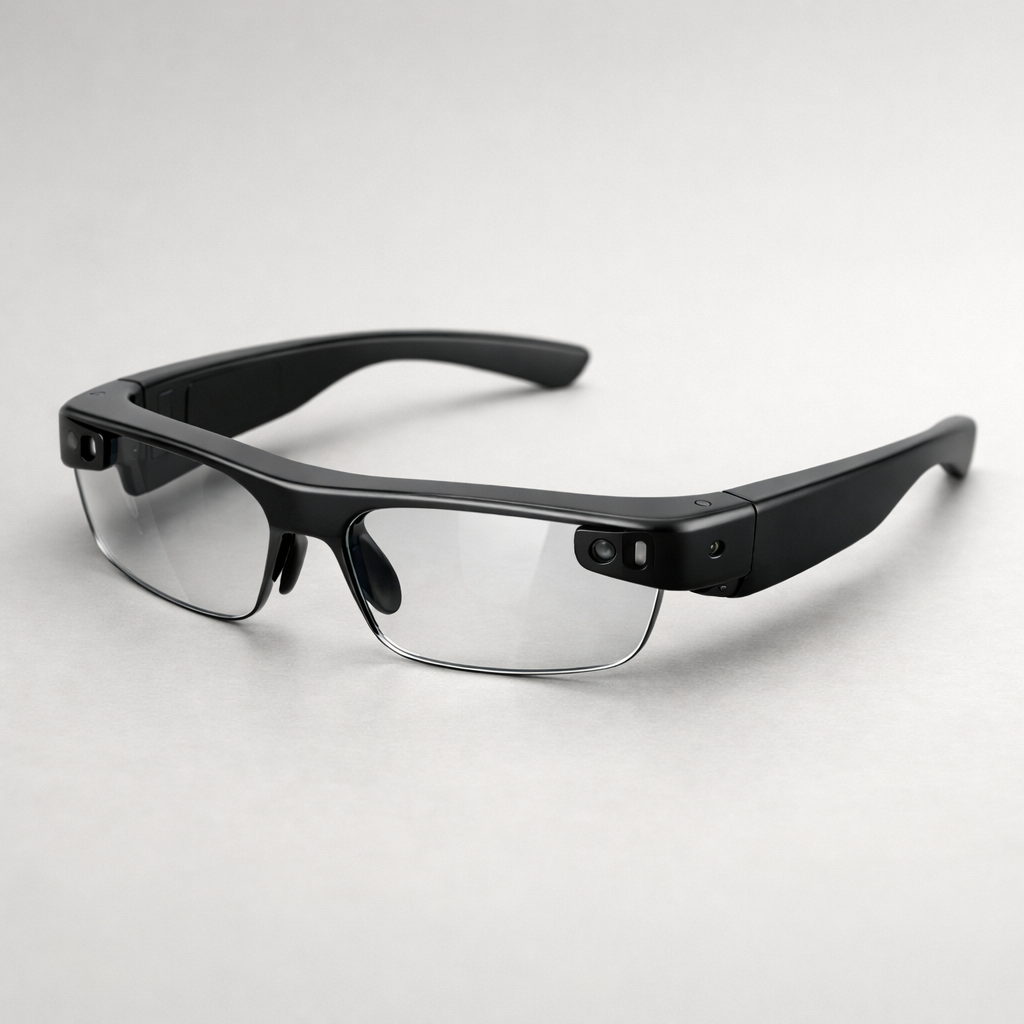
Apple’s upcoming smart glasses—often dubbed “Apple Glasses”—won’t replicate the mixed reality experience offered by the Vision Pro. Instead of overlaid visuals, the first generation is expected to focus on environmental awareness and voice-based AI interactions. No apps or graphics will be rendered on the lenses.
What’s inside: Sensing, battery & Siri AI
The device will include sensors and cameras designed to scan and track surroundings. While these sensors won’t power head-up displays or holograms, they’ll feed location and environmental data into Siri AI, which is planned to always be on. Users will be able to issue voice commands and the assistant will use what it perceives through the glasses—without visual prompts—spurring comparisons to wearing “AirPods for your face.”
Battery life is expected to be a priority. Apple reportedly aims for enough battery to support folks through a full day without needing a charge. Comfort also plays a major part in the design, suggesting lighter materials or ergonomic tweaks aligned with regular eyeglass wear.
How this differs from Vision Pro
Unlike the Vision Pro, which delivers full augmented reality—graphical overlays, virtual interfaces, and immersive spatial experiences—these glasses are taking a minimalist route. The lack of visible data means no AR content, no on-lens displays for maps, notifications, or other UIs. Essentially, they resemble smart earbuds more than lightweight VR goggles.
In terms of use cases, the glasses seem aimed at assisting users through voice AI, environmental awareness, and perhaps audio cues, leaving the more graphically driven AR and apps for future iterations or other devices.
Analytical perspective: With this strategy, Apple appears to be mapping a phased product roadmap. Launching with core features like battery longevity, comfort, and always-on voice AI is less risky than delivering full AR out of the gate, which could involve compromises in weight, visuals, cost, and form factor. The decision suggests Apple wants to build a foundation first—one that piques interest without trying to do everything. What to watch: how consumers react to a product that markets “smart glasses” without screen-based functionality—and whether Apple’s second-gen hardware can leap the visual AR hurdle without sacrificing what early users will expect most.