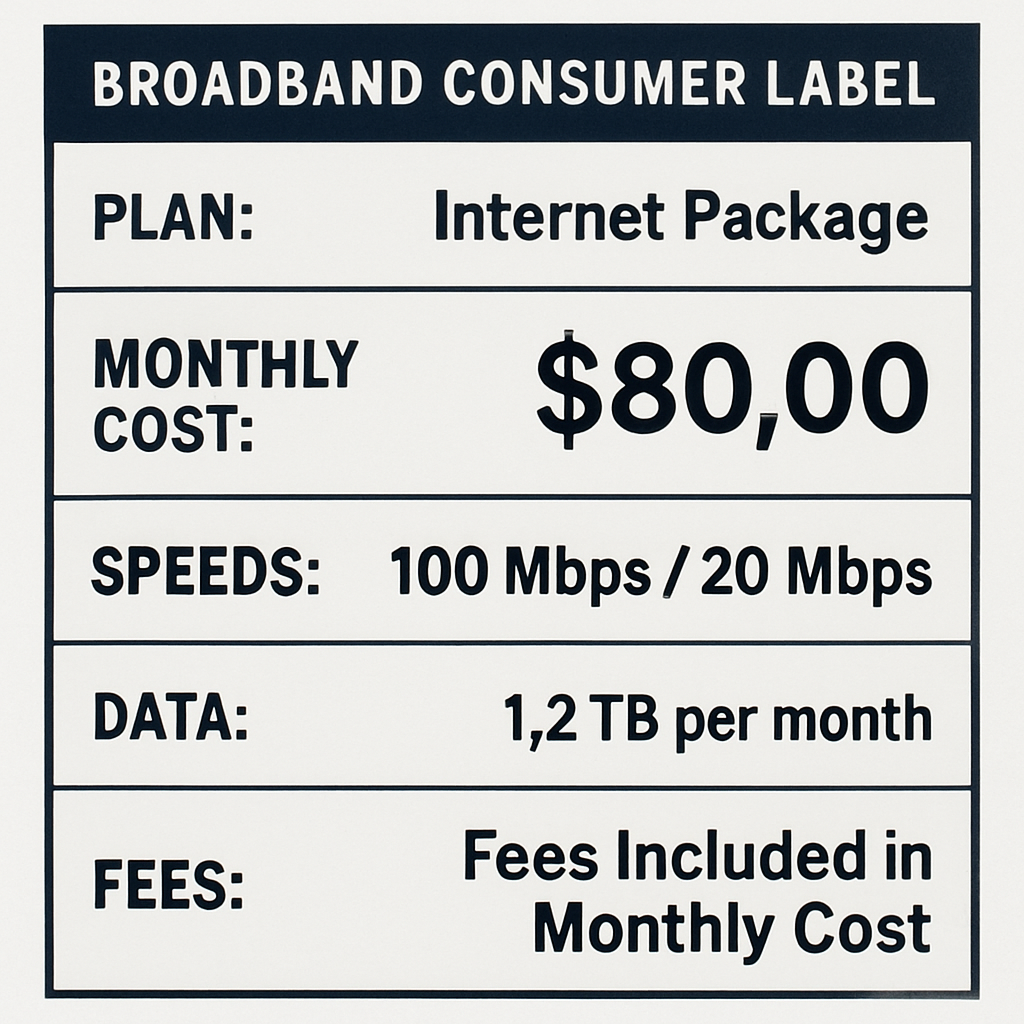
The Federal Communications Commission (FCC) is considering revisions to its broadband consumer label requirements, potentially reducing the transparency of fees and service details provided to consumers. A vote on these changes is scheduled for later this month.
Under the current regulations, internet service providers (ISPs) are mandated to itemize all passthrough fees on their broadband consumer labels. This practice ensures that consumers are fully aware of additional charges beyond the base service price. However, the proposed amendments would allow ISPs to aggregate these fees into a single “up to” amount, encompassing both government-imposed fees and those from non-government entities, such as utility pole owners. This shift aims to alleviate the burden on providers who must create and update numerous labels to account for location-specific fee variations.
In addition to fee aggregation, the FCC is contemplating other modifications that could further impact consumer transparency. One such proposal would permit ISPs to provide links to broadband labels instead of displaying them directly on ordering pages and customer account portals. The FCC acknowledges that this change “may result in fewer consumers reading the label,” potentially diminishing the effectiveness of these disclosures.
Another significant change under consideration is the elimination of the requirement for ISPs to publish label data in machine-readable formats. This data has been instrumental for third parties in developing price-comparison tools and conducting market research. Without this accessibility, consumers may find it more challenging to compare services and make informed decisions.
Furthermore, the FCC is proposing to relax the obligations of phone representatives. Instead of reciting label information verbatim, representatives would be allowed to present a conversational summary of key label fields. Additionally, ISPs would no longer be required to retain labels for discontinued plans for a minimum of two years.
These proposed changes mark a departure from the FCC’s previous efforts to enhance transparency in the broadband industry. In April 2024, the FCC implemented rules requiring ISPs to display “nutrition labels” for their services, detailing prices, speeds, data allowances, and other critical information. These labels were designed to help consumers make informed choices and foster competition among providers.
While the FCC argues that the proposed amendments aim to reduce compliance burdens on providers, consumer advocates express concern that these changes could obscure important information, making it harder for consumers to understand the true costs and terms of their broadband services. As the FCC moves forward with these proposals, it is crucial to balance the needs of providers with the rights of consumers to clear and comprehensive information.