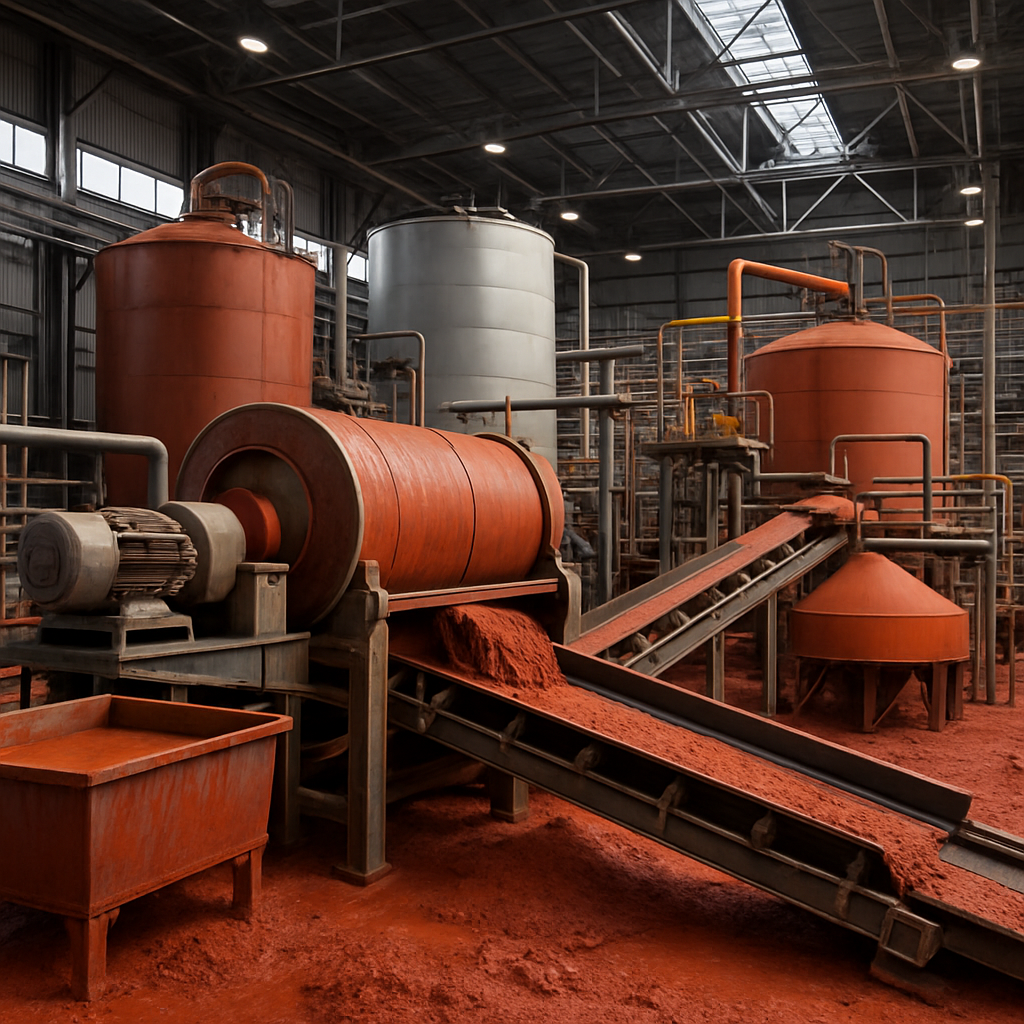
Aluminum production has resulted in over 3 billion tons of red mud, a caustic byproduct typically stored in open-air ponds or mounds. Fast Metals, a startup co-founded by Sumedh Gostu, sees potential in this waste, aiming to extract valuable minerals from it.
Red mud is rich in iron oxide, giving it its characteristic color, and contains critical minerals like titanium, aluminum, and rare earth elements. Historically, extracting these minerals has been cost-prohibitive. Fast Metals has developed a six-step chemical process that utilizes another waste stream from alumina refineries to economically separate these minerals.
Gostu, who developed much of this process during his doctoral studies at the Colorado School of Mines, realized that incorporating this additional waste stream could make the extraction process more viable. The process allows for the sequential extraction of minerals, with iron covering operational expenses and other minerals generating profit. For instance, titanium dioxide sells for approximately $2.50 to $3 per kilogram, while scandium oxide can fetch around $750 per kilogram.
Recently, Fast Metals secured a $4.3 million pre-seed funding round led by New Climate Ventures, with participation from Azolla Ventures, Astor Swiss, and Rio Tinto’s accelerator, Founders Factory. This funding will support scaling up their operations. The company has also entered into a commercial contract with Metalox, a mineral processor, to treat one ton of red mud and refinery waste per week later this year.
By transforming industrial waste into valuable resources, Fast Metals not only addresses environmental concerns associated with red mud storage but also contributes to the supply of critical minerals essential for various industries. This innovative approach exemplifies how sustainable practices can align with economic interests, potentially setting a precedent for similar waste-to-resource initiatives in the future.