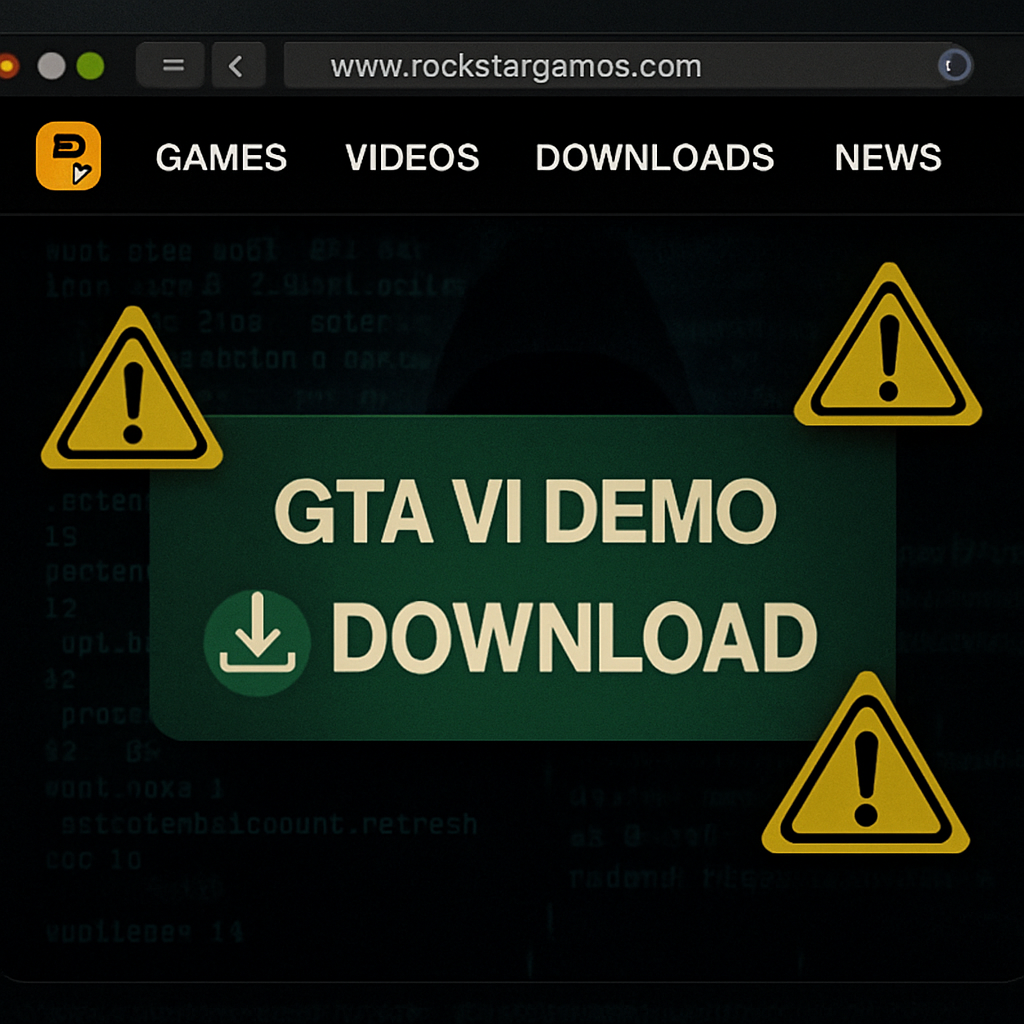
Gamers seeking early access to Grand Theft Auto VI are being targeted by a malicious imposter: a “demo” download that’s actually malware. Impersonating Rockstar Games’ official site, the fake installer—labeled as a demo—actually contains the Vidarstealer, a notorious threat designed to harvest saved credentials, session cookies, and other sensitive browser data. ([cybersecuritynews.com](https://cybersecuritynews.com/fake-gta-6-demo/))
What the Scam Looks Like
Platforms built to mimic official Rockstar Games landing pages are appearing in search results, offering download links and pressings such as “Play Now.” In reality, these links point to a 1.1 MB executable—not even close to the expected size of a major game build. The campaign kicked off openly around August 19, just after unauthorized leaks and alleged footage surrounding GTA VI’s Leonida map began circulating online. ([cybersecuritynews.com](https://cybersecuritynews.com/fake-gta-6-demo/))
What the Malware Does
Once executed, the malicious file does not trigger any recognizable game interface or installer. Instead, it quietly scours the system for stored session and login data from various web browsers—including Chrome, Firefox, Edge, Brave, Opera, and Vivaldi—as well as other apps like FTP clients, email client Thunderbird, and even components used in Roblox Studio. ([cybersecuritynews.com](https://cybersecuritynews.com/fake-gta-6-demo/))
The malware is especially risky because it exfiltrates browser session cookies. These allow attackers to impersonate your logged-in sessions without needing your password or passing two-factor checks. In many cases, victims may never notice their credentials have been stolen until someone misuses them. The program also engages legitimate programs in hidden mode to access protected data and removes traces of its activity after collection. ([cybersecuritynews.com](https://cybersecuritynews.com/fake-gta-6-demo/))
Damage & Mitigation Steps
Exposure isn’t limited to gaming accounts. A compromise could give attackers access to email, shopping, social media, and payment platforms. Even users with strong, unique passwords and two-factor authentication aren’t fully safe. ([cybersecuritynews.com](https://cybersecuritynews.com/fake-gta-6-demo/))
To respond: run a full scan of your system using trusted security software. If you suspect infection, log in from a clean device, change passwords—especially for email and financial services—sign out of all active sessions, remove unknown devices, and review recovery settings. Also watch for unusual account activity. ([cybersecuritynews.com](https://cybersecuritynews.com/fake-gta-6-demo/))
Preventive measures include obtaining games and demos only from official publishers or reputable digital stores and treating search ads, surprise downloads, leaked builds, or promises of early access with extreme skepticism. Before opening any executable, check its size and signature; anything claiming to be a full game yet barely over a megabyte in size should raise red flags. ([cybersecuritynews.com](https://cybersecuritynews.com/fake-gta-6-demo/))
Indicators of Compromise (IoCs)
Threat researchers have identified domain names used in the campaign, a fake file name, the cryptographic hash of the malicious installer, and malicious infrastructure tied to exfiltration via sites pretending to be Telegram, Pinterest, or the Steam Community. These IoCs help defenders block phishing domains or flag suspicious files. ([cybersecuritynews.com](https://cybersecuritynews.com/fake-gta-6-demo/))
This incident follows a broader trend of attackers leveraging high-profile game releases and leaks to push credential-stealing malware. The Vidar family is no stranger to such campaigns: similar methods have been observed in other gaming-related threats earlier in 2026. ([cybersecuritynews.com](https://cybersecuritynews.com/fake-gta-6-demo/))
Analytically, this attack matters because it shows how even savvy users—aware of 2FA, password managers, and secure practices—can be compromised via session hijacking and stolen cookies. Going beyond passwords, the risk moves into digital identity itself. This raises the bar for what security tools and practices must protect—not just credentials, but active sessions, device hygiene, and source verification. What to watch: whether GTA VI’s official release triggers further mimic campaigns, how refresh tokens/sessions are secured against replay attacks, and whether browser developers build stronger protections for session cookie theft.