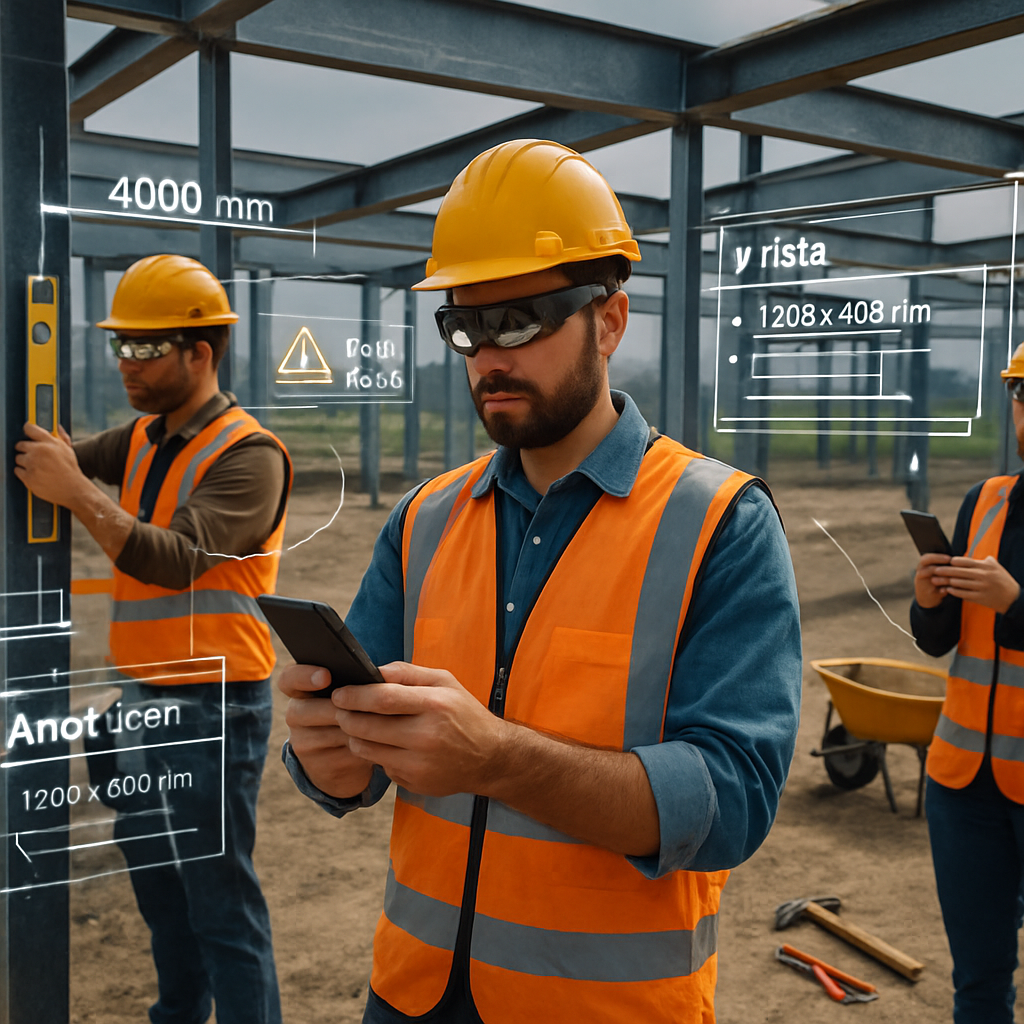
Eric Wu, best known for founding Opendoor, has unveiled his latest startup—the company, named NavigateAI, formally launched from stealth this May with $25 million in seed funding, targeting the labor shortfall in construction by equipping field workers with AI copilots. At a post-money valuation of $225 million, investors include Elad Gil, Khosla Ventures, Lennar, Tishman Speyer, Helix Electric, plus several prominent angels. NavigateAI aims to blend artificial intelligence, hardware, and real-world workflows to help skilled trades scale more efficiently.
The problem: mounting demand, shrinking workforce
The construction industry is facing an accelerating gap between projects and available labor, especially amid a construction boom fueled by the AI economy. Trade associations estimate nearly 350,000 additional workers are needed just to keep up with current demand. An aging workforce, tighter immigration policies, and major infrastructure developments—particularly large data center campuses—have all added pressure. As an example, some data center builds now require thousands more workers than earlier projects did.
NavigateAI’s solution
The core product operates via smartphone or comfortably hands-free through AI-enabled glasses (in collaboration with Meta), allowing workers to inspect their own work visually while keeping their hands free. Workers can ask natural-language questions—“Is this installed properly?”, “Does this meet code?”, “Is the torque correct?”—and the system retrieves specs, manuals, policy, and other relevant documentation in real time.
An important component of NavigateAI’s adoption strategy lies in training. They’re partnering with AIM, a fiber-installation trade school backed by Meta that guarantees job placement to graduates. Introducing AI tools early in training aims to ease the hesitancy often felt by veteran tradespeople, who are less likely to adopt new tech without evidence or incentive.
Business model and long-term value
The pricing approach started with a “token-plus-margin” model, resembling usage-based SaaS. NavigateAI is shifting toward value-based contracts: it takes a share of the savings generated—about 20%—when it helps reduce construction costs. With one client, homebuilder Lennar, spending about $9 billion annually on labor and related costs, even modest efficiency gains translate into vast dollars.
Beyond software, NavigateAI is gathering a growing dataset—egocentric, labeled video from field workers doing correct and incorrect builds. Eric Wu believes that this data will become nearly as important as the immediate productivity gains for constructors, especially for downstream applications in robotics and automated inspection.
Challenges and competitive landscape
Several headwinds loom: proving that cost savings actually came from NavigateAI—not due to weather, crew composition, or materials—is complex. Experienced construction workers often rely on intuition and may be skeptical about trusting AI in lieu of traditional judgment. Safety and liability are also critical: how defects or failures are handled when AI tools are involved could lead to legal exposure.
Competition could come either from companies already servicing construction with management or documentation tools, or from large AI/LLM providers and even Meta itself, which has both hardware and model capabilities. Wu sees Buildots and OpenSpace as peers, but says they focus more on project oversight, whereas NavigateAI is built around individual labor performance.
NavigateAI has deliberately delayed forming a board to stay nimble, emphasizing product and customer feedback over governance. For Wu, this reflects lessons learned during his time at Opendoor, where public company obligations often diverted focus from building product toward management and shareholder demands.
Overall, this startup is betting that the confluence of AI, data, and field work automation will transform construction labor—unlocking scale, consistency, and efficiency, just when the industry needs it most.
Analysis: NavigateAI arrives at a pivotal moment for construction, where labor shortages and rising project complexity demand smarter tools. By integrating AI into the hands-on work, not just supervision, it may shift how tradespeople work daily. The real test will be how well it wins the trust of veteran workers, navigates liability, and outmaneuvers competition. If it succeeds, it could help redefine productivity in an industry long resistant to change.