Elon Musk vs. Sam Altman: The Legal Battle Over OpenAI’s Mission
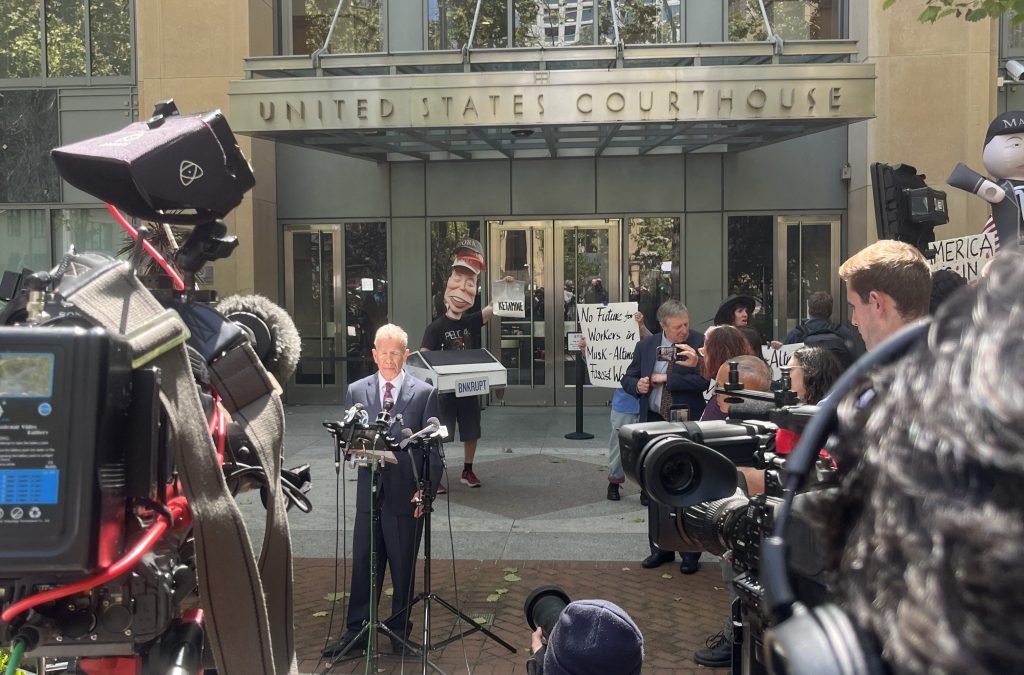
The courtroom drama between Elon Musk and OpenAI’s co-founders, Sam Altman and Greg Brockman, has reached a pivotal juncture. A jury in California is now deliberating on critical questions that could redefine the trajectory of OpenAI, a leading entity in artificial intelligence research.
Background of the Dispute
In 2015, Elon Musk co-founded OpenAI with the vision of developing artificial intelligence (AI) technologies that would benefit humanity. The organization was established as a nonprofit, emphasizing transparency and public welfare. Musk contributed approximately $38 million to support this mission. However, tensions arose when OpenAI transitioned to a capped-profit model and entered into a significant partnership with Microsoft, which invested around $13 billion into the organization. Musk contends that this shift deviated from OpenAI’s original nonprofit mission, leading him to file a lawsuit in 2024 against OpenAI, Altman, Brockman, and later, Microsoft. ([techcrunch.com](https://techcrunch.com/2024/03/01/elon-musk-openai-sam-altman-court/?utm_source=openai))
Key Legal Questions
The jury is tasked with addressing several specific issues:
1. Breach of Charitable Trust: Did OpenAI and its co-founders violate an agreement with Musk by using his donations for purposes other than the specified charitable objectives?
2. Unjust Enrichment: Did the defendants leverage Musk’s contributions to benefit themselves through OpenAI’s for-profit arm, rather than fulfilling the charitable mission?
3. Aiding and Abetting Breach of Charitable Trust: Did Microsoft, through its interactions with OpenAI, knowingly contribute to the alleged breach of charitable trust, thereby causing harm to Musk?
Arguments from Both Sides
Plaintiff’s Perspective:
Musk’s legal team argues that his donations were intended to support a nonprofit dedicated to ensuring AI benefits humanity and remains free from control by any single organization. They highlight the 2023 investment from Microsoft into OpenAI’s for-profit affiliate as a turning point that prioritized commercial interests over the original charitable mission. Musk’s attorneys claim this partnership led to the enrichment of OpenAI’s investors at the expense of the organization’s foundational goals. ([techcrunch.com](https://techcrunch.com/2026/05/14/what-the-jury-will-actually-decide-in-the-case-of-elon-musk-vs-sam-altman/?utm_source=openai))
Defendant’s Perspective:
OpenAI’s defense counters that there were no specific restrictions placed on Musk’s donations. They point out that Musk himself attempted to establish a for-profit entity affiliated with OpenAI under his control and later proposed merging OpenAI into Tesla. Additionally, they note that other donors have not alleged any breach of charitable trust. A forensic accountant testified that all of Musk’s contributions were utilized by OpenAI well before the critical date of August 5, 2021, suggesting that his donations had already served their intended purpose prior to the lawsuit. ([techcrunch.com](https://techcrunch.com/2026/05/14/what-the-jury-will-actually-decide-in-the-case-of-elon-musk-vs-sam-altman/?utm_source=openai))
Statute of Limitations and Other Legal Considerations
OpenAI’s legal team has raised several defenses, including:
– Statute of Limitations: They argue that any alleged harms occurred before the legal deadlines for filing the lawsuit, rendering Musk’s claims invalid.
– Unreasonable Delay: They contend that Musk’s delay in filing the lawsuit until 2024 makes his request for damages unreasonable.
– Unclean Hands: This doctrine suggests that Musk’s own conduct related to his claims was unconscionable, thereby invalidating them.
Potential Implications
Should the jury rule in favor of Musk, it could lead to significant changes within OpenAI, potentially dismantling its for-profit structure. However, the exact consequences remain uncertain. Following the jury’s decision, the judge will conduct hearings to determine the appropriate remedies, which could include restructuring OpenAI or other measures to realign the organization with its original mission. ([techcrunch.com](https://techcrunch.com/2026/05/14/what-the-jury-will-actually-decide-in-the-case-of-elon-musk-vs-sam-altman/?utm_source=openai))
Broader Industry Impact
This legal battle underscores the complex interplay between innovation, ethics, and profit in the rapidly evolving AI industry. The outcome could influence how AI organizations balance commercial interests with ethical considerations and public benefit. It also highlights the challenges in maintaining the original missions of tech organizations as they scale and attract substantial investments.
Conclusion
As the jury deliberates, the tech community and the public await a verdict that could have far-reaching implications for OpenAI and the broader AI landscape. The case serves as a pivotal moment in the ongoing discourse about the governance and ethical development of artificial intelligence technologies.