Ed Zitron, a prominent critic of the artificial intelligence (AI) industry’s rapid expansion, has long contended that the substantial investments fueling AI development may not yield sustainable returns. As memory prices have surged, leading to increased costs for devices like Macs and iPads, and with iPhone price hikes anticipated, Zitron’s perspective offers a critical lens on the current AI landscape.
Unsustainable Economics of Large Language Models
Zitron highlights a fundamental issue with the economics of Large Language Models (LLMs). Traditionally, software services operate on a subscription basis, offering users predictable costs. In contrast, LLMs consume computational resources, or “tokens,” at a rate that doesn’t necessarily correlate with user satisfaction or successful task completion. This means users might incur costs even when the AI fails to deliver the desired outcome.
To attract users, AI companies have often provided monthly subscriptions with ambiguous usage limits, allowing consumers to utilize services far beyond the actual cost of their subscriptions. For instance, analyses have shown that users can consume services worth hundreds of dollars on a $20 monthly plan, and thousands on a $200 plan. Despite claims of high gross margins on tokens, evidence suggests that companies like OpenAI faced significant financial losses, with reports indicating a $20.9 billion loss on $13.07 billion in revenue in 2025.
Apple’s Cautious Approach to AI Investments
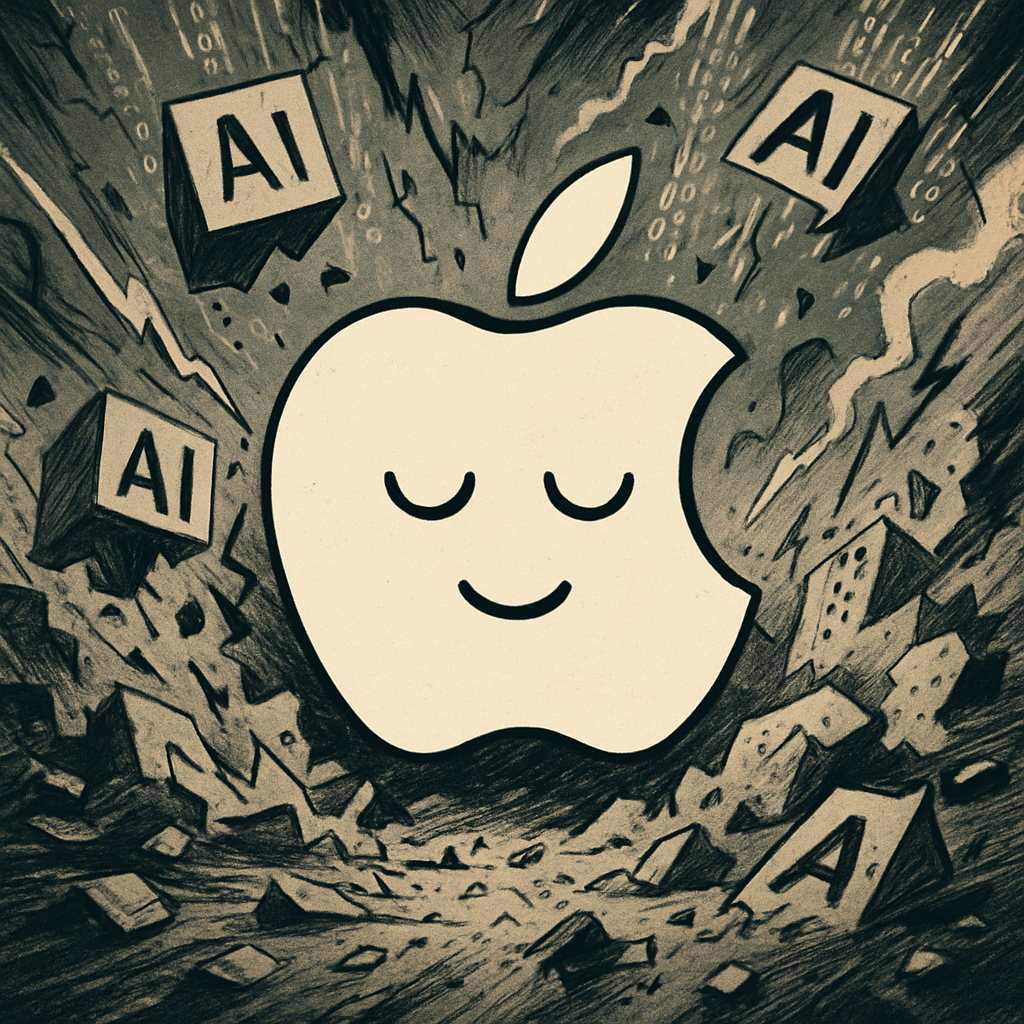
In contrast to the aggressive spending by many tech giants, Apple has maintained a more measured approach to AI investments. Zitron observes that Apple has been conservative in its capital expenditures related to AI, focusing instead on integrating AI features like “Apple Intelligence” into its existing product ecosystem without substantial financial outlays. This strategy has led to perceptions that Apple is lagging in the AI race; however, Zitron argues that the company is avoiding the pitfalls of an overheated market.
He suggests that Apple’s restraint positions it advantageously. If the AI bubble bursts, leading to industry-wide financial turmoil, Apple could emerge relatively unscathed. The company might even capitalize on the situation by acquiring valuable assets from struggling AI firms at reduced prices.
Potential Implications for Apple’s Product Strategy
Looking ahead, Zitron points to products like the Vision Pro as examples of Apple’s forward-thinking initiatives. While the Vision Pro has faced challenges, it represents a significant step toward innovative user interfaces. Zitron advises that Apple should continue to invest in refining such technologies, focusing on making them more compact and user-friendly over time.
In summary, Zitron’s analysis underscores the precarious nature of the current AI investment climate. Companies heavily invested in AI infrastructure may face substantial financial risks if the anticipated returns fail to materialize. Apple’s cautious strategy, emphasizing gradual integration and careful investment, could serve as a model for navigating the uncertain future of AI development.