DuckDuckGo’s ‘No AI’ Search Gains Momentum Amid Google’s AI Integration
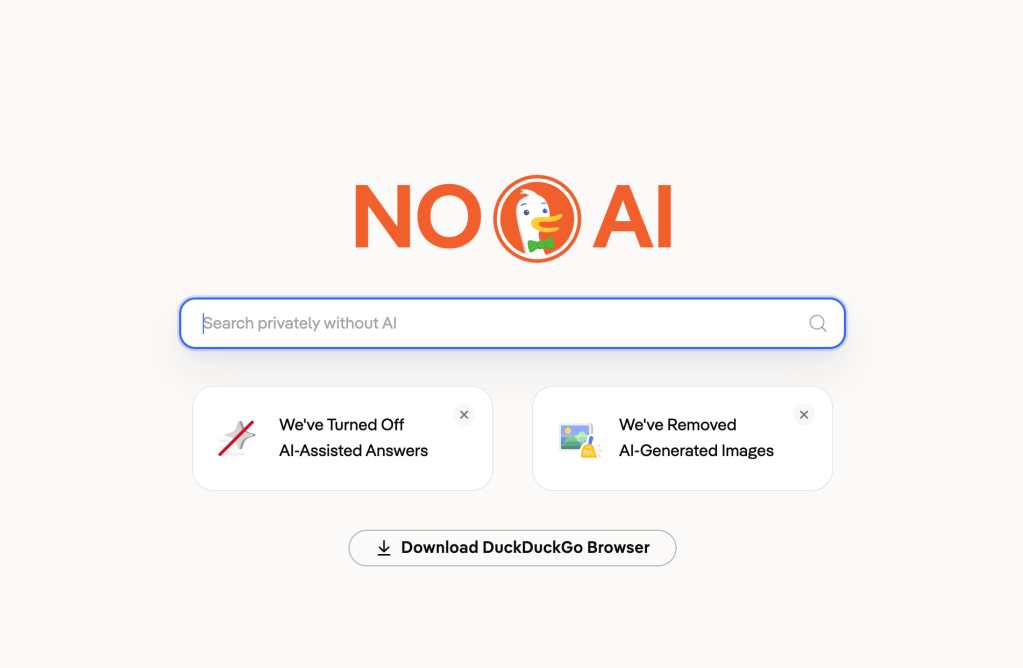
In the wake of Google’s recent AI-centric enhancements to its search engine, DuckDuckGo has experienced a significant surge in user engagement, particularly among those seeking a more traditional, AI-free search experience. To accommodate this growing demand, DuckDuckGo has introduced new browser extensions for Chrome and Firefox, enabling users to set its ‘No AI’ search page (noai.duckduckgo.com) as their default search engine. ([techcrunch.com](https://techcrunch.com/2026/06/01/duckduckgo-makes-its-no-ai-search-engine-easier-to-access-as-its-traffic-booms/?utm_source=openai))
These extensions direct users to DuckDuckGo’s AI-free search interface, which omits AI-assisted answers, chat prompts, and reduces the presence of AI-generated images in search results. This initiative aligns with the company’s commitment to providing users with greater control over their search experiences, especially in an era where AI integration is becoming increasingly prevalent. ([techcrunch.com](https://techcrunch.com/2026/06/01/duckduckgo-makes-its-no-ai-search-engine-easier-to-access-as-its-traffic-booms/?utm_source=openai))
The impetus for this development stems from Google’s announcement at its developer conference in May 2026, where it unveiled a comprehensive AI-first overhaul of its search engine. This revamp introduced AI-generated search overviews, interactive elements like visualizations and mini-apps, and an AI Mode chat experience, effectively shifting the traditional 10 blue links further down the search results page. ([techcrunch.com](https://techcrunch.com/2026/06/01/duckduckgo-makes-its-no-ai-search-engine-easier-to-access-as-its-traffic-booms/?utm_source=openai))
In response to these changes, DuckDuckGo has observed a notable increase in traffic to its ‘No AI’ search page. On May 28, 2026, visits to this page tripled compared to previous levels, marking a new peak since Google’s announcement. This growth appears to be sustained, with visits averaging approximately 84% above the baseline, indicating a consistent shift in user preferences. ([techcrunch.com](https://techcrunch.com/2026/06/01/duckduckgo-makes-its-no-ai-search-engine-easier-to-access-as-its-traffic-booms/?utm_source=openai))
In addition to the new browser extensions, DuckDuckGo plans to update its existing Privacy Essentials extensions for Chrome, Firefox, Edge, and Opera to include controls for AI search settings. This move aims to provide users with a consistent AI-free search experience across various platforms. ([techcrunch.com](https://techcrunch.com/2026/06/01/duckduckgo-makes-its-no-ai-search-engine-easier-to-access-as-its-traffic-booms/?utm_source=openai))
It’s important to note that DuckDuckGo is not opposed to AI technology. The company offers its own AI chatbot with access to popular models and a subscription plan that includes the latest models and additional tools such as a VPN service, identity theft restoration, and personal information removal services. However, DuckDuckGo emphasizes user choice, allowing individuals to opt for an AI-free search experience if they prefer. ([techcrunch.com](https://techcrunch.com/2026/06/01/duckduckgo-makes-its-no-ai-search-engine-easier-to-access-as-its-traffic-booms/?utm_source=openai))
This trend reflects a broader public sentiment favoring transparency and user autonomy in the integration of AI into search tools. While Google’s AI-driven approach aims to enhance search capabilities, the growing interest in DuckDuckGo’s ‘No AI’ option suggests that a significant segment of users values the ability to control their exposure to AI-generated content. ([tomsguide.com](https://www.tomsguide.com/ai/google-is-force-feeding-ai-with-no-way-to-opt-duckduckgo-ceo-says-installs-are-surging-after-google-i-o?utm_source=openai))
In summary, as major search engines like Google continue to integrate AI into their platforms, alternative search engines like DuckDuckGo are gaining traction by offering users the choice to opt out of AI features. This development underscores the importance of user control and transparency in the evolving landscape of search technologies.