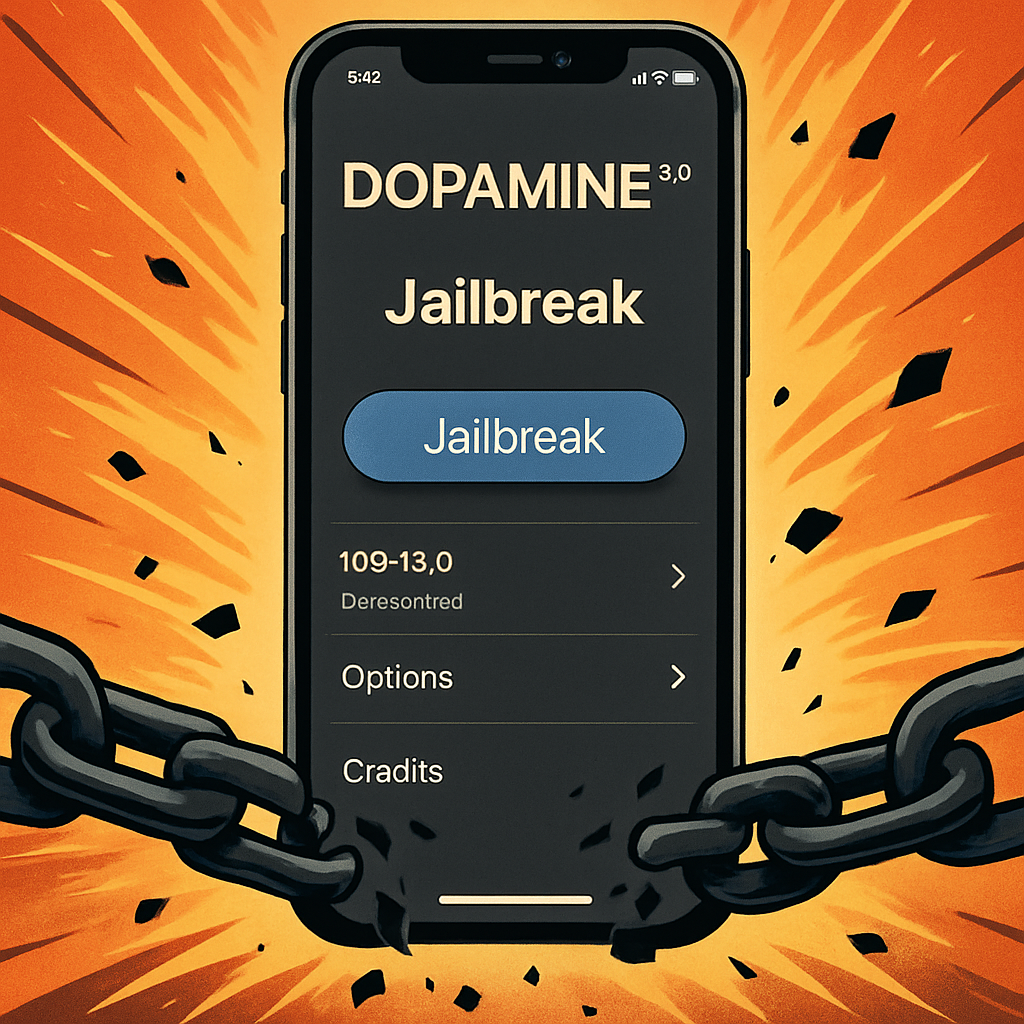
After nearly a year since its release, iOS 26 has received its first jailbreak, courtesy of the developers behind the Dopamine tool. This development marks a significant milestone for the jailbreaking community, which has faced increasing challenges due to Apple’s enhanced security measures in recent iOS versions.
Lars Fröder, known in the community as opa334, has unveiled Dopamine 3.0. This latest iteration extends support to devices equipped with A12 and A13 chips running iOS 26.0 and iOS 26.0.1. Additionally, it broadens compatibility to encompass all devices operating on iOS versions from 16.5.1 through 17.3.1, thereby expanding the range of devices and firmware versions that can be jailbroken using this tool.
For users interested in determining whether their specific device and iOS version are supported, a comprehensive compatibility list is available on AppleDB, a database dedicated to tracking jailbreak compatibility across various devices and firmware versions.
Jailbreaking, the process of removing software restrictions imposed by Apple on iOS devices, allows users to install unauthorized apps, customize the user interface, and access system files. While it offers greater flexibility and personalization, jailbreaking also carries potential risks, including security vulnerabilities, instability, and the voiding of device warranties.
Over the years, Apple has intensified its efforts to secure iOS, making the development of reliable jailbreaks increasingly complex. The release of Dopamine 3.0 underscores the persistence and ingenuity of the jailbreaking community in overcoming these obstacles.
As the cat-and-mouse game between Apple and jailbreak developers continues, users should weigh the benefits against the potential risks. It’s crucial to stay informed about the latest developments and exercise caution when considering jailbreaking, especially with newer iOS versions that may introduce additional security challenges.